AF 6 7 1

Airplane Rejected Takeoff, Engine Failure and Noise Abatement

Takeoff is a critical phase of flight that requires careful planning and prompt decision-making. Pilots must be prepared to reject a takeoff when unsafe conditions arise, respond appropriately to an engine failure after lift-off, and follow airport noise abatement procedures. Understanding these procedures helps support safe and considerate aircraft operations. Rejected Takeoff and Engine Failure … Read more
8 4

Airplane Short-Field Takeoff and Maximum Performance Climb

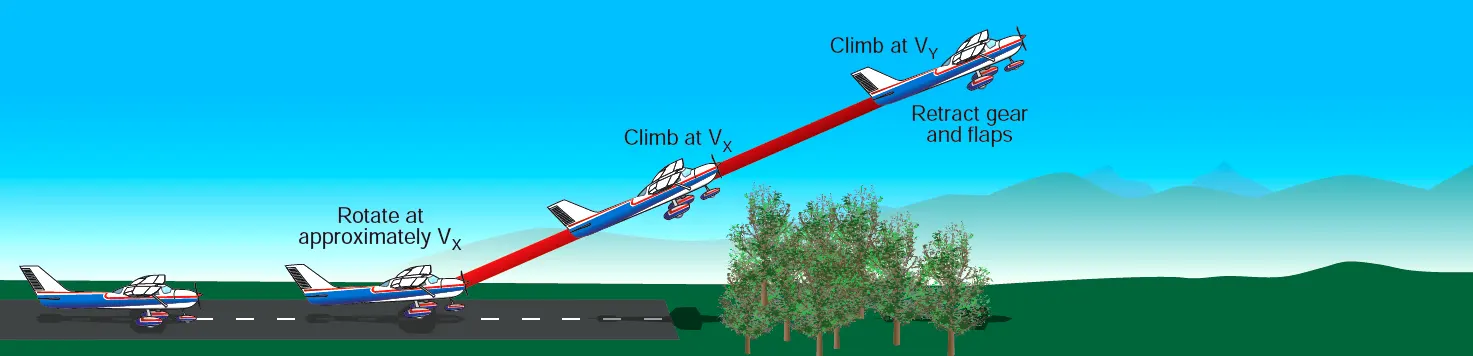
Short-field takeoffs require precise control of airplane attitude and airspeed to achieve the shortest ground roll and the steepest angle of climb. Pilots must follow the aircraft manufacturer’s recommended procedures and performance data to safely operate from restricted takeoff areas. Short-Field Takeoff Planning When performing takeoffs and climbs from fields where the takeoff area is … Read more

5 3

Airplane Crosswind Takeoff Techniques and Procedures

Taking off into the wind is generally preferable whenever practical. However, pilots may need to take off with a crosswind due to runway availability or other circumstances. Understanding proper crosswind takeoff techniques helps pilots maintain directional and lateral control throughout the takeoff roll, lift-off, and initial climb. Takeoff Roll The technique used during the initial … Read more

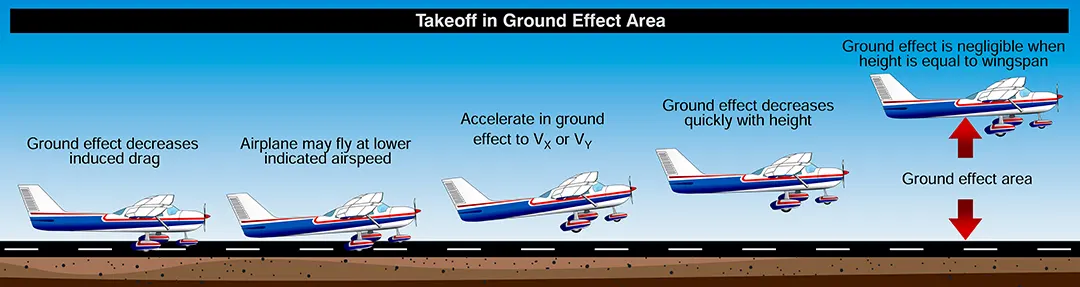
Airplane takeoff in ground effect, illustrating how induced drag decreases as the aircraft accelerates and climbs away from the ground

Ground Effect on Airplane Takeoff

Ground effect can improve an airplane’s performance when it operates close to the ground. Understanding how ground effect influences lift, drag, indicated flight instruments, and climb performance is important for safe takeoff operations. Understanding Ground Effect Ground effect is a condition of improved performance encountered when an airplane operates very close to the ground. It … Read more

3 3

Airplane Normal Takeoff and Initial Climb Procedures

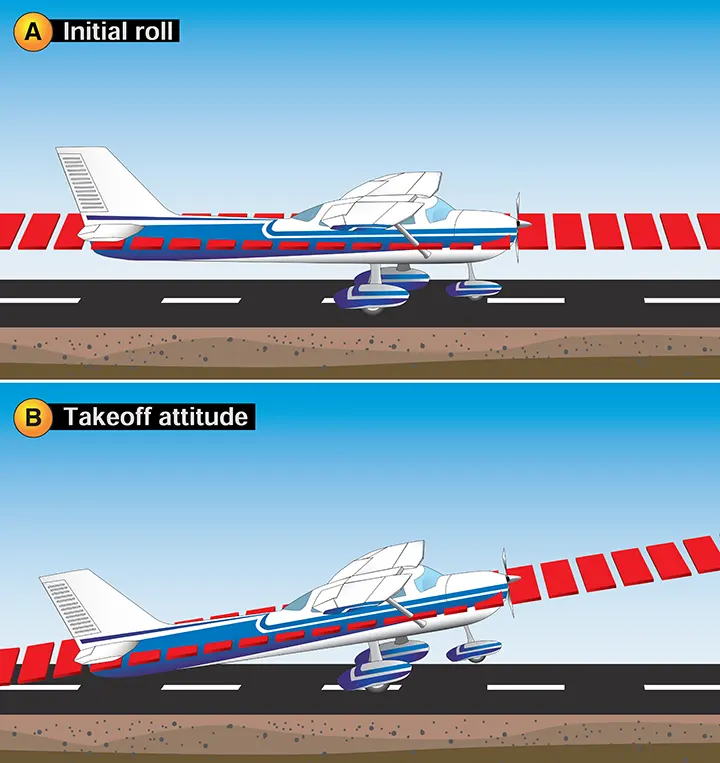
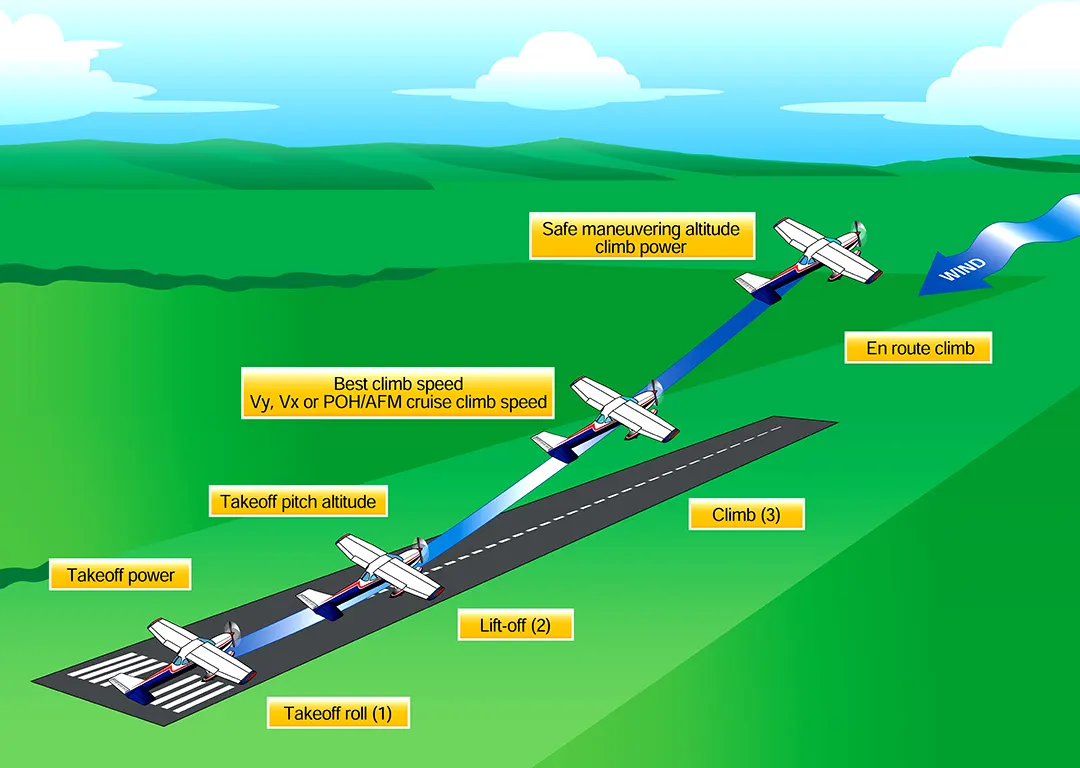
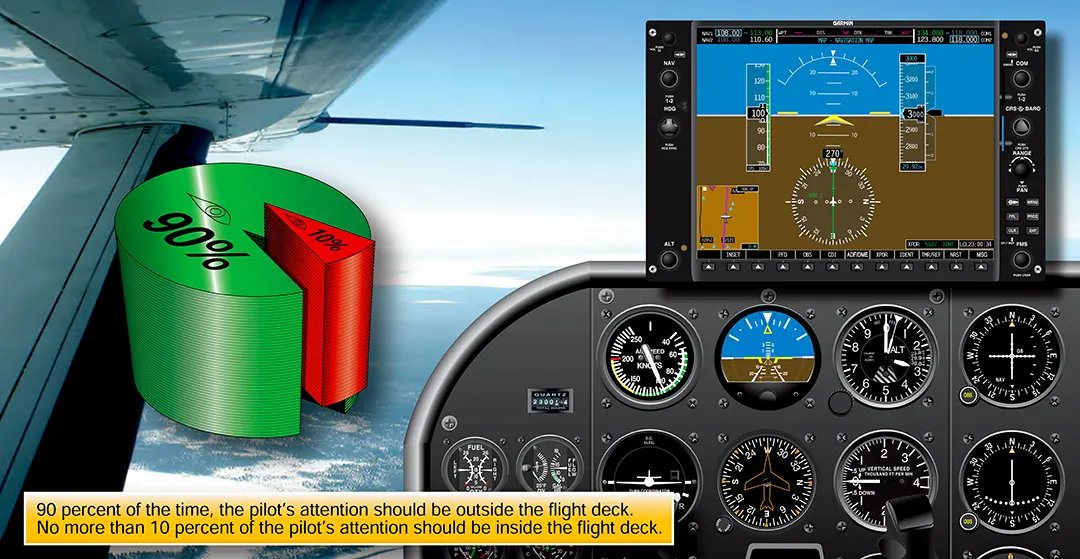
A normal takeoff and initial climb require proper coordination of flight controls, accurate airspeed management, and continuous visual scanning. Pilots must maintain directional control during the takeoff roll, establish the correct lift-off attitude, and transition smoothly into the initial climb. Understanding each phase and recognizing common errors are essential for safe takeoff operations. Normal Takeoff … Read more

2 3

Airplane Pre-Takeoff Planning and Safety Procedures

Proper pre-takeoff planning and safety checks are essential for ensuring a safe takeoff and departure. Pilots must evaluate airplane performance, complete required checklists, assess potential emergency situations, and ensure that the takeoff path is clear before beginning the takeoff. Pre-Takeoff Performance Planning Before going to the airplane, the pilot should check the performance charts in … Read more

5 2

Aircraft Upset Prevention and Recovery (UPRT)

Pilots must be able to recognize and prevent airplane upsets to maintain aircraft control and reduce the risk of loss of control in flight (LOC-I). Understanding the environmental, mechanical, and human factors that contribute to upsets helps pilots recognize developing hazards, take appropriate preventive action, and recover safely when an upset occurs. Upset prevention and … Read more

16 1

Upset Prevention and Recovery: Airplane Stalls

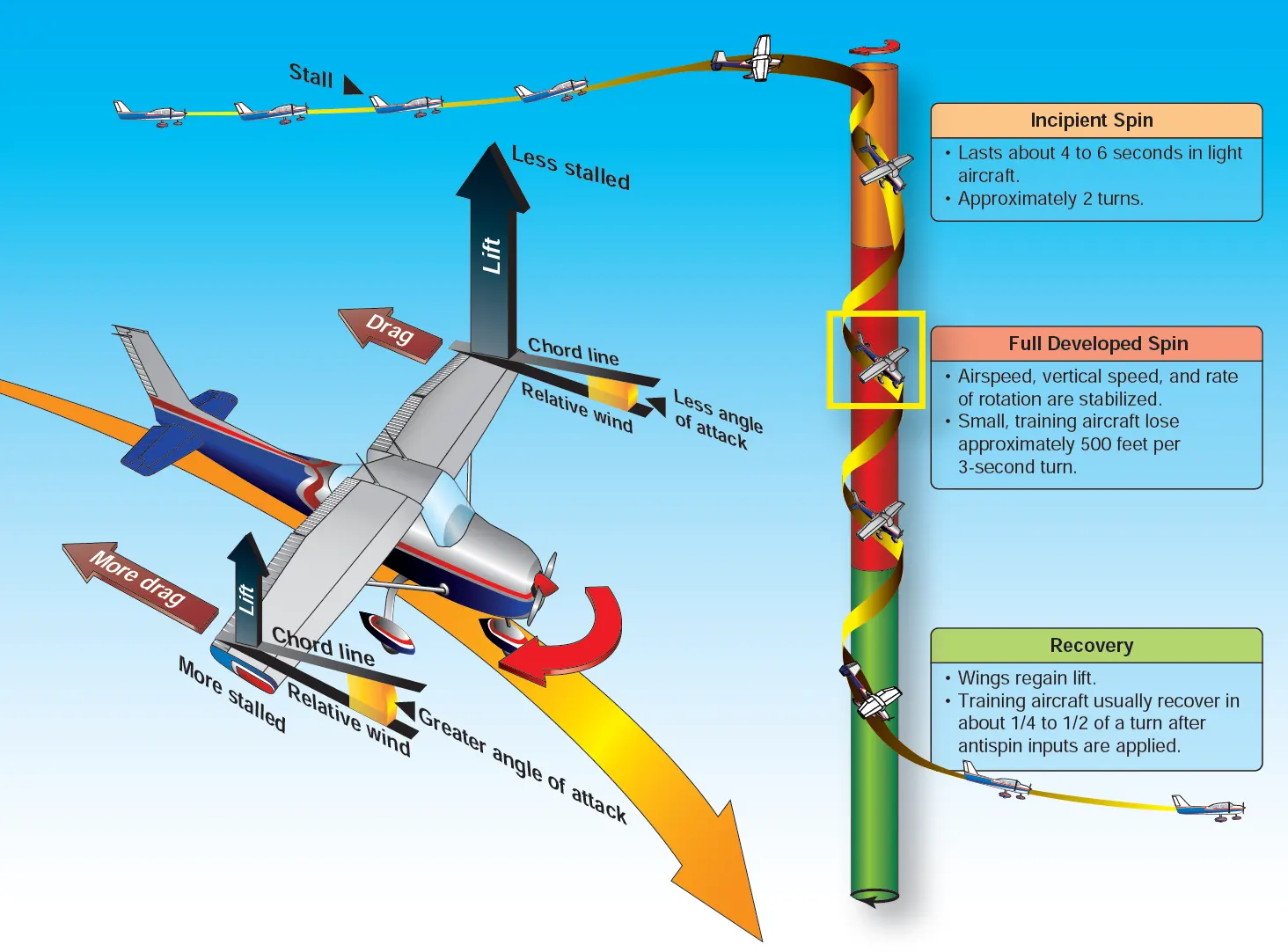
Stalls occur when an airplane’s angle of attack exceeds the wing’s critical angle of attack, and they can develop at a range of airspeeds, attitudes, and power settings. Understanding stall recognition, recovery procedures, and spin awareness helps pilots respond appropriately to changing flight conditions. The following material reviews stall characteristics, training maneuvers, recovery principles, and … Read more

7 2

Upset Prevention and Recovery: Slow Flight

Slow flight is an important flight-training maneuver that helps pilots understand airplane handling characteristics at low airspeeds and high angles of attack (AOA). Practicing this maneuver develops the ability to recognize stall warnings, maintain coordinated flight, manage power and pitch, and respond appropriately to changing flight conditions. These skills help pilots maintain aircraft control during … Read more