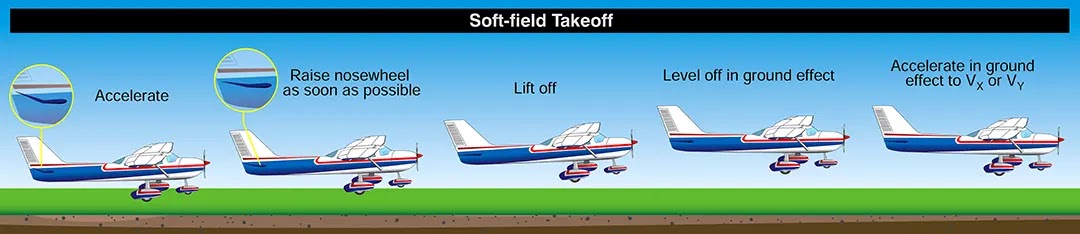
Airplane Soft/Rough-Field Takeoff and Climb

Takeoffs and climbs from soft fields require the use of operational techniques for getting the airplane airborne as quickly as possible to eliminate the drag caused by tall grass, soft sand, mud, and snow and may require climbing over an obstacle. The technique makes judicious use of ground effect to reduce landing gear drag and … Read more
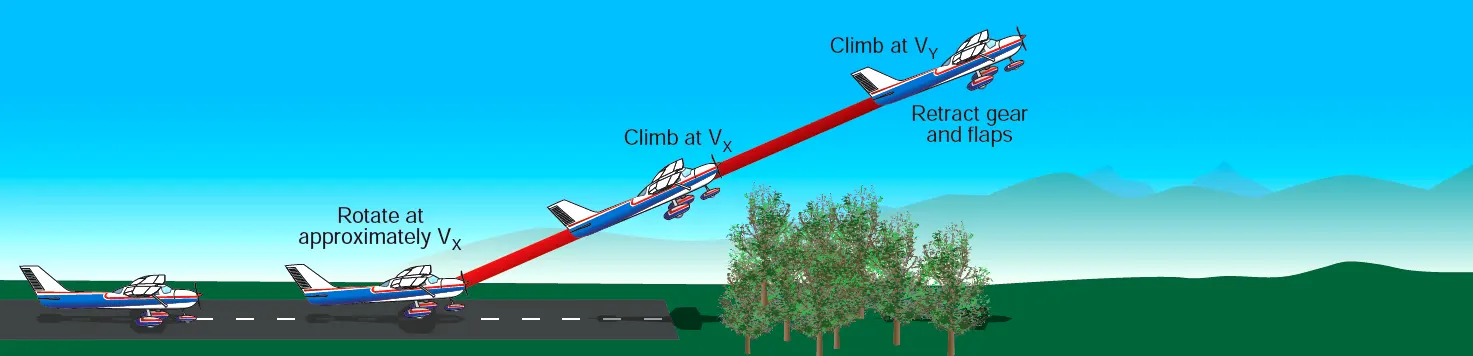
Airplane Rejected Takeoff, Engine Failure and Noise Abatement

Rejected Takeoff/Engine Failure Emergency or abnormal situations can occur during a takeoff that require a pilot to reject the takeoff while still on the runway. Circumstances such as a malfunctioning powerplant, inadequate acceleration, runway incursion, or air traffic conflict may be reasons for a rejected takeoff. Prior to takeoff, the pilot should identify a point … Read more

Airplane Crosswind Takeoff Techniques and Procedures

While it is usually preferable to take off directly into the wind whenever possible or practical, there are many instances when circumstances or judgment indicate otherwise. Therefore, the pilot must be familiar with the principles and techniques involved in crosswind takeoffs, as well as those for normal takeoffs. A crosswind affects the airplane during takeoff … Read more

Ground Effect on Airplane Takeoff

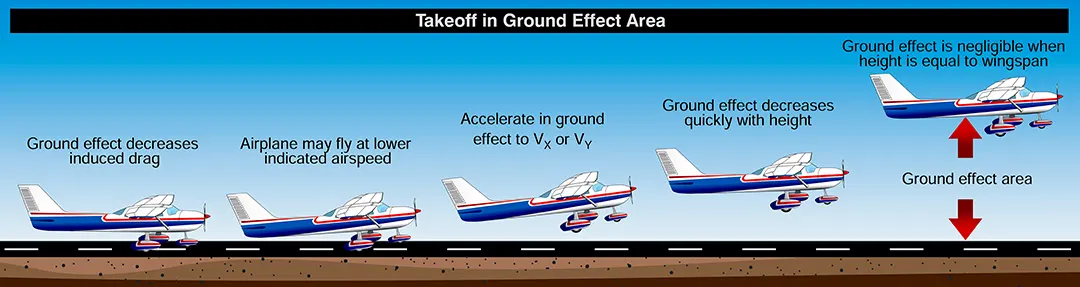
Ground effect is a condition of improved performance encountered when the airplane is operating very close to the ground. Ground effect can be detected and normally occurs up to an altitude equal to one wingspan above the surface. [Figure] Ground effect is most significant when the airplane maintains a constant attitude at low airspeed at … Read more

Airplane Pre-Takeoff Planning and Safety Procedures

Before going to the airplane, the pilot should check the POH/AFM performance charts to determine the predicted performance and decide if the airplane is capable of a safe takeoff and climb for the conditions and location. [Figure] High density altitudes reduce engine and propeller performance, increase takeoff rolls, and decrease climb performance. A more detailed … Read more

Takeoffs and Departure Climbs

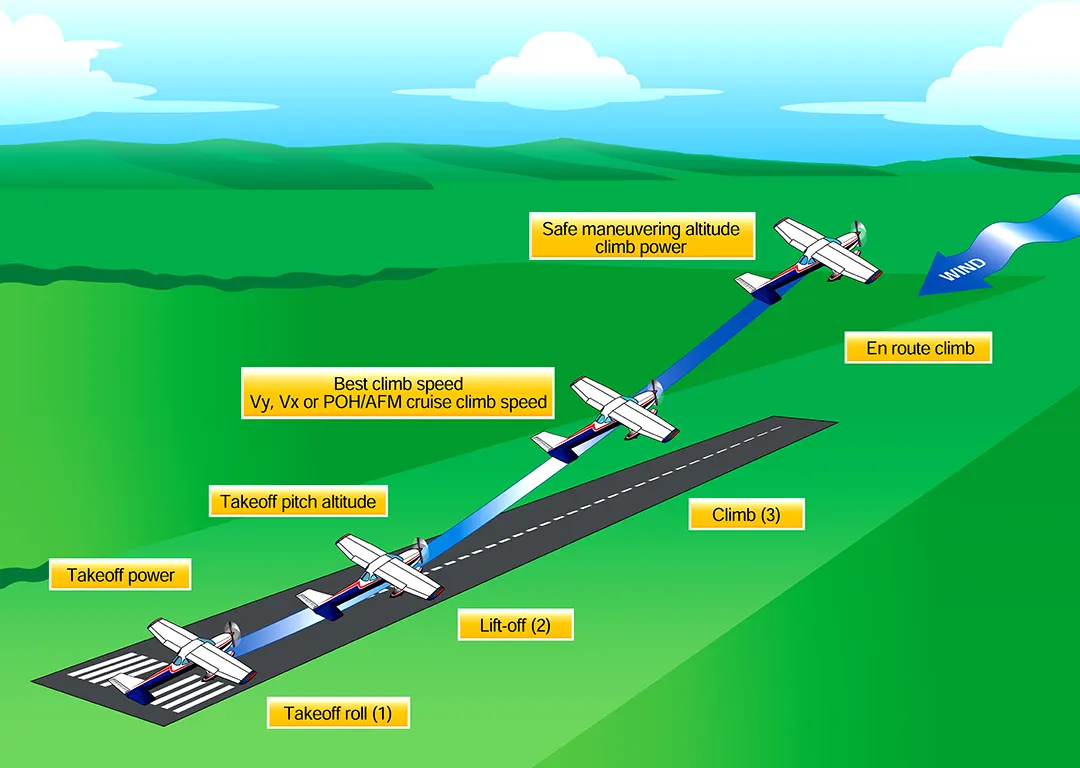
About twenty percent of all yearly general aviation (GA) accidents occur during takeoff and departure climbs, and more than half of those accidents are the result of some sort of failure of the pilot. A significant number of takeoff accidents are the result of loss of control of the airplane. When compared to the entire … Read more