Aircraft Weight & Balance

This section begins with the basic principle of aircraft weight and balance control, emphasizing its importance and including examples of documentation furnished by the aircraft manufacturer and by the FAA to ensure the aircraft weight and balance records contain the proper data. Procedures for the preparation and the actual weighing of an aircraft are described, … Read more
Commuter Category and Large Aircraft Weight and Balance Control

This section discusses general guidelines and procedures for weighing large fixed-wing aircraft exceeding a takeoff weight of 12,500 pounds. Several examples of center of gravity (CG) determination for various operational aspects of these aircraft are also included. Persons seeking approval for a weight and balance control program for aircraft operated under Title 14 of the … Read more

Use of Computer for Weight and Balance Computations

Almost all weight and balance problems involve only simple math. This allows slide rules and hand-held electronic calculators to relieve much of the tedium involved with these problems. This section compares the methods of determining the center of gravity (CG) of an airplane while it is being weighed. First, it shows how to determine the … Read more

Dedicated Electronic Flight Computer

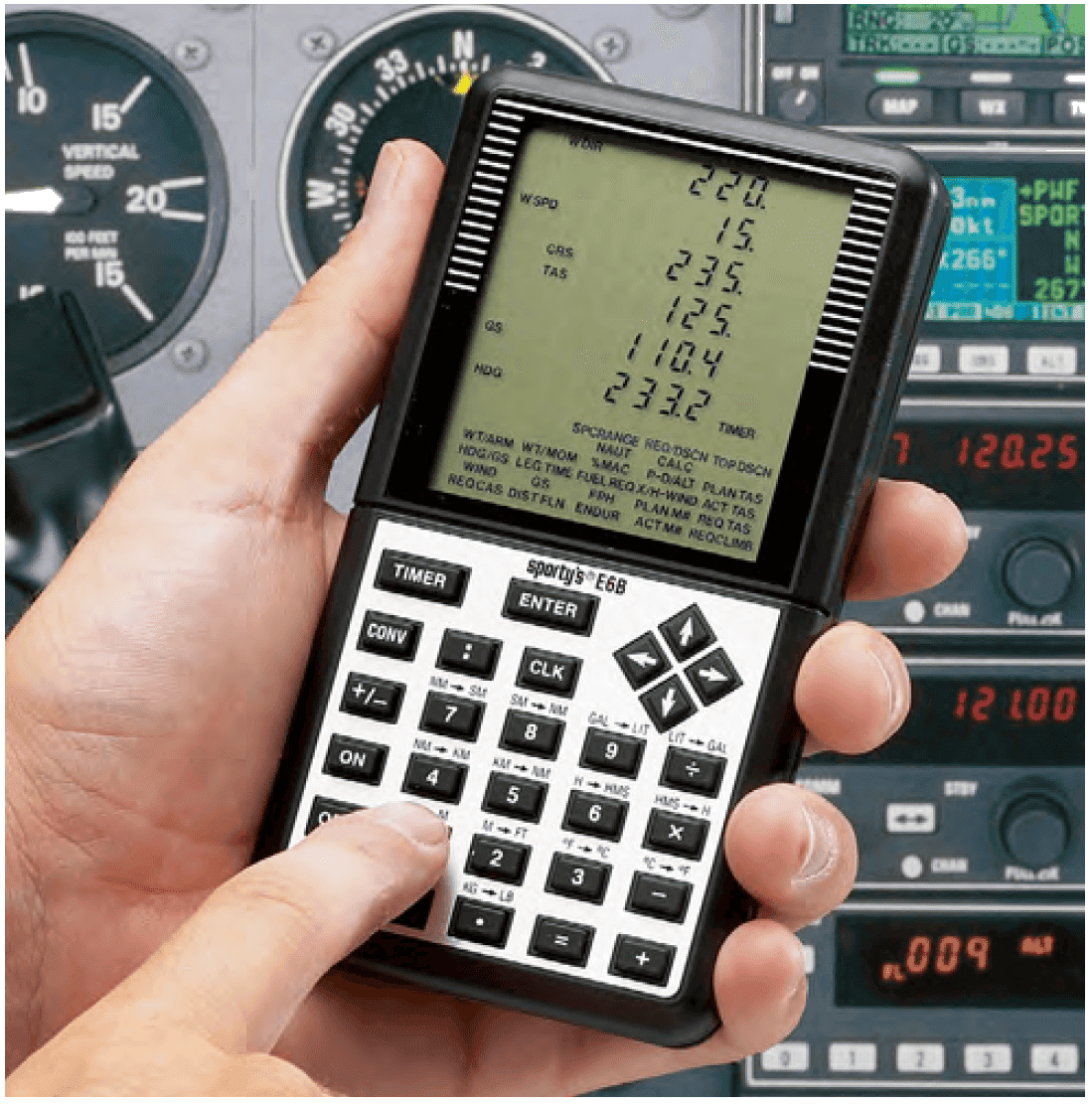
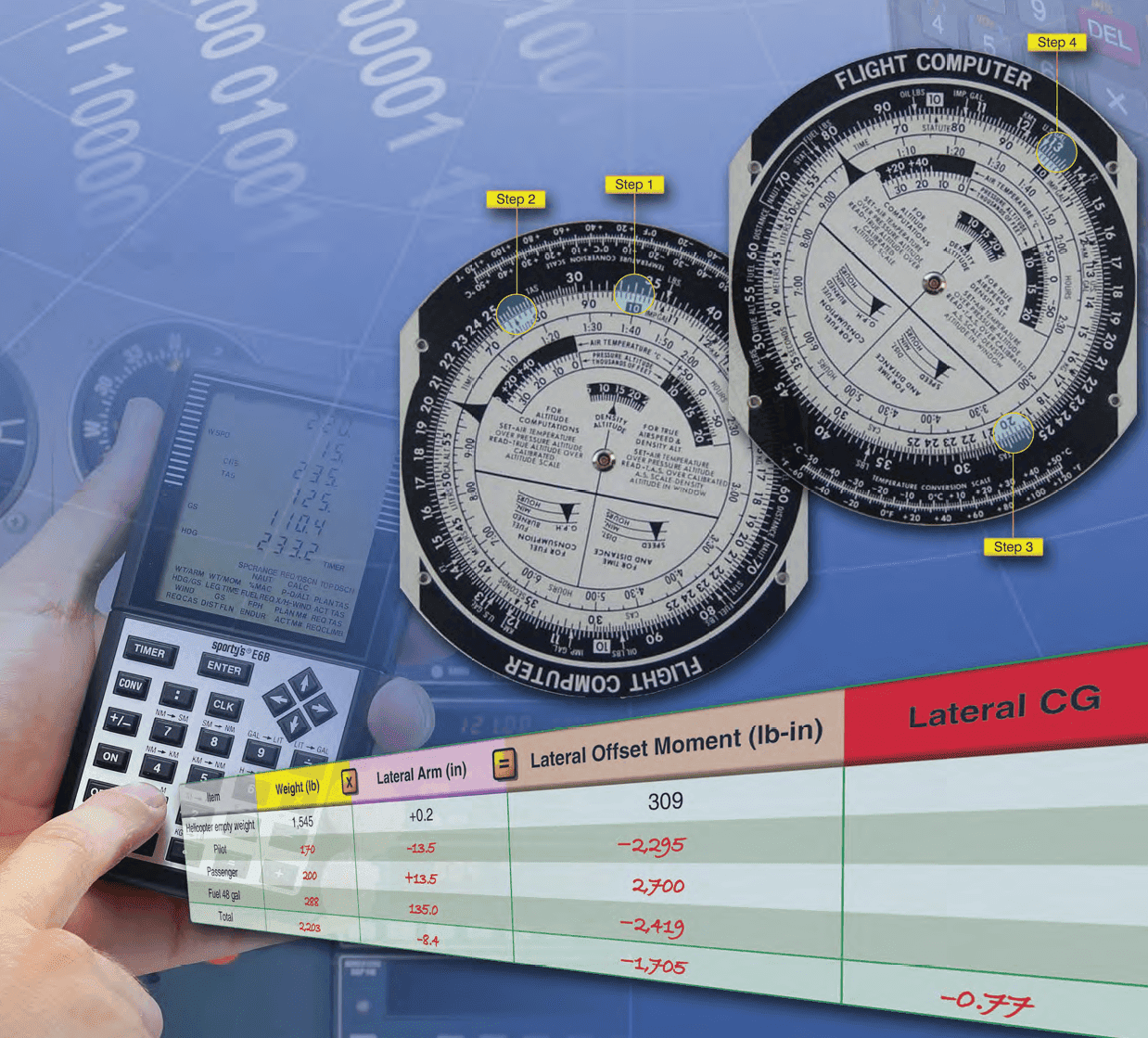
Dedicated electronic flight computers, like the one in Figure 1, are programmed to solve many flight problems such as wind correction, heading and ground speed, endurance, and true airspeed (TAS), as well as weight and balance problems. Figure 1. Dedicated electronic flight computers are programmed to solve weight and balance problems, as well as flight … Read more

E6-B Flight Computer

The E6-B uses a special kind of slide rule. Instead of its scales going from 1 to 10, as on a normal slide rule, both scales go from 10 to 100. The E6-B cannot be used for addition or subtraction, but it is useful for making calculations involving multiplication and division. Its accuracy is limited, … Read more

Electronic Calculator

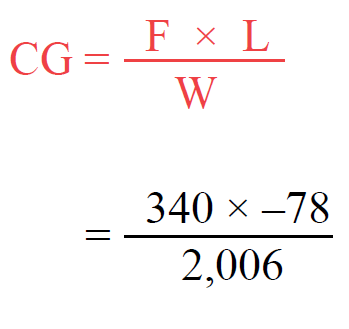
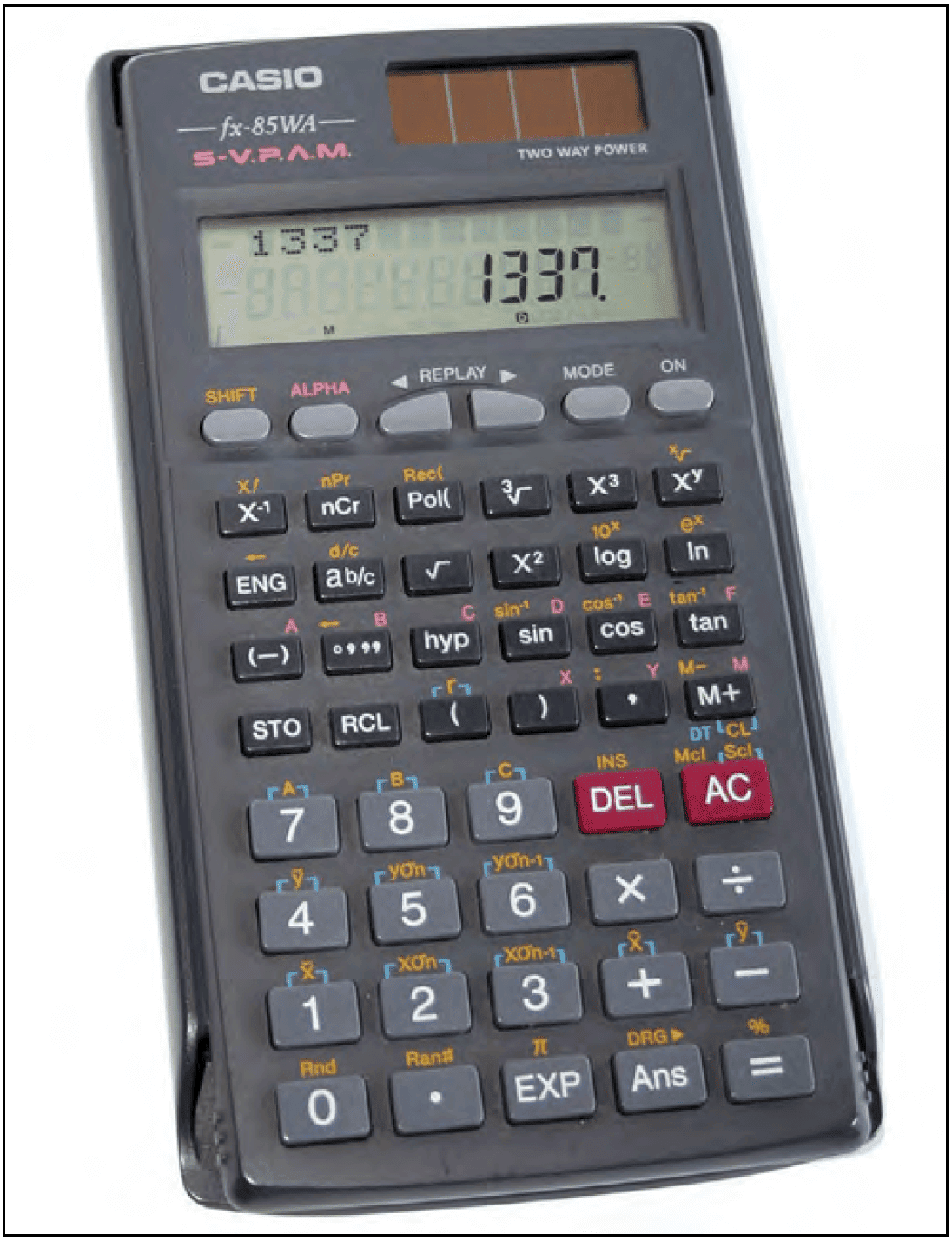
Determining the CG of an airplane in inches for the main-wheel weighing points can be done with any simple electronic calculator that has addition (+), subtraction (–), multiplication (×), and division (÷) functions. [Figure 1] Scientific calculators with such additional functions as memory (M), parentheses (( )), plus or minus (+/–), exponential (yx), reciprocal (1/x), … Read more

Determining CG Changes Caused by Modifying the Cargo (Part 3)

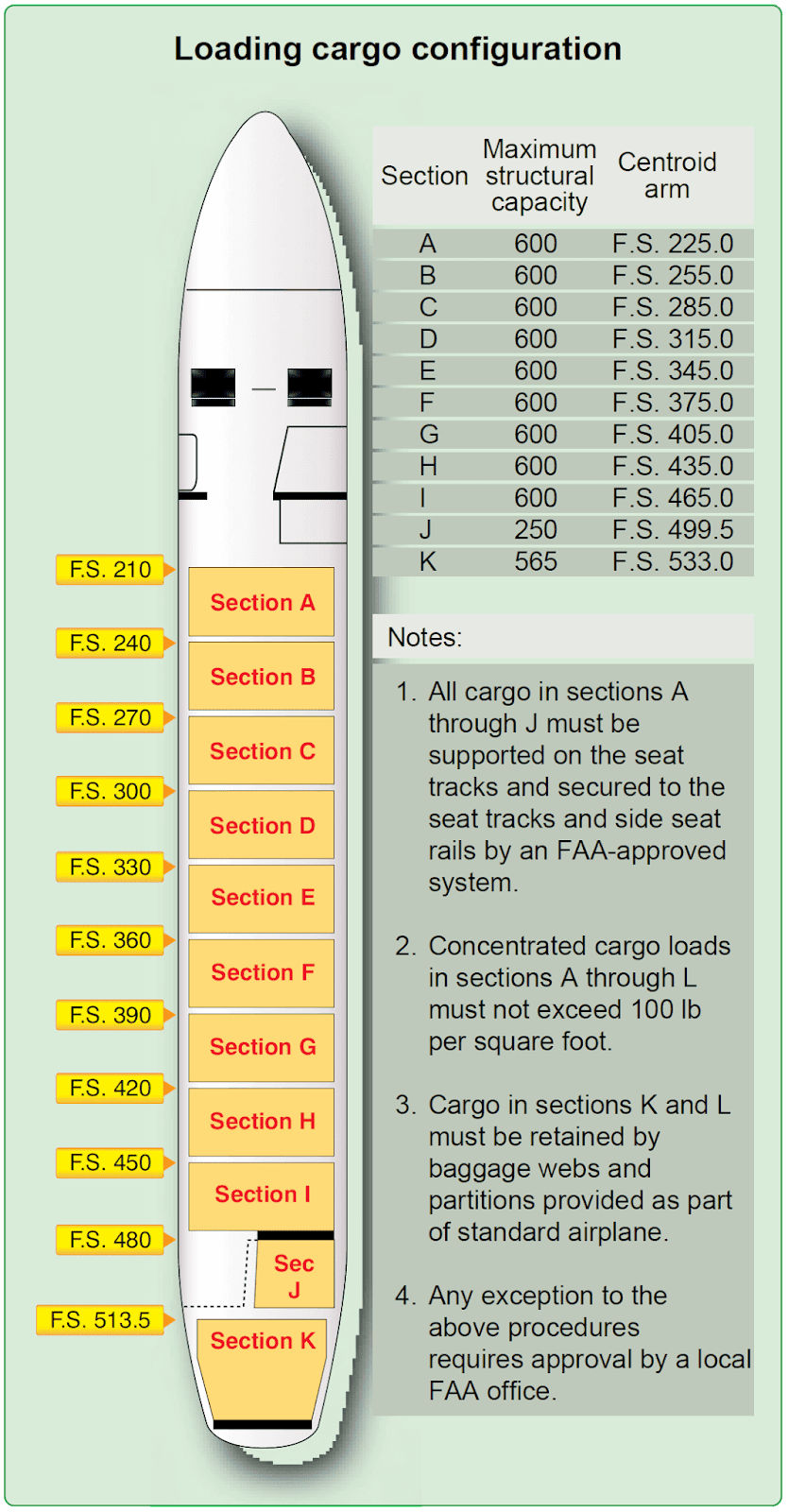
Determining Changes in Weight and CG When the Aircraft Is Operated in Its Cargo Configuration To determine changes in weight and CG when the aircraft is operated in its cargo configuration, the Beech 1900 is used as an example. Figure 1 illustrates the airplane configuration. Notice that the arm of each cargo section is the … Read more

Determining CG Changes Caused by Modifying the Cargo (Part 2)

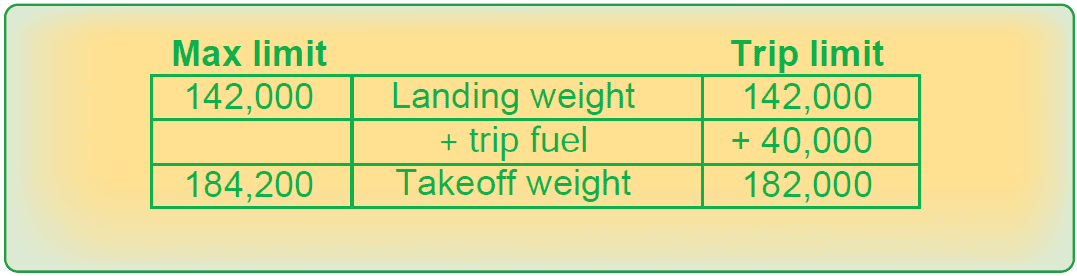
Determining the Maximum Amount of Payload That Can Be Carried The primary function of a transport or cargo aircraft is to carry payload, which is the portion of the useful load, passengers, or cargo that produces revenue. To determine the maximum amount of payload that can be carried, both the maximum limits for the aircraft … Read more

Determining CG Changes Caused by Modifying the Cargo (Part 1)

Since large aircraft can carry substantial cargo, adding, subtracting, or moving any of the cargo from one hold to another can cause large shifts in the CG. Effects of Loading or Offloading Cargo Both the weight and CG of an aircraft are changed when cargo is loaded or offloaded.In the following example, the new weight … Read more

Operational Empty Weight (OEW)

Operational empty weight (OEW) is the basic empty weight or fleet empty weight plus operational items. The operator has two choices for maintaining OEW. The loading schedule may be utilized to compute the operational weight and balance of an individual aircraft, or the operator may choose to establish fleet empty weights for a fleet or … Read more