Airplane in Percent MAC

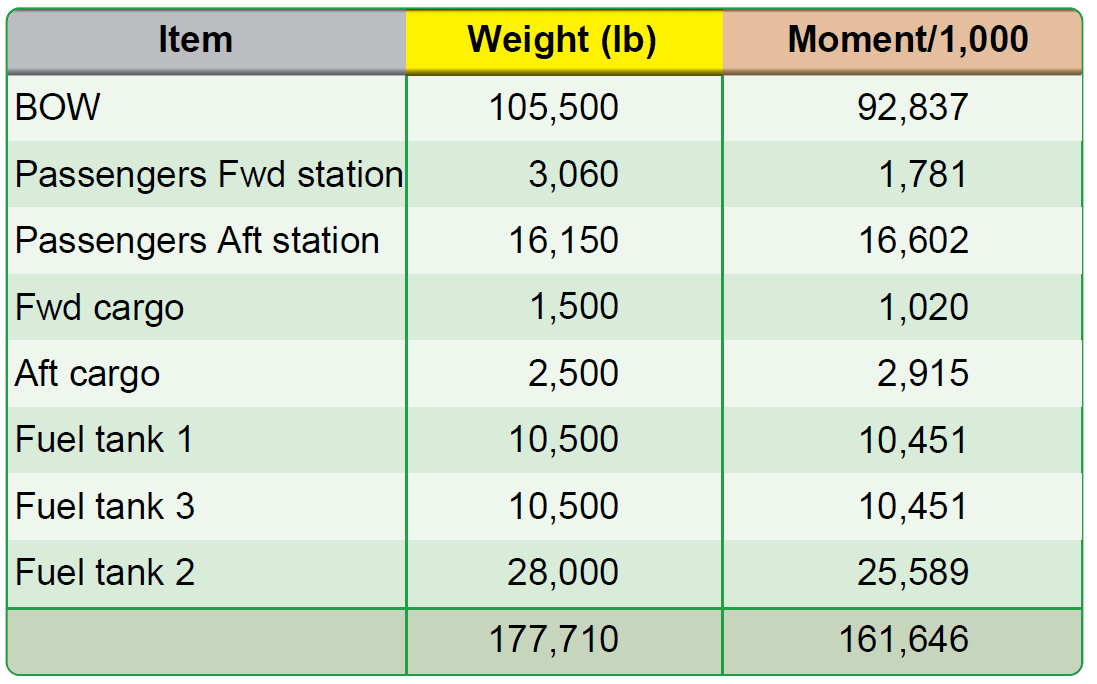
A loading schedule is used to document compliance with the certificated weight and balance limitations contained in the manufacturer’s AFM and weight and balance manual. The basic operating weight (BOW) and the operating index are entered into a loading schedule like the one in Figure 1, and the variables for a specific flight are entered … Read more


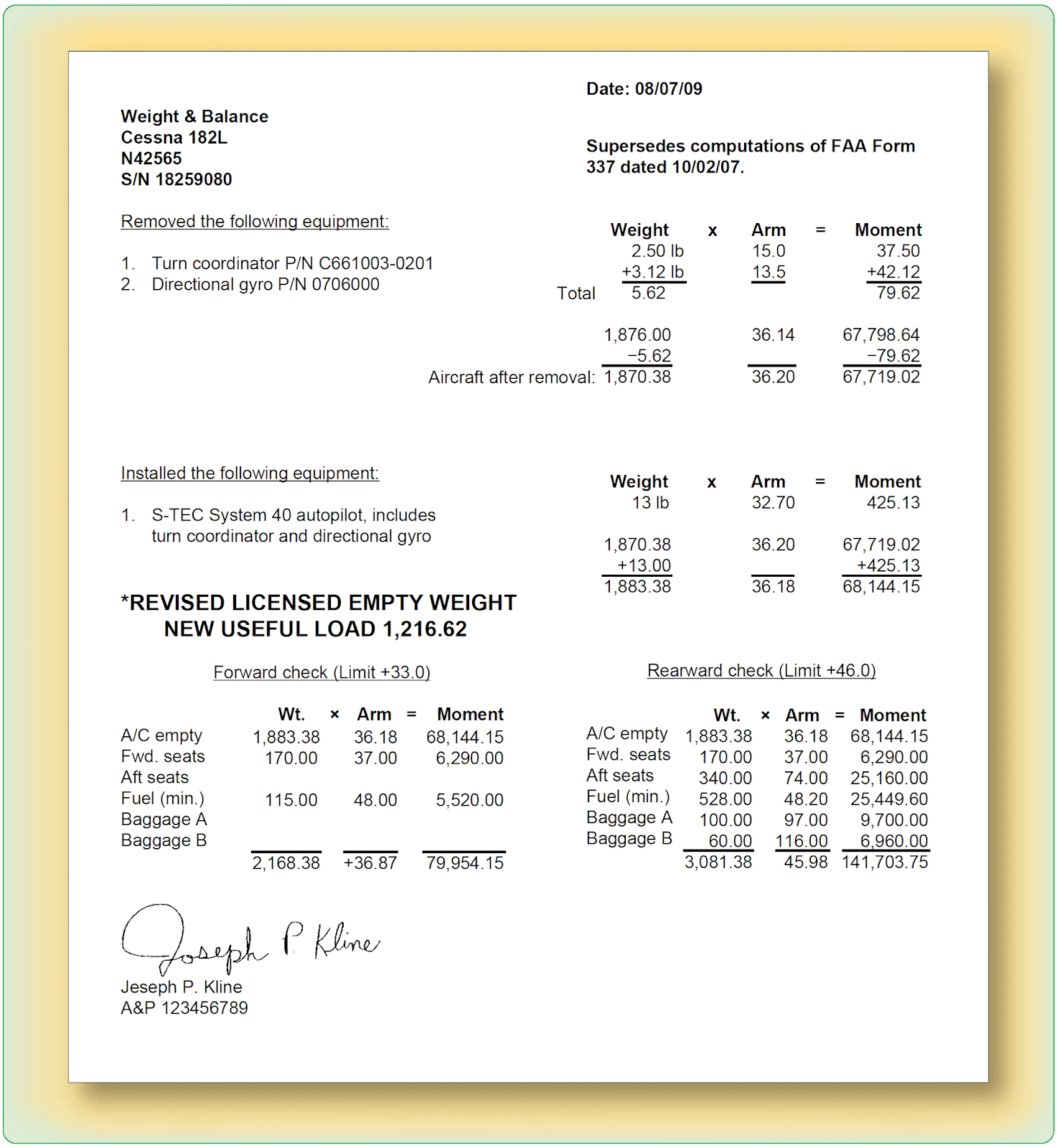
Documenting Changes to an Aircraft’s Weight and Balance

The weight and balance system should include methods by which a complete, current, and continuous record of the weight and CG of each aircraft is maintained, such as a log, ledger, or other equivalent electronic means. Alterations and changes affecting the weight and/or balance of the aircraft should be recorded in this log. Changes in … Read more

Determining the Empty Weight and Empty Weight CG

When the aircraft is properly prepared for weighing, roll it onto the scales, and level it. The weights are measured at three weighing points: the two main wheel points and the nosewheel point. The empty weight and empty weight CG (EWCG) are determined by using the following steps with the results recorded in the weight … Read more

Establishing the Initial Weight of an Aircraft

Prior to being placed into service, each aircraft is weighed and the empty weight and CG location established. New aircraft are normally weighed at the factory and are eligible to be placed into operation without reweighing if the weight and balance records were adjusted for alterations and modificationsto the aircraft, such as interior reconfigurations. An … Read more

Helicopter Weight and Balance Control

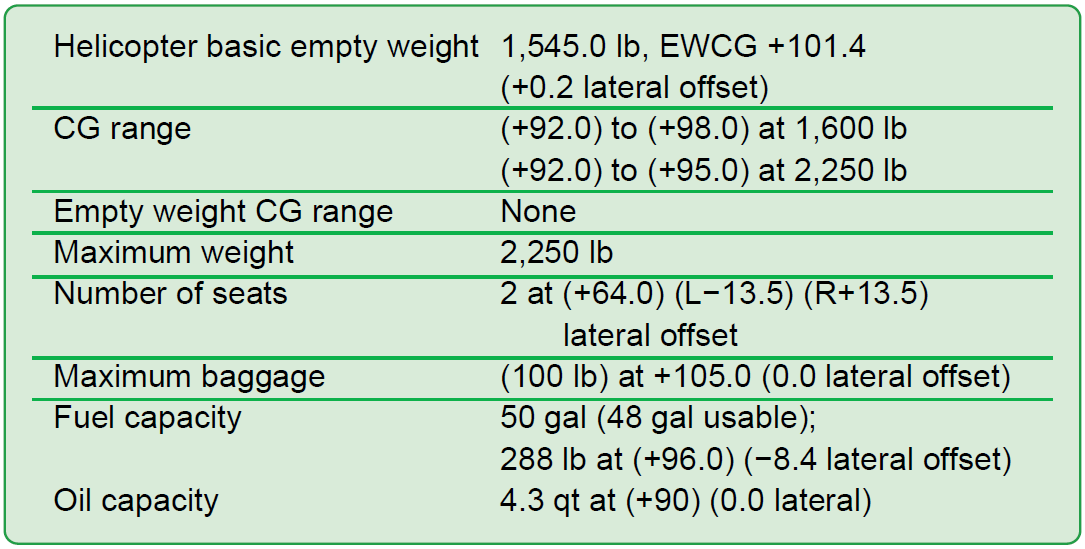
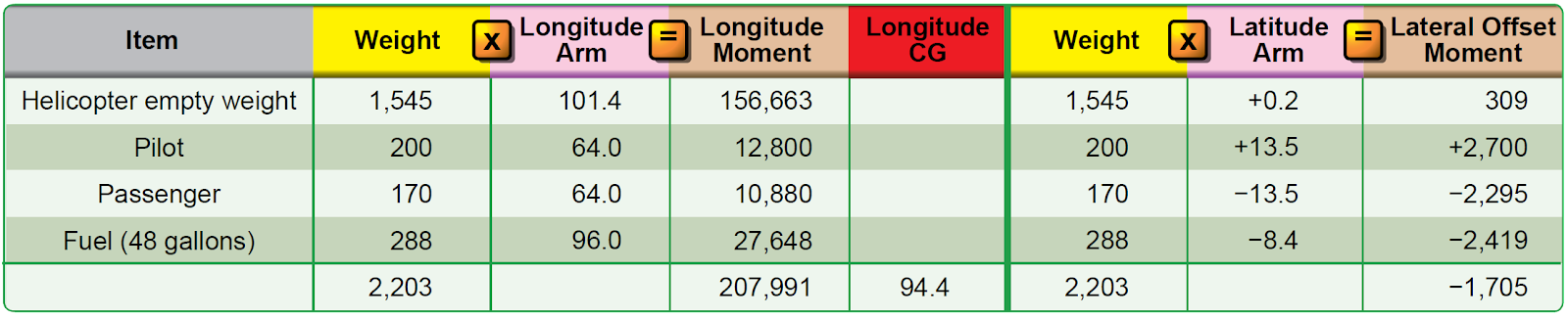
Weight and balance considerations of a helicopter are similar to those of an airplane, except they are far more critical, and the center of gravity (CG) range is much more limited. [Figures 1 and 2] The engineers who design a helicopter determine the amount of cyclic control authority that is available, and establish both the … Read more

Effects of Offloading Passengers an Using Fuel

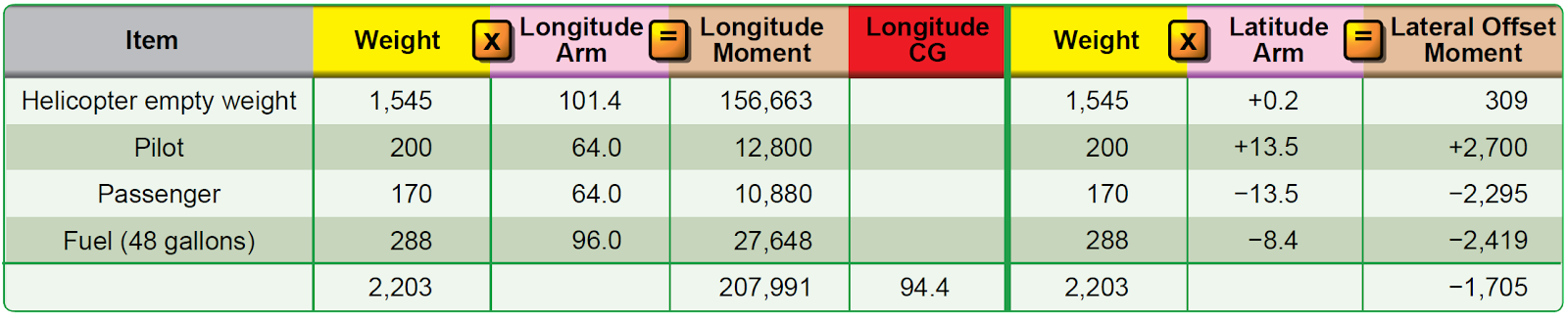
Consider the helicopter in Figure 1. The first leg of the flight consumes 26 gallons of fuel, and at the end of this leg, the passenger deplanes. Is the helicopter still within allowable CG limits for takeoff? To find out, make a new chart like the one in Figure 2 to show the new loading … Read more

Determining the Loaded CG of a Helicopter

The empty weight and empty weight center of gravity (EWCG) of a helicopter are determined in the same way as for an airplane. See section, Single-Engine Aircraft Weight and Balance Computations. The weights recorded on the scales supporting the helicopter are added and their distances from the datum are used to compute the moments at … Read more

Ballast

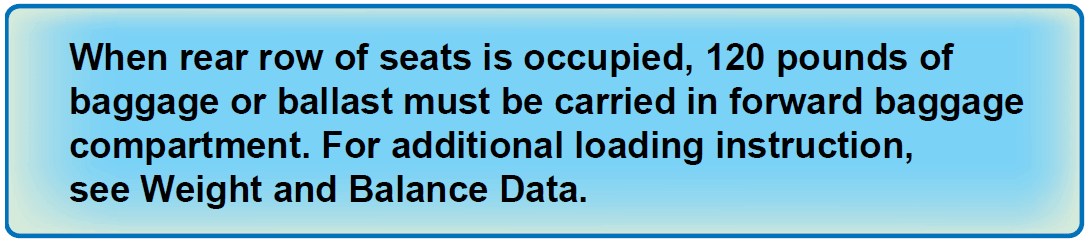
It is possible to load most modern airplanes so the CG shifts outside of the allowable limit. Placards and loading instructions in the weight and balance data inform the pilot of the restrictions that prevent such a shift from occurring. A typical placard in the baggage compartment of an airplane is shown in Figure 1. … Read more

Empty Weight CG Range and Adverse Load CG Checks

Empty Weight CG (EWCG) Range The fuel tanks, seats, and baggage compartments of some aircraft are so located that changes in the fuel or occupant load have a very limited effect on the balance of the aircraft. Aircraft of such a configuration show an empty weight CG (EWCG) range in the Type Certificate Data Sheet … Read more

Weight Changes Caused by a Repair or Alteration

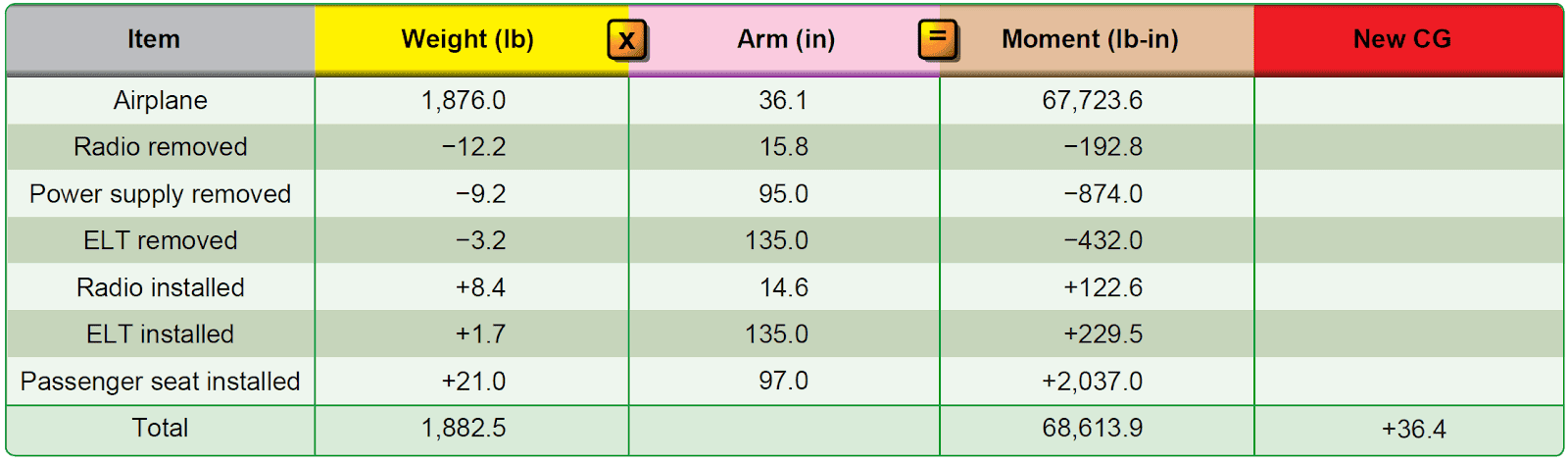
A typical alteration might consist of removing two pieces of radio equipment from the instrument panel and a power supply that was located in the baggage compartment behind the rear seat. In this example, these two pieces are replaced with a single lightweight, self-contained radio. At the same time, an old emergency locator transmitter (ELT) … Read more