
Determining the CG

When the aircraft is in its level flight attitude, drop a plumb line from the datum and make a mark on the hangar floor below the tip of the bob. Draw a chalk line through this point parallel to the longitudinal axis of the aircraft. Then, draw lateral lines between the actual weighing points for … Read more

Preparation for Weighing

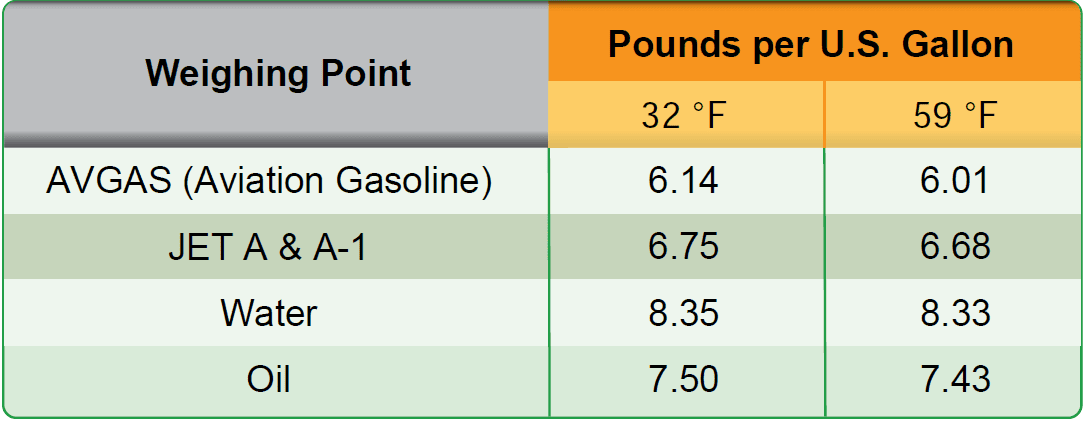
In general, weight procedures may vary with the aircraft and types of weight equipment employed. The weighing procedure contained in the manufacturer’s maintenance manual should be followed for each particular aircraft. The major considerations in preparing an aircraft for weighing are described in the following paragraphs. Scale Preparation Mechanical and electronic scales shall be inspected … Read more

Requirements and Equipment for Weighing

Requirements Regulations do not require periodic weighing of privately owned and operated aircraft. Such aircraft are usually weighed when originally certificated or after major alterations that can affect the weight and balance. The primary purpose of aircraft weight and balance control is safety. Manufacturers conduct extensive flight tests to establish loading limits for their aircraft … Read more

Weight and Balance Theory (Part 3)

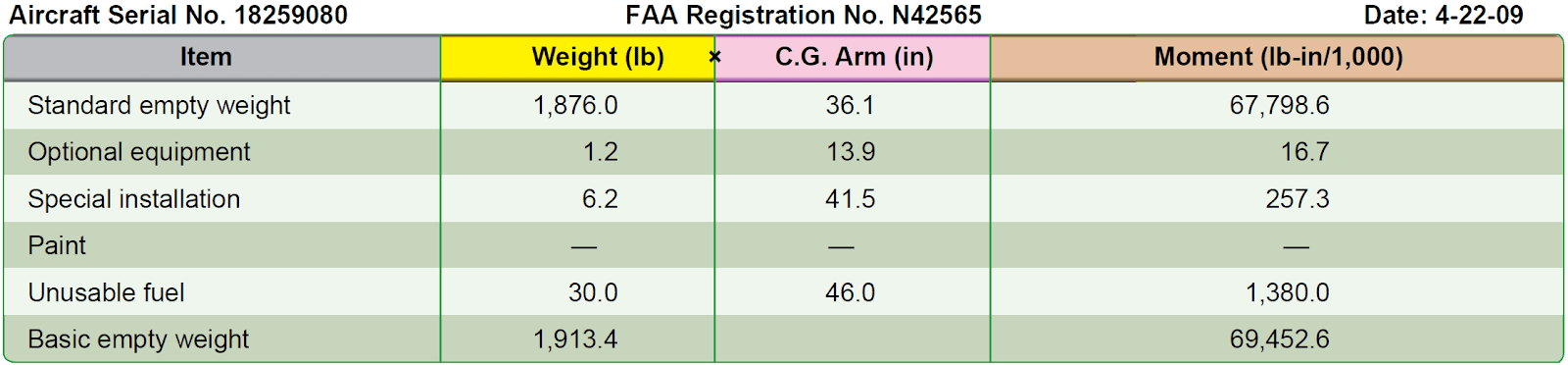
Manufacturer-Furnished Information When an aircraft is initially certificated, its empty weight and EWCG are determined and recorded in the weight and balance record, such as the one in Figure 1. Notice in this figure that the moment is expressed as “Moment (lb-in/1,000).” This is a moment index, which means that the moment, a very large … Read more

Weight and Balance Theory

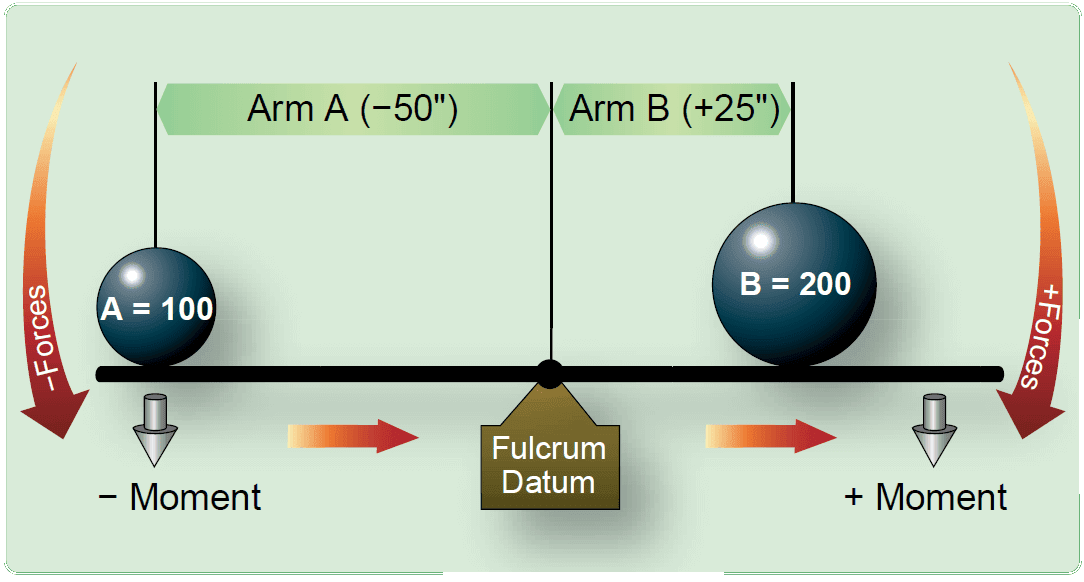
Weight and balance in aircraft is based on the law of the lever. This section discusses the application of the law of the lever and its applications relative to locating the balance point of a beam or lever on which various weights are located or shifted. The chapter also discusses the documentation pertaining to weight … Read more

Weight and Balance Control

There are many factors in the safe and efficient operation of aircraft, including proper weight and balance control. The weight and balance system commonly employed among aircraft consists of three equally important elements: the weighing of the aircraft, the maintaining of the weight and balance records, and the proper loading of the aircraft. An inaccuracy … Read more

Weight and Balance Control (Part 2)

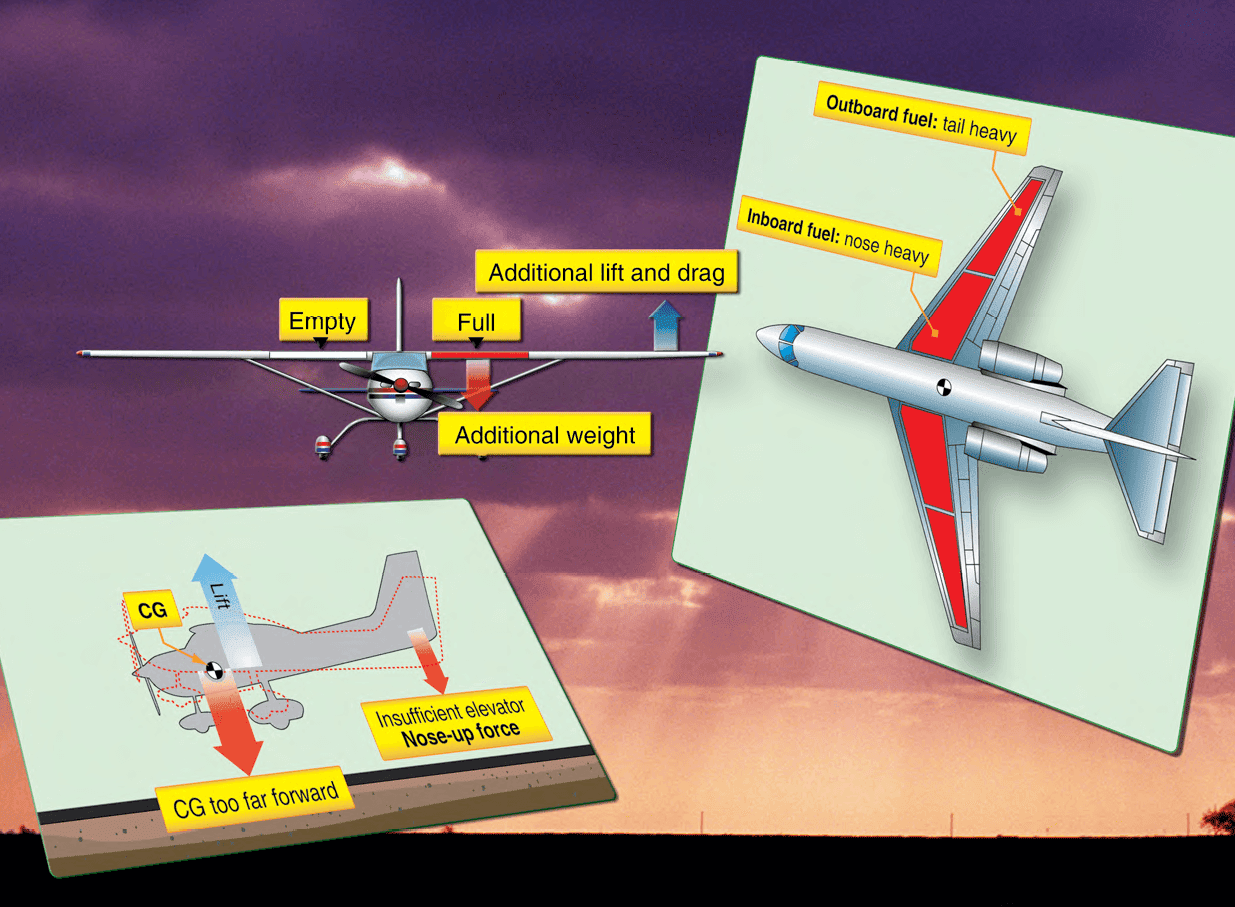
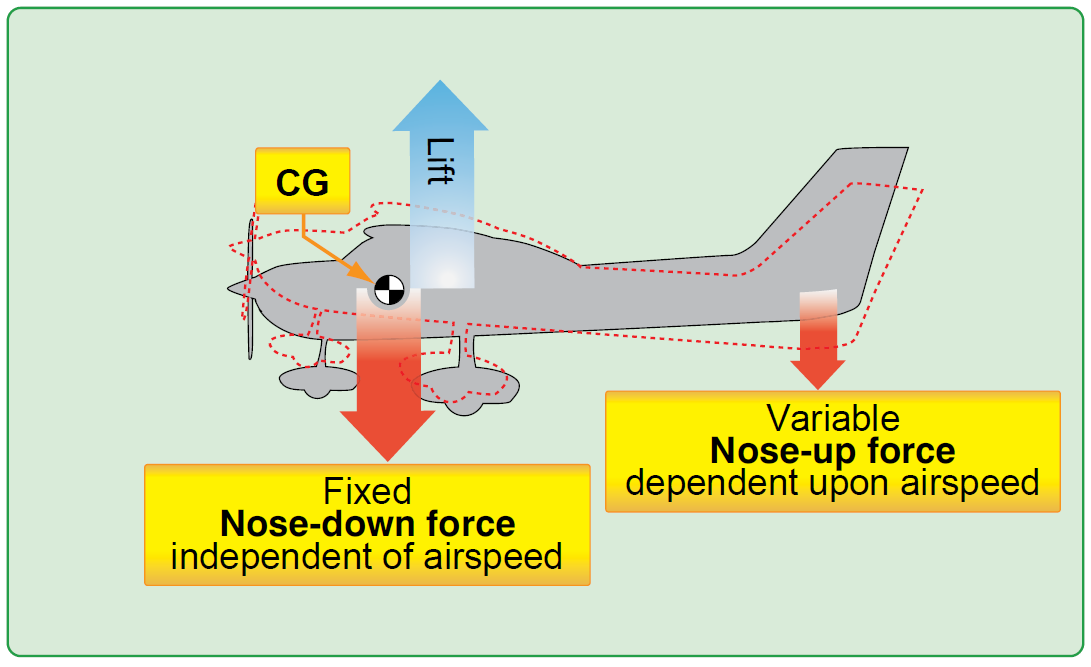
Stability and Balance Control Balance control refers to the location of the CG of an aircraft. This is of primary importance to aircraft stability, which is a factor in flight safety. The CG is the point at which the total weight of the aircraft is assumed to be concentrated, and the CG must be located … Read more

Weight and Balance Theory (Part 2)

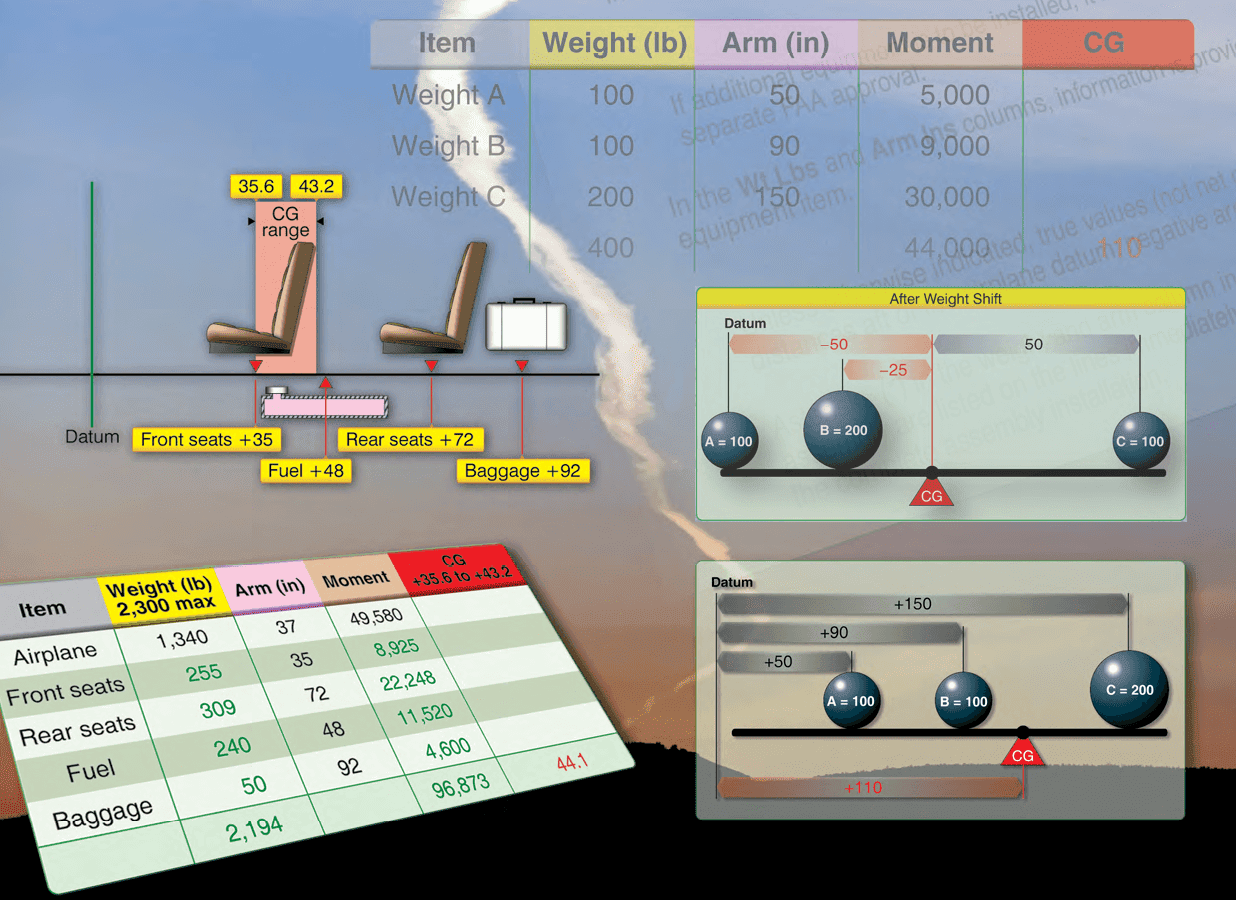
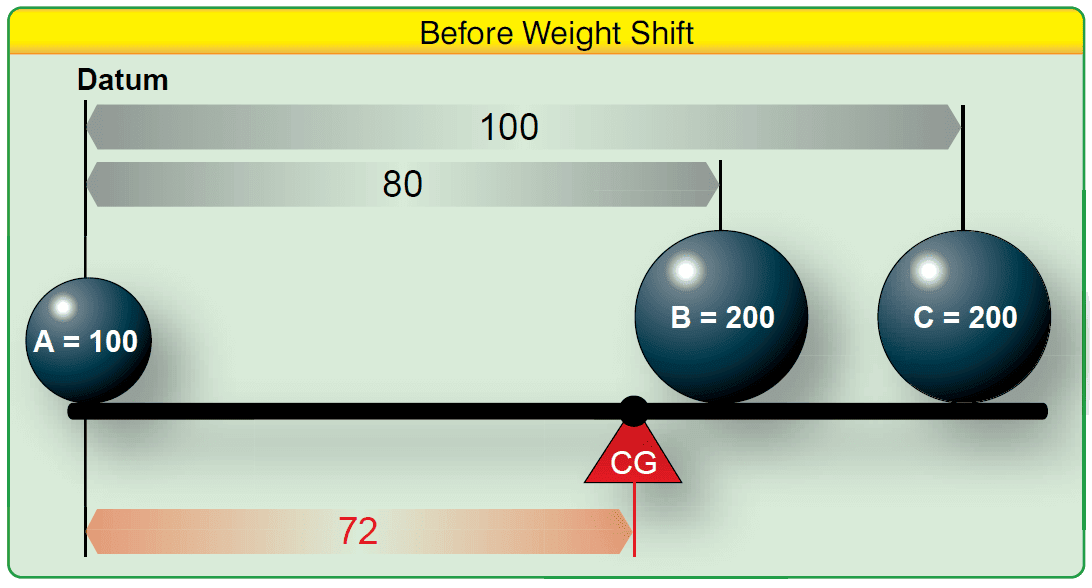
Shifting the Balance Point or CG One common weight and balance problem involves moving or shifting weight from one point to another in order to move the balance point or CG to a desired location. This can be demonstrated by using a lever with three weights to work out the problem. Solution by Chart As … Read more

Weight and Balance Theory (Part 1)

Weight and Balance Theory Two elements are vital in the weight and balance considerations of an aircraft. The total weight of the aircraft must be no greater than the maximum weight allowed by the FAA for the make and model of the aircraft. The center of gravity (CG), or the point at which all of … Read more

Weight and Balance Control (Part 1)

Responsibility for Weight and Balance Control The responsibility for proper weight and balance control begins with the engineers and designers and extends to the technicians who maintain the aircraft and the pilots who operate them. Modern aircraft are engineered utilizing state-of-the-art technology and materials to achieve maximum reliability and performance for the intended category. As … Read more