Weight and Balance Revision Record

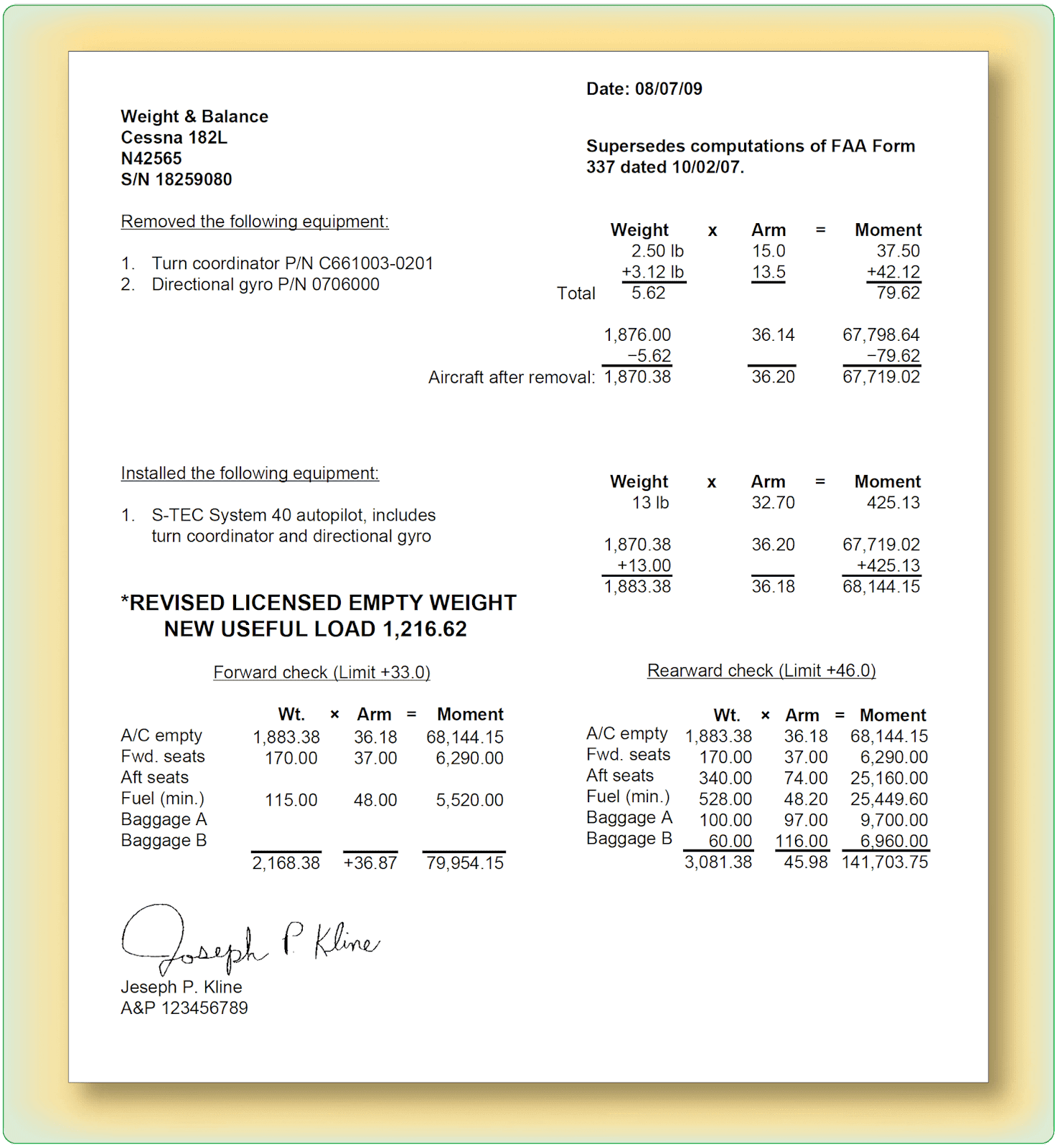
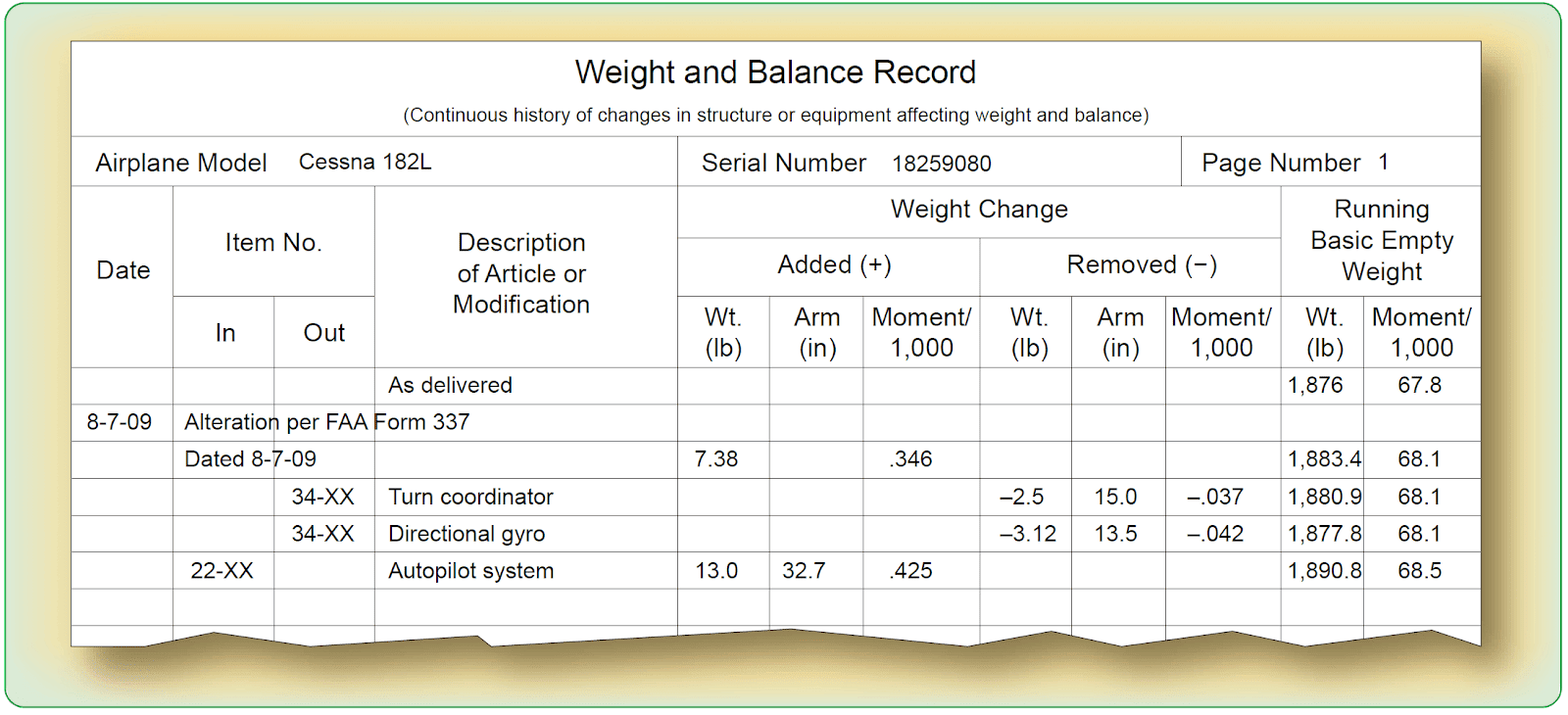
Aircraft manufacturers use different formats for their weight and balance data, but Figure is typical of a weight and balance revision record. All weight and balance records should be kept with the other aircraft records. Each revision record should be identified by the date, the aircraft make, model, and serial number. The pages should be … Read more
Equipment List

The Federal Aviation Administration (FAA) considers the addition or removal of equipment included in the Comprehensive Equipment List to be a minor alteration. The weights and arms are included with the items in the equipment list, and these minor alterations can be done and the aircraft approved for return to service by an FAA-certificate mechanic … Read more

Multiengine Aircraft Weight and Balance Computations

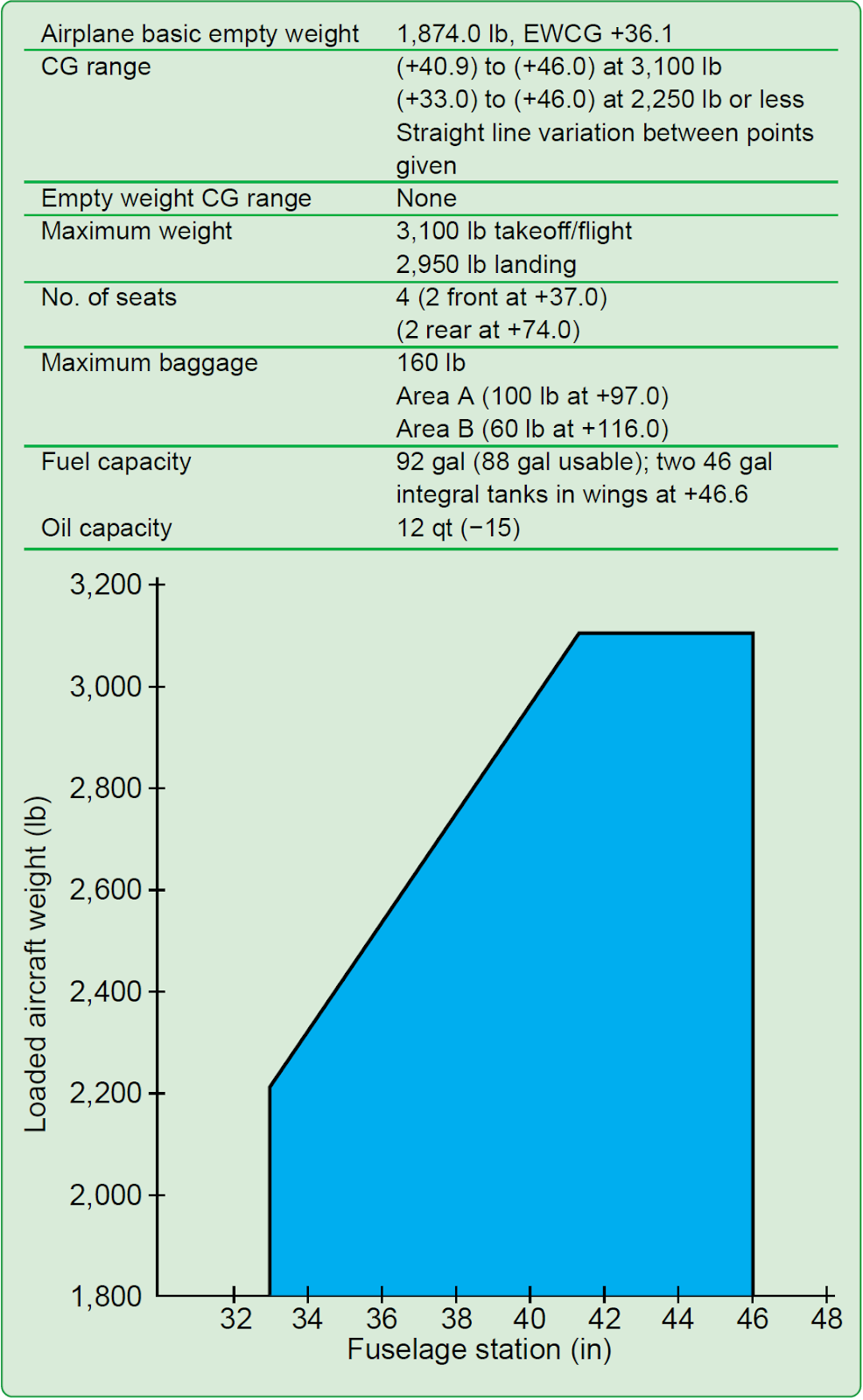
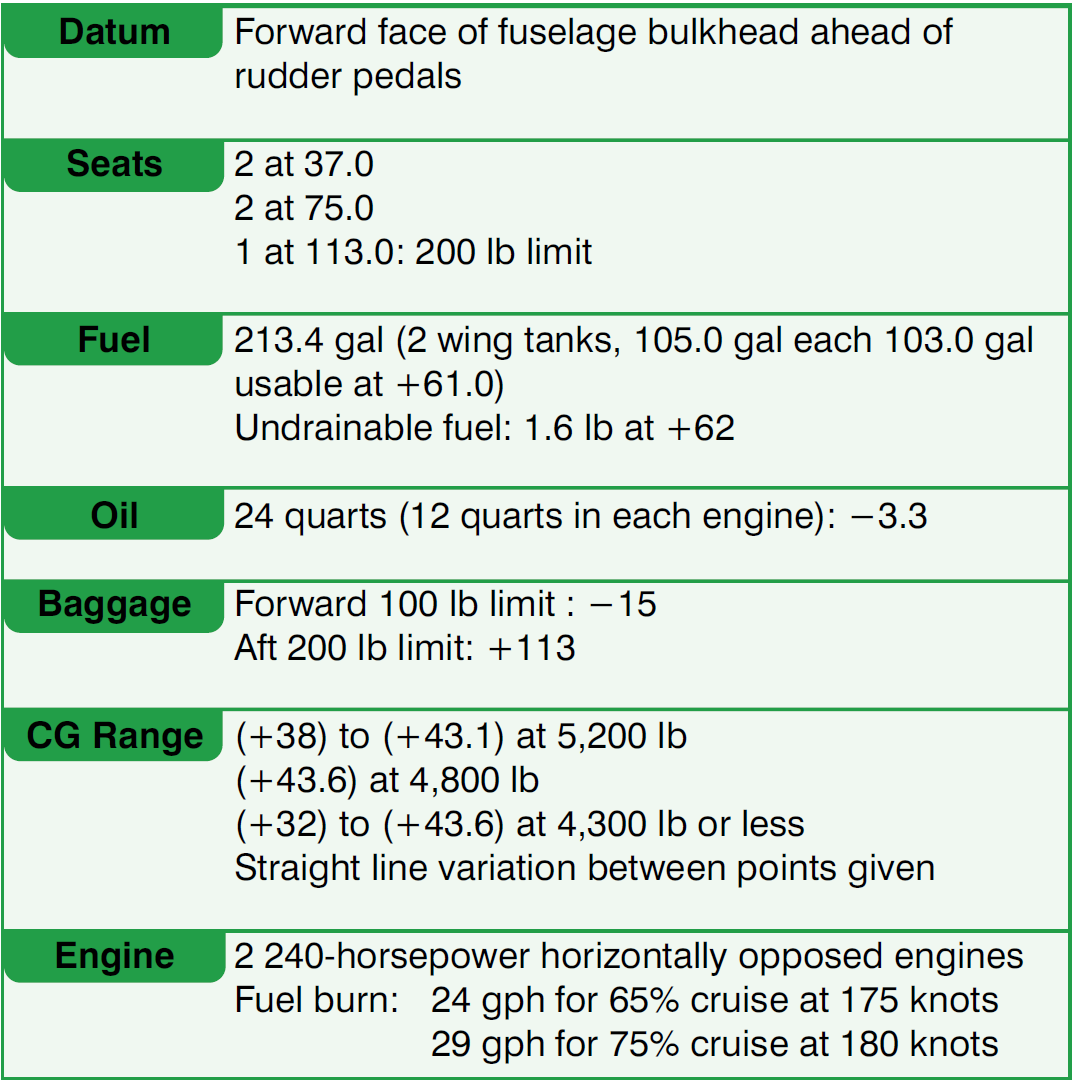
Weight and balance computations for small multiengine airplanes are similar to those discussed for single-engine airplanes. See Figure 1 for an example of weight and balance data for a typical light twin-engine airplane. Figure 1. Typical weight and balance data for a light twin-engine airplane The airplane in this example was weighed to determine its … Read more

Single-Engine Aircraft Weight and Balance Computations (Part 2)

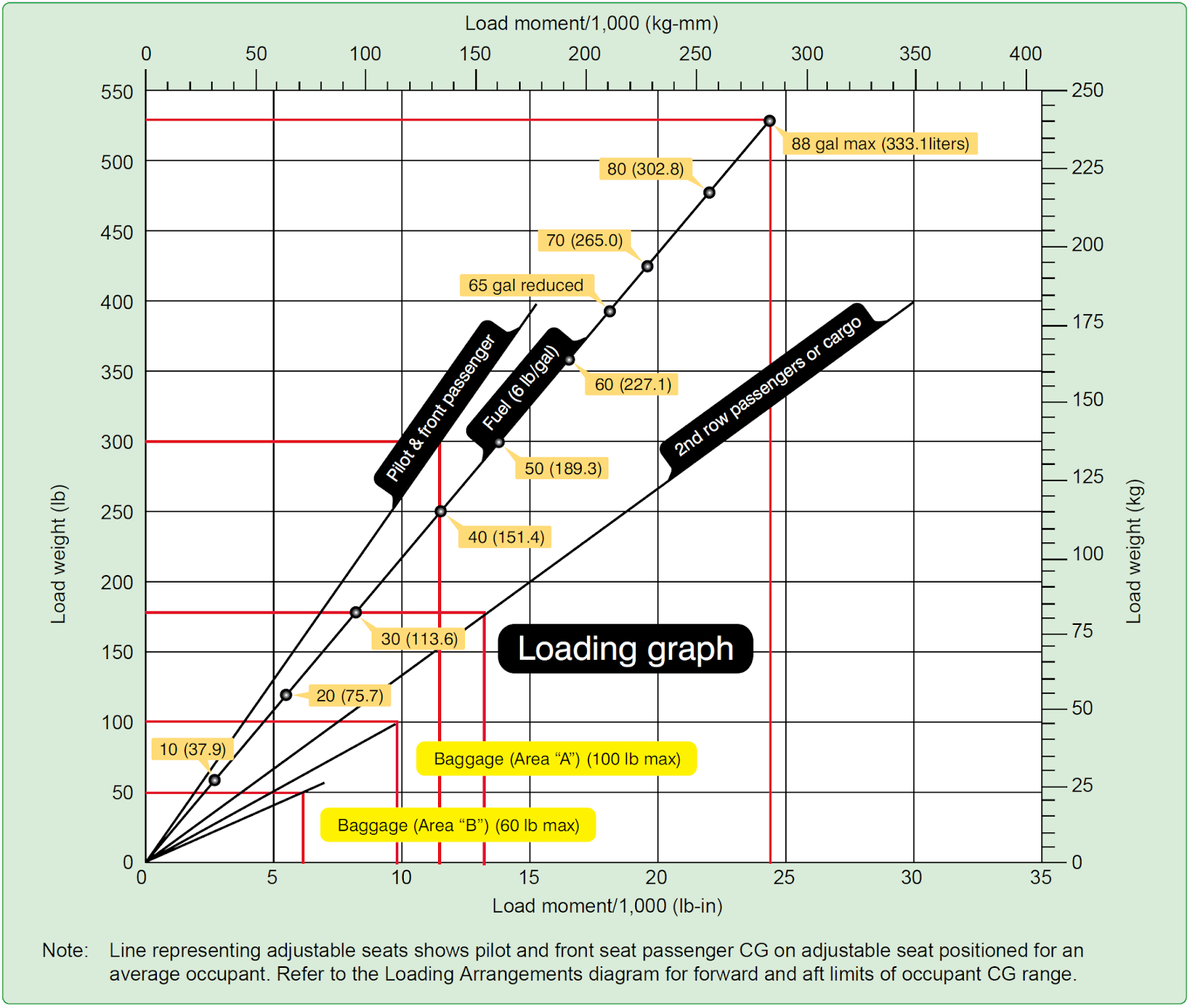
Loading Graph Method The charts and graphs found in the POH/AFM can help simplify and expedite the preflight weight and balance computation process. Some use a loading graph and moment indexes rather than the arms and moments. These charts eliminate the need for calculating moments and make computations quicker and easier. [Figure 1] Figure 1. … Read more

Light Sport Aircraft Weight and Balance Control

This post discusses the weight and balance procedures for light sport aircraft (LSA) that differ from conventional aircraft, specifically weight-shift control (WSC) aircraft (also called trikes), powered parachutes, and amateur-built LSA. [Figure 1] Figure 1. Examples of light sport aircraft (from top left, clockwise): weight-shift control, powered parachute, glider, airplanes, hot air balloon, and amateur-built … Read more

Weighing the Aircraft and Determining the EWCG

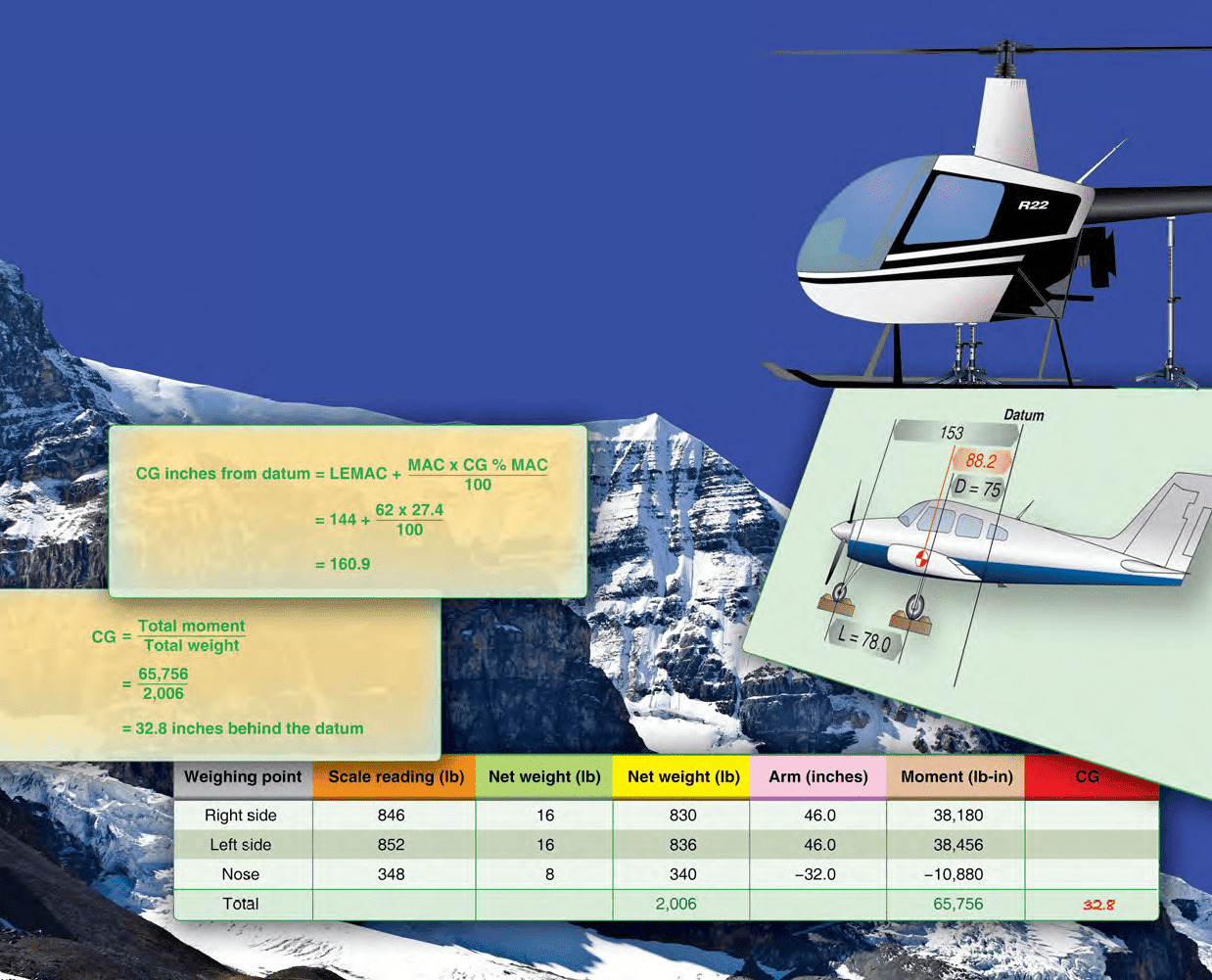
Section Weight and Balance Theory, explained the theory of weight and balance and gave examples of the way the center of gravity (CG) could be found for a lever loaded with several weights. In this chapter, the practical aspects of weighing an airplane and locating its CG are discussed. Formulas are introduced that allow the … Read more

Center of Gravity and Mean Aerodynamic Chord

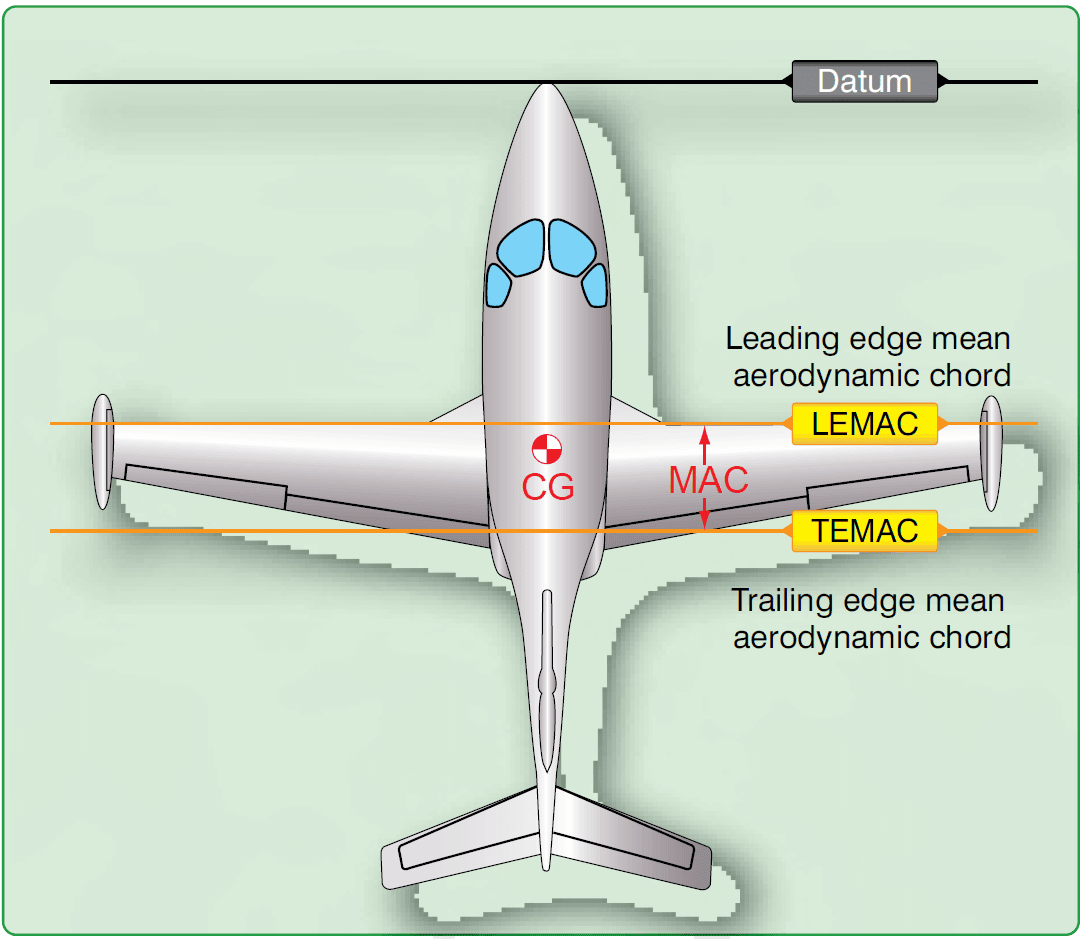
Center of Gravity (CG) In addition to overloading or drastically reducing the aircraft’s weight, the distribution of weight is also a concern. When aircraft equipment is changed, the person making the equipment change must make an entry on the equipment list indicating items added, removed, or relocated; the date of the change; and the person’s … Read more

Location of Datum

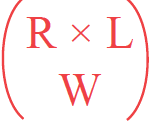
The location of the datum is not important, but all measurements must be made from the same location. Datum Forward of the Main Wheels—Tailwheel Landing Gear Locating the CG of a tailwheel airplane is done in the same way as locating it for a nosewheel airplane except the formula is The distance (D) between the … Read more

EWCG Formulas

A chart such as the one in Figure 1 helps the pilot visualize the weights, arms, and moments when solving an EWCG problem, but it is quicker to determine the EWCG by using formulas and an electronic calculator. The use of a calculator for solving these problems is described in Section 8, Use of Computers … Read more