Helicopter Normal Climb and Descent

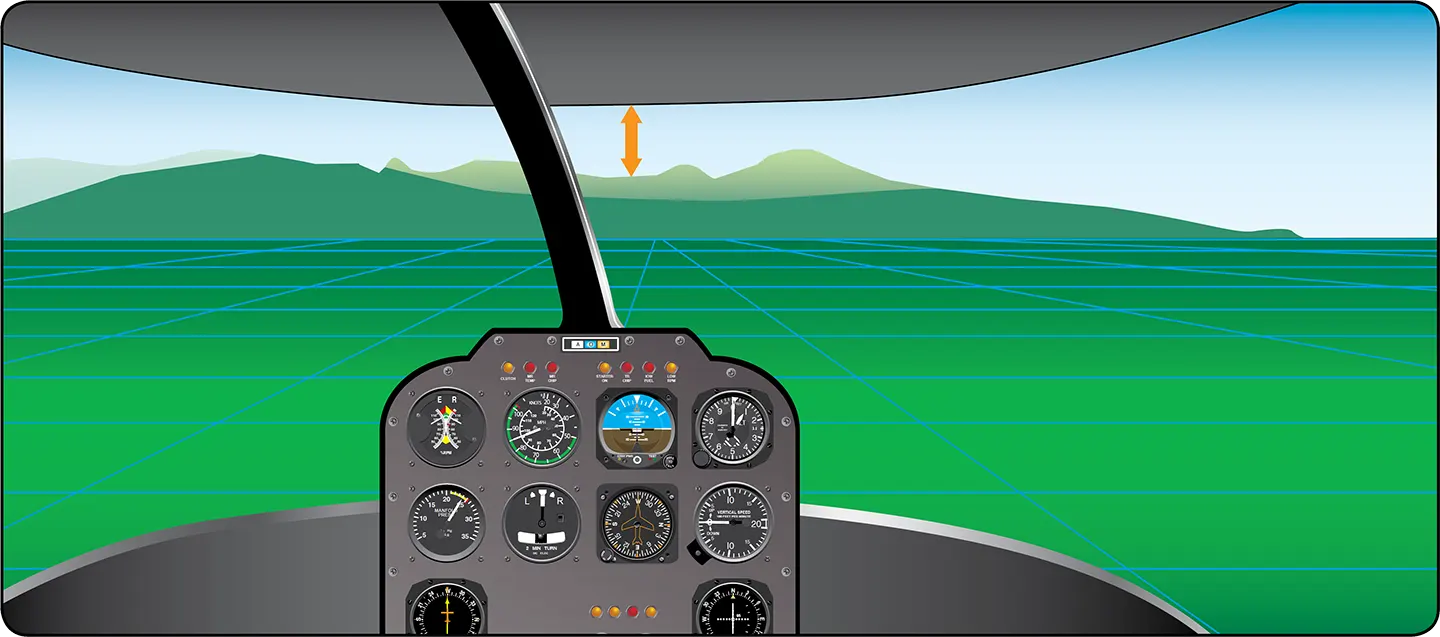
Normal Climb The entry into a climb from a hover has already been described in the Normal Takeoff from a Hover subsection; therefore, this discussion is limited to a climb entry from cruising flight. Technique To enter a climb in a helicopter while maintaining airspeed, the first actions are increasing the collective and throttle, and … Read more
2 4

Helicopter Turns

A turn is a maneuver used to change the heading of the helicopter. The aerodynamics of a turn were previously discussed in Aerodynamics of Flight section. Technique Before beginning any turn, the area in the direction of the turn must be cleared not only at the helicopter’s altitude, but also above and below. To enter … Read more

1 3

Helicopter Straight-and-Level Flight

Straight-and-level flight is flight in which constant altitude and heading are maintained. The attitude of the rotor disk relative to the horizon determines the airspeed. The horizontal stabilizer design determines the helicopter’s attitude when stabilized at an airspeed and altitude. Altitude is primarily controlled by use of the collective. Technique To maintain forward flight, the … Read more

The Four Fundamentals of Helicopter Flight

There are four fundamentals of flight upon which all maneuvers are based: straight-and-level flight, turns, climbs, and descents. All controlled flight maneuvers consist of one or more of these four fundamentals of flight. If a student pilot is able to perform these maneuvers well, and the student’s proficiency is based on accurate “feel” and control … Read more

Basic Flight Maneuvers

Basic Helicopter Flight Maneuvers

Although helicopter flight principles are the same for all rotorcraft, no two helicopters perform exactly alike. Differences in rotor system design, wind, temperature, humidity, aircraft weight, and installed equipment all influence how a helicopter responds during flight. For this reason, the flight techniques presented here are intended to apply to the majority of training helicopters. … Read more

3 3

Helicopter Ground Procedures and Flight Preparation

Once a pilot takes off, it is up to him or her to make sound, safe decisions throughout the flight. It is equally important for the pilot to use the same diligence when conducting a preflight inspection, making maintenance decisions, refueling, and conducting ground operations. This post discusses the responsibility of the pilot regarding ground … Read more

5 2

Helicopter Performance

A pilot’s ability to predict the performance of a helicopter is extremely important. It helps to determine how much weight the helicopter can carry before takeoff, if the helicopter can safely hover at a specific altitude and temperature, the distance required to climb above obstacles, and what the maximum climb rate will be. Factors Affecting … Read more

Helicopter Anti-Icing Systems

Anti-icing is the process of protecting against the formation of frozen contaminant, snow, ice, or slush on a surface. Engine Anti-Ice The anti-icing system found on most turbine-powered helicopters uses engine bleed air. Bleed air in turbine engines is compressed air taken from within the engine, after the compressor stage(s) and before the fuel is … Read more

Helicopter ComponentsSections and Systems

Helicopter Components, Sections, and Systems

Although helicopters vary greatly in size, shape, and mission, most share the same basic structural sections and operating systems. Every helicopter is built around a fuselage that supports the rotor systems, landing gear, powerplant, and transmission. Together, these major components provide the lift, thrust, and control that make rotary-wing flight possible. The main rotor system … Read more