Instrument Approaches

This section discusses general planning and conduct of instrument approaches by pilots operating under Title 14 of the Code of Federal Regulations (14 CFR) Parts 91,121, 125, and 135. The operations specifications (OpSpecs), standard operating procedures (SOPs), and any other FAA- approved documents for each commercial operator are the final authorities for individual authorizations and … Read more
1 1

Helicopter Instrument Procedures

This section presents information on IFR helicopter operations in the National Airspace System. Advances in avionics technology installed in helicopters such as Global Positioning System (GPS) and Wide Area Augmentation System (WAAS) are bringing approach procedures to heliports around the country. The ability to operate helicopters under IFR increases their utility and safety. Helicopter IFR … Read more

31 3

Operational Limitations of Airborne Navigation Databases

Understanding the capabilities and limitations of the navigation systems installed in an aircraft is one of the pilot’s biggest concerns for IFR flight. Considering the vast number of RNAV systems and pilot interfaces available today, it is critical that pilots and flight crews be familiar with the manufacturer’s operating manual for each RNAV system they … Read more

5

Path and Terminator Concept

The path and terminator concept is a means to permit coding of terminal area procedures, SIDs, STARs, and approach procedures. Simply put, a textual description of a route or a terminal procedure is translated into a format that is useable in RNAV systems. One of the most important concepts for pilots to learn regarding the limitations … Read more

1

Airborne Navigation Databases

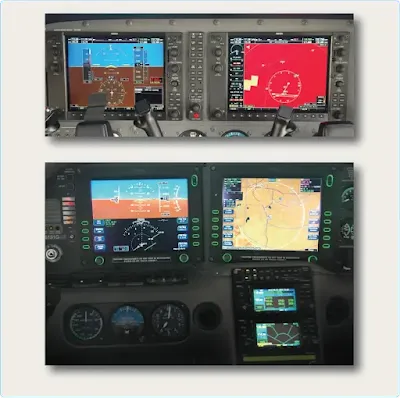
Area Navigation (RNAV) systems, aeronautical applications, and functions that depend on databases are widespread. [Figure 1] Since the 1970s, installed flight systems have relied on airborne navigation databases to support their intended functions, such as navigation data used to facilitate the presentation of flight information to the flight crew and understanding and better visualization of … Read more

1 7

IFR Improvement Plans

In the upcoming years, exciting new technologies will be developed and implemented to help ease air traffic congestion, add to system capacity, and enhance safety. Some of these seamless changes will be invisible to pilots. Others will entail learning new procedures, aircraft equipment, and systems that will introduce powerful new capabilities and dramatically increase the … Read more

10A

Enhanced Flight Vision Systems and Instrument Approaches

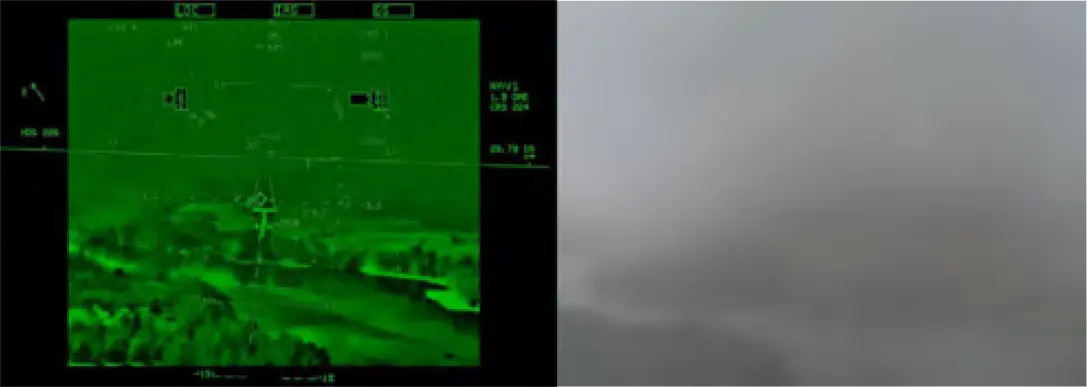
An Enhanced Flight Vision System (EFVS) is an installed aircraft system which uses a head up display (HUD), or an equivalent display that is a head up presentation, to combine aircraft flight information and flight symbology, navigation guidance, and a real-time image of the external scene to the pilot on a single display. [Figure 1] … Read more

Instrument Procedures

The Instrument Procedures section is designed as a technical reference for all pilots who operate under instrument flight rules (IFR) in the National Airspace System (NAS). It expands and updates information contained in the Instrument Flying section, and introduces advanced information for IFR operations. Instrument flight instructors, instrument pilots, and instrument students will also find this section a valuable resource … Read more

Instrument Approach Altitudes

Prescribed altitudes may be depicted in four different configurations: minimum, maximum, recommended, and mandatory. The U.S. Government distributes approach charts produced by the FAA. Altitudes are depicted on these charts in the profile view with an underscore or overscore, or both to identify them as minimum, maximum, or mandatory, respectively. Minimum altitudes are depicted with … Read more

4 2

Aircraft Performance Considerations

All operators are required to comply with specific airplane performance limitations that govern approach and landing. Many of these requirements must be considered prior to the origination of flight. The primary goal of these performance considerations is to ensure that the aircraft can remain clear of obstructions throughout the approach, landing, and go-around phase of … Read more