
Trim control helps relieve the sustained control pressure a pilot must apply to maintain a desired flight condition. Trim systems are designed to reduce the force required to hold the primary flight controls in a particular position, allowing the pilot to maintain the desired attitude with less physical effort.
In light general aviation airplanes, elevator trim is commonly used to relieve sustained pitch-control pressure. [Figure 1] This allows the pilot to maintain the desired flight condition more comfortably while directing attention to other flight tasks.
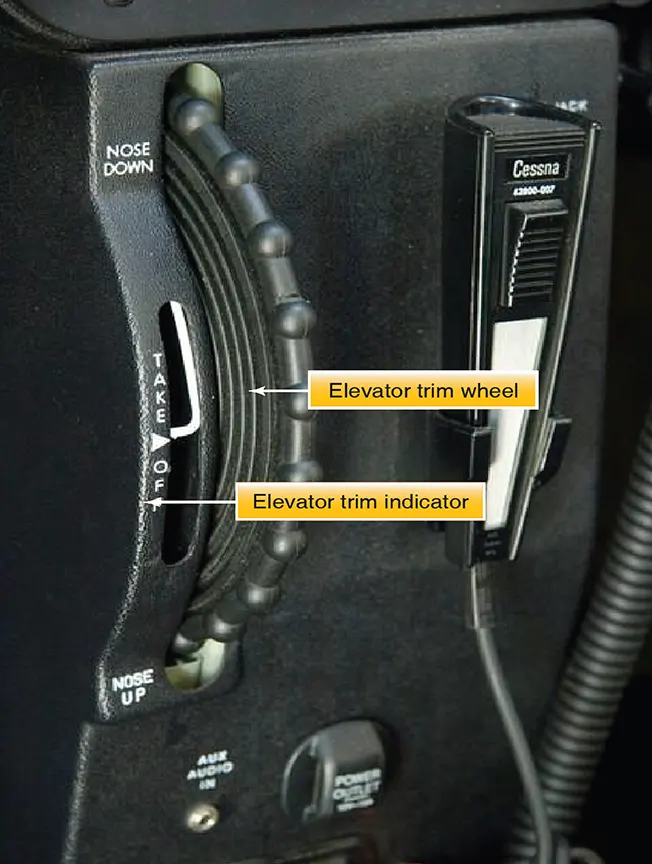
Because of design, cost, and operational considerations, not all light airplanes have adjustable trim systems for all three axes: pitch, roll, and yaw. Nearly all conventional light airplanes are equipped with elevator trim, while rudder and aileron trim may be available on some airplanes. As airplane power, weight, and complexity increase, adjustable rudder and aileron trim systems may be provided to help relieve sustained directional or lateral control pressures.
In airplanes equipped with multiple trim systems, the appropriate trimming sequence depends on the airplane and its operating procedures. Rudder trim may be adjusted to relieve sustained rudder pressure, followed by elevator trim to relieve sustained pitch-control pressure and aileron trim, if installed, to relieve sustained lateral-control pressure. However, when airspeed or power is changing, repeated adjustments to rudder and aileron trim may create unnecessary workload and distraction. In some propeller-driven airplanes, rudder trim requirements also vary with power and airspeed because of changes in propeller-related yawing tendencies.
The appropriate procedure is to establish the desired airspeed, power setting, and pitch attitude first. The pilot should maintain the desired attitude and keep the wings level using the primary flight controls while adjusting the available trim systems to relieve sustained control pressures. Rudder trim can then be adjusted as needed to reduce sustained rudder pressure, followed by aileron trim, if installed, to relieve sustained aileron pressure. The airplane’s flight manual or pilot’s operating handbook should be followed for the specific airplane.
A properly trimmed airplane reflects good piloting technique. Control forces should result from deliberate control inputs when the pilot intends to change the airplane’s attitude, rather than from having to maintain unnecessary pressure to hold a desired flight condition. A common error is overcontrolling the airplane with trim adjustments. Attempting to fly the airplane using trim instead of the primary flight controls is an incorrect basic flying technique, even among experienced pilots.
The correct technique is to establish the desired airplane attitude with the primary flight controls and maintain it with appropriate control pressure. The pilot then adjusts the trim to relieve sustained pressure while continuing to monitor the airplane’s attitude and performance. Trim should be used to reduce control forces, not as a substitute for proper attitude control.