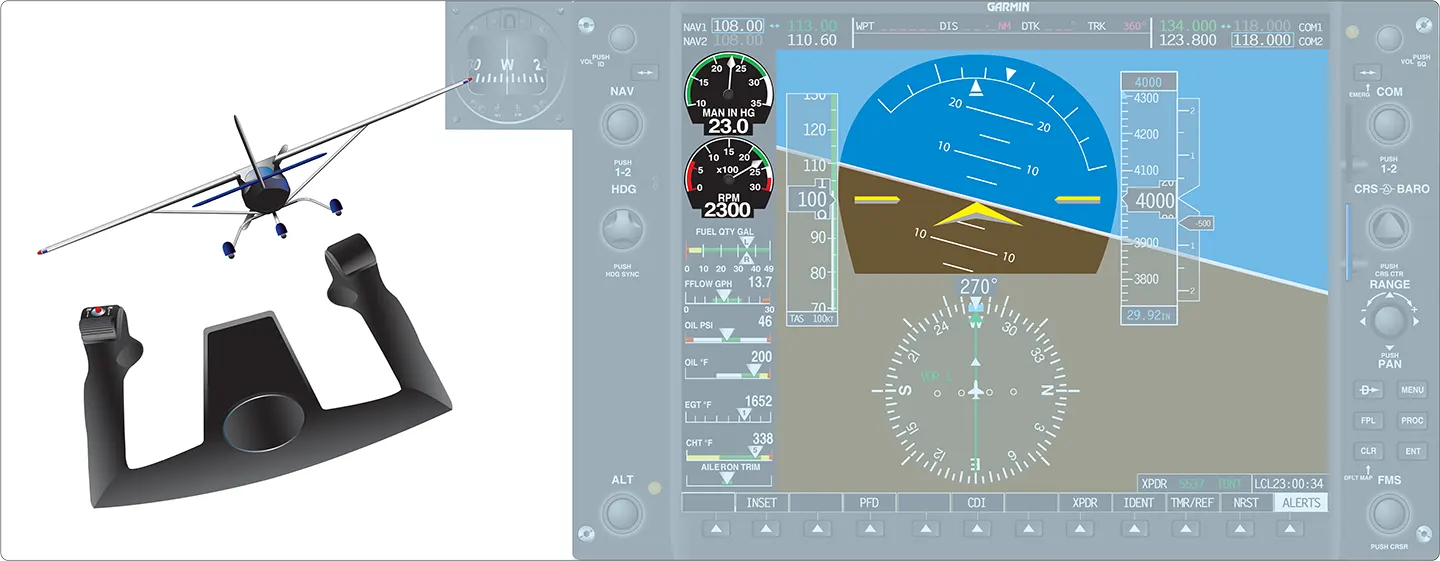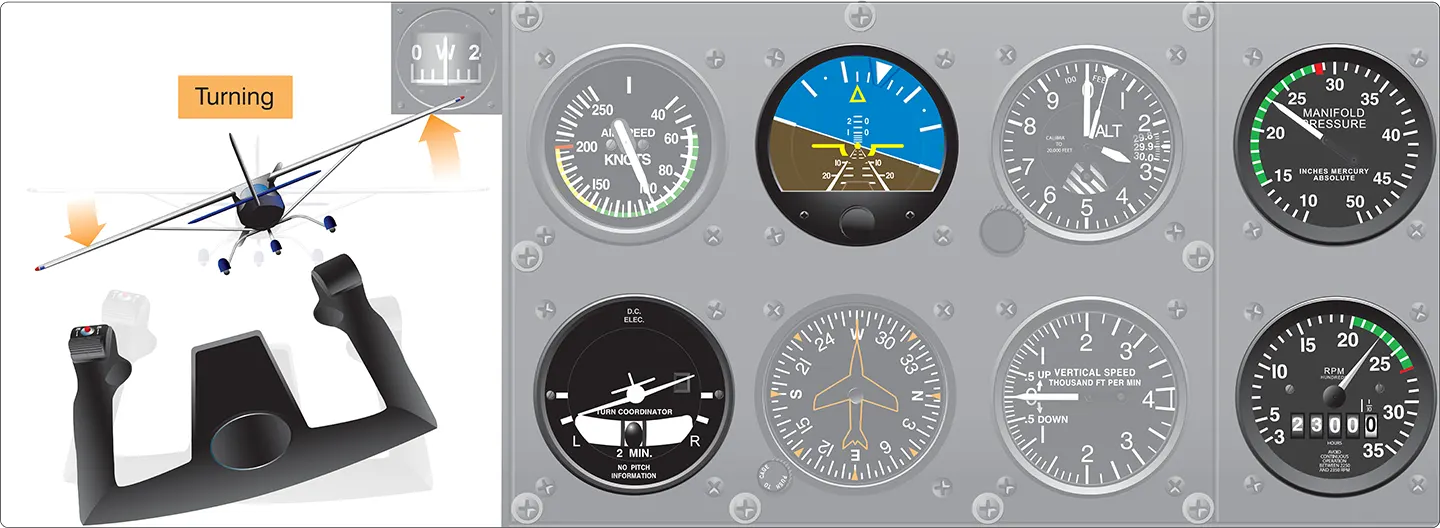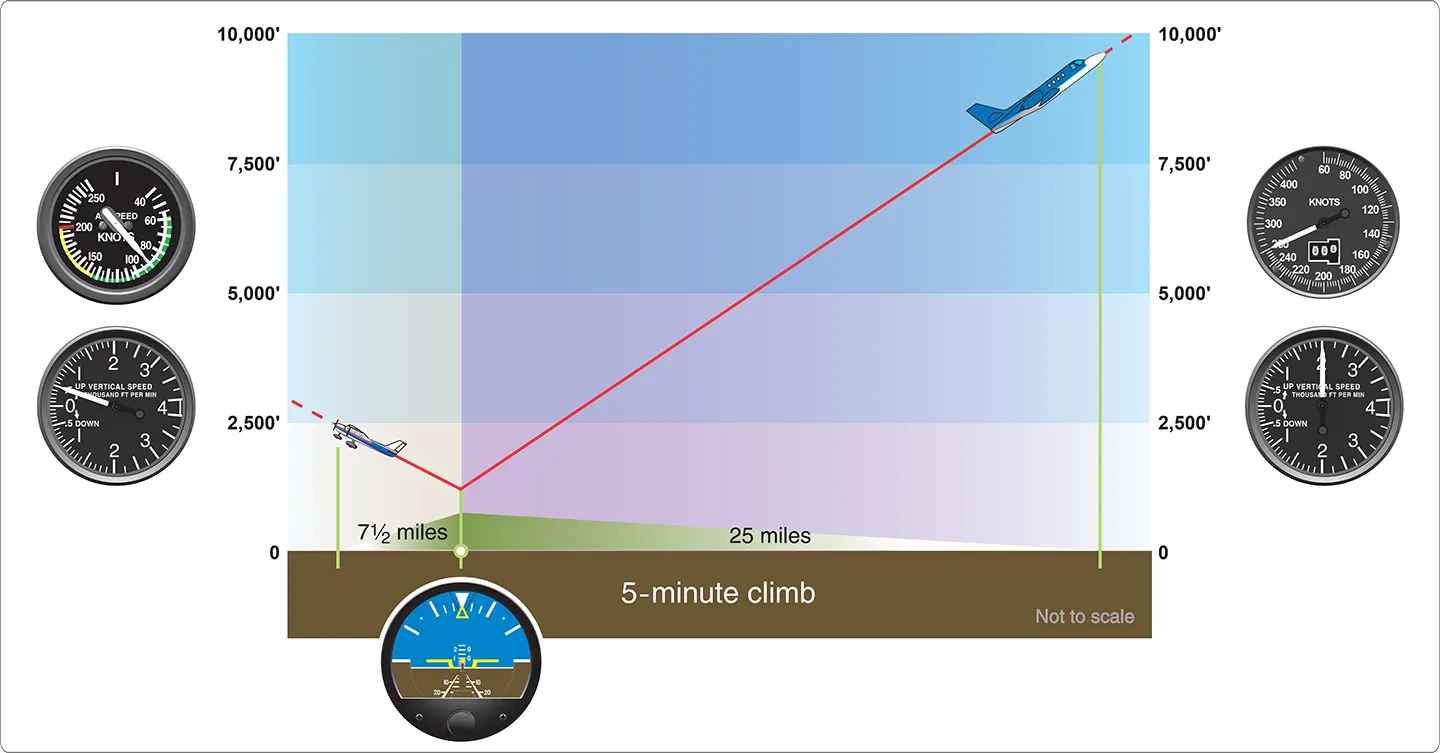
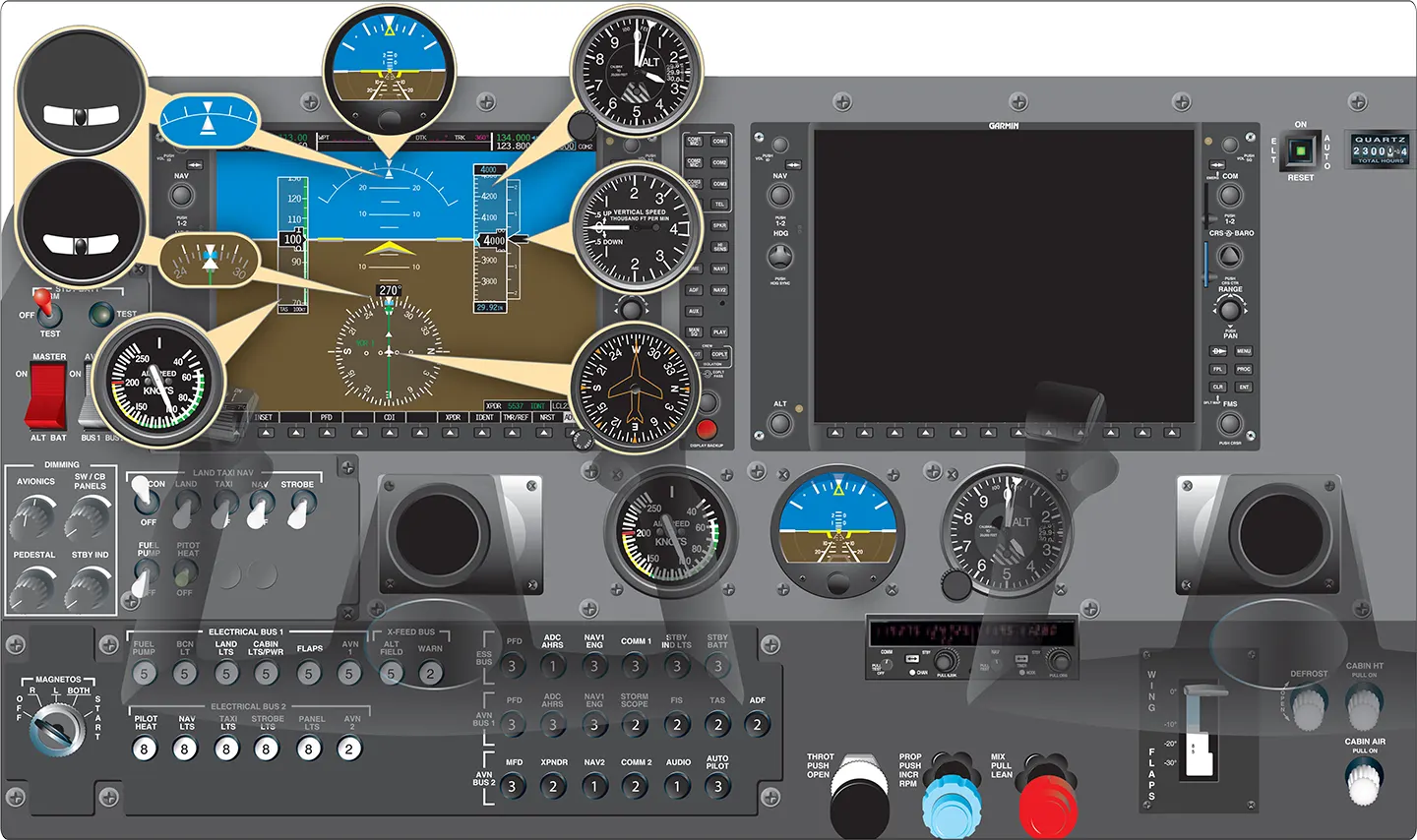
Airplane Attitude Instrument Flying

Using Analog Instrumentation Attitude instrument flying is defined as the control of an aircraft’s spatial position by using instruments rather than outside visual references. Today’s aircraft come equipped with analog and/or digital instruments. Analog instrument systems are mechanical and operate with numbers representing directly measurable quantities, such as a watch with a sweep second hand. … Read more
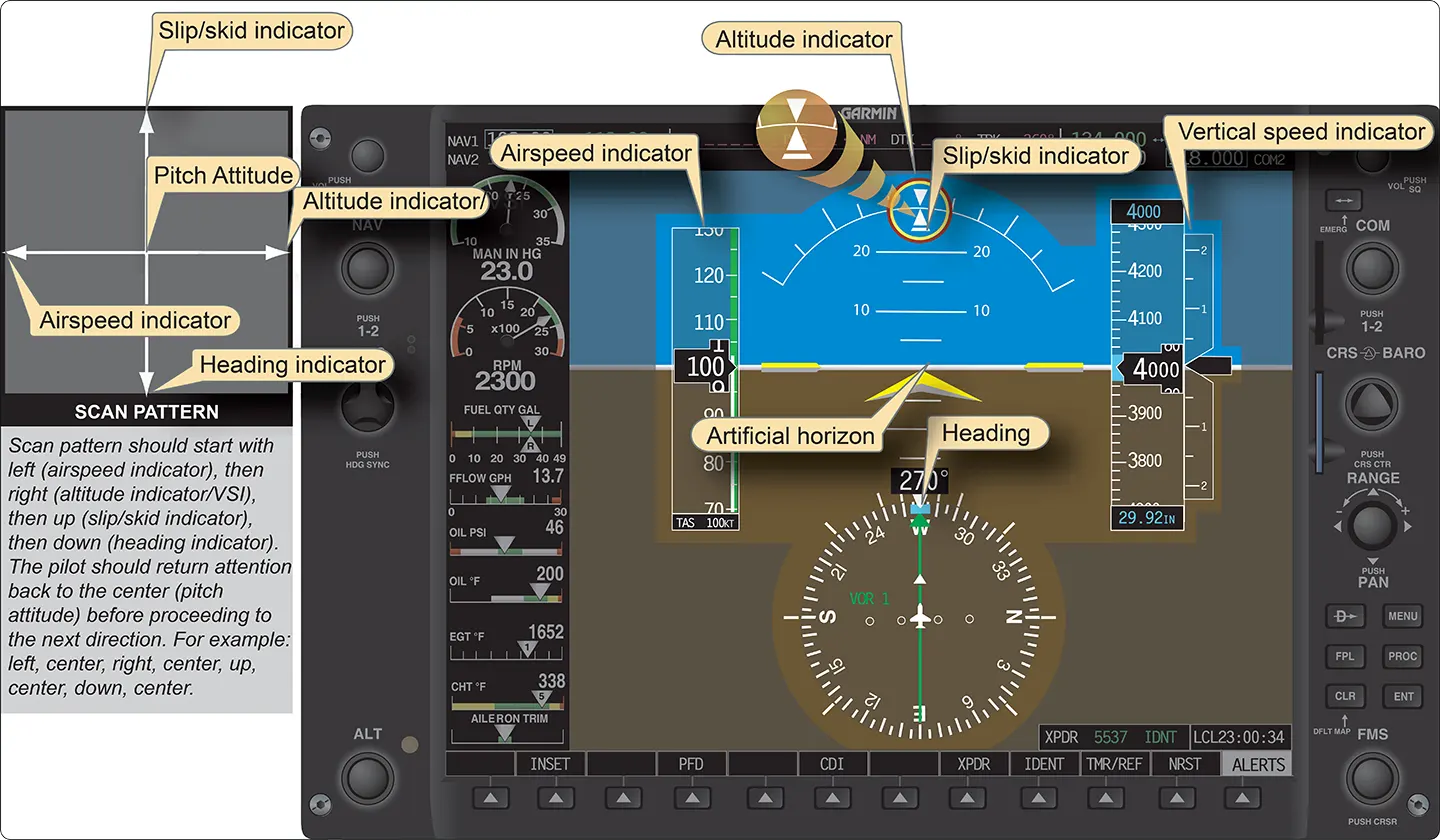
Instrument Cross-Check and Scanning Using EFD

Fundamental Skills When first learning attitude instrument flying, it is very important that two major skills be mastered. Instrument crosscheck and instrument interpretation comprise the foundation for safely maneuvering the aircraft by reference to instruments alone. Without mastering both skills, the pilot is not able to maintain precise control of aircraft attitude. Instrument Cross-Check The … Read more

Methods of Attitude Instrument Flying Using EFD

There are two basic methods utilized for learning attitude instrument flying. They are “control and performance” and “primary and supporting.” These methods rely on the same flight instruments and require the pilot to make the same adjustments to the flight and power controls to control aircraft attitude. The main difference between the two methods is … Read more

Attitude Instrument Flying Learning Methods

Two primary methods are used to learn attitude instrument flying: the control and performance method and the primary and supporting method. Both methods utilize the same instruments and responses for attitude control. They differ in their reliance on the attitude indicator and interpretation of other instruments. Attitude Instrument Flying Using the Control and Performance Method … Read more

Attitude Instrument Flying Fundamental Skills

During attitude instrument training, two fundamental flight skills must be developed. They are instrument cross-check and instrument interpretation, both resulting in positive aircraft control. Although these skills are learned separately and in deliberate sequence, a measure of proficiency in precision flying is the ability to integrate these skills into unified, smooth, positive control responses to … Read more