Aerodynamics of Helicopter Flight

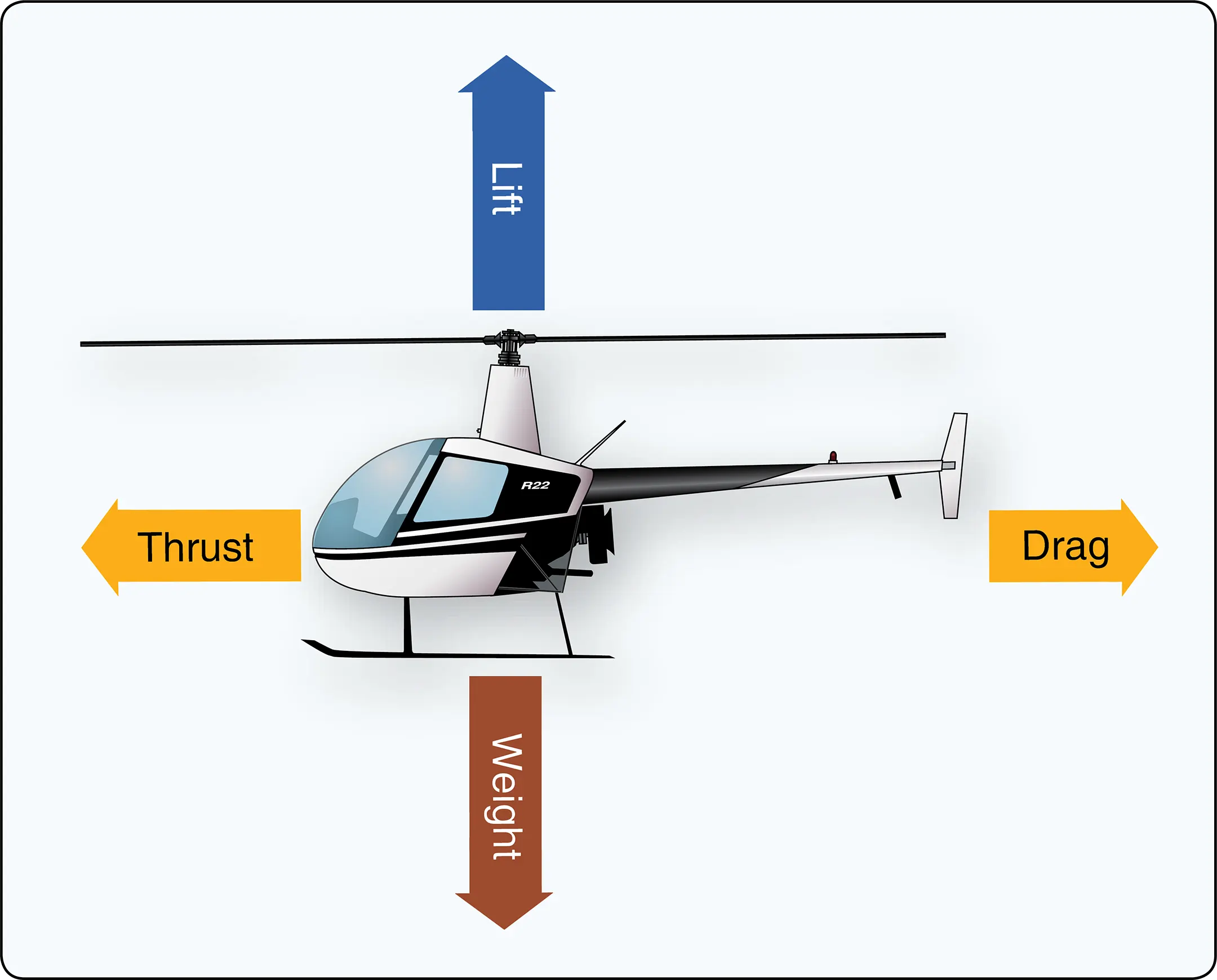
Helicopter flight is governed by the same aerodynamic principles that apply to all aircraft, but the rotating rotor system creates unique forces and behaviors. To operate a helicopter safely and efficiently, pilots must understand how lift, drag, thrust, and weight interact throughout every phase of flight. The rotor blades act as rotating airfoils. As air … Read more

Introduction to Helicopter Aerodynamics

Gravity acting on the mass (the amount of matter) of an object creates a force called weight. The rotor blade below weighs 100 lbs. It is 20 feet long (span) and is 1 foot wide (chord). Accordingly, its surface area is 20 square feet. [Figure 1] The blade is perfectly balanced on a pinpoint stand, … Read more

Helicopter Autorotation Aerodynamics

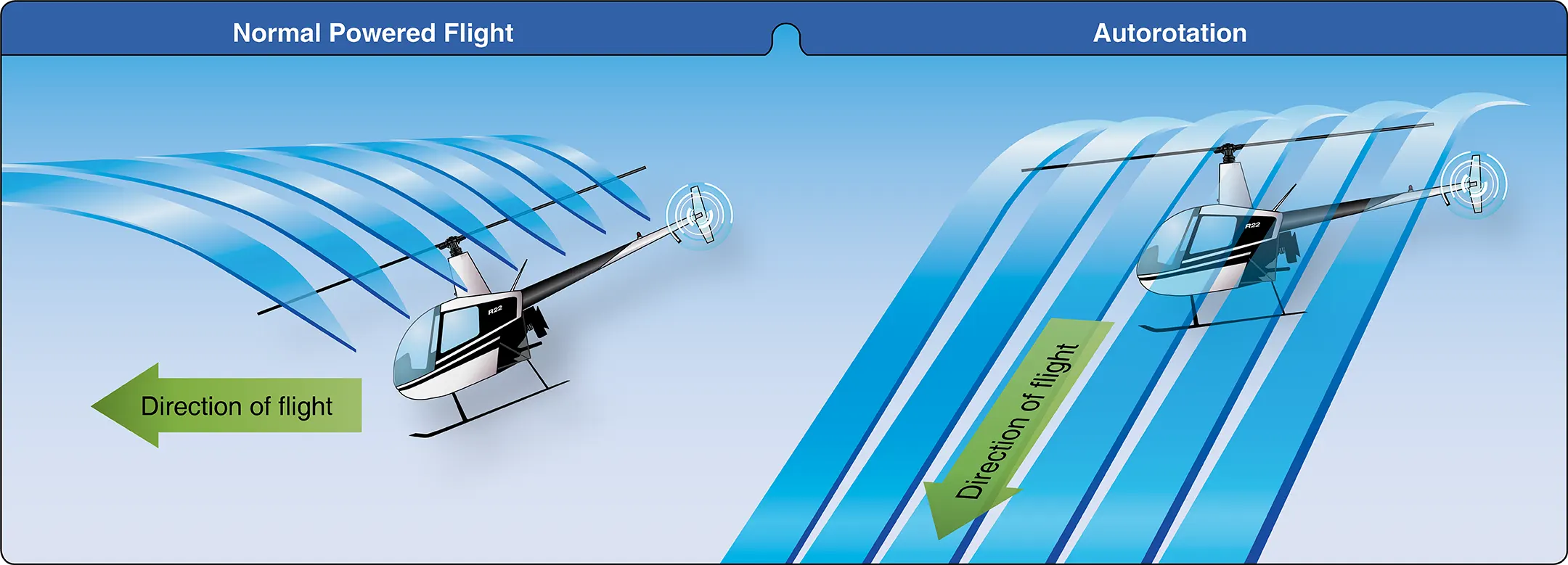
Autorotation is the state of flight where the main rotor disk of a helicopter is being turned by the action of air moving up through the rotor rather than engine power driving the rotor. In normal, powered flight, air is drawn into the main rotor disk from above and exhausted downward, but during autorotation, air … Read more

Helicopter Sideward, Rearward and Turning Flight

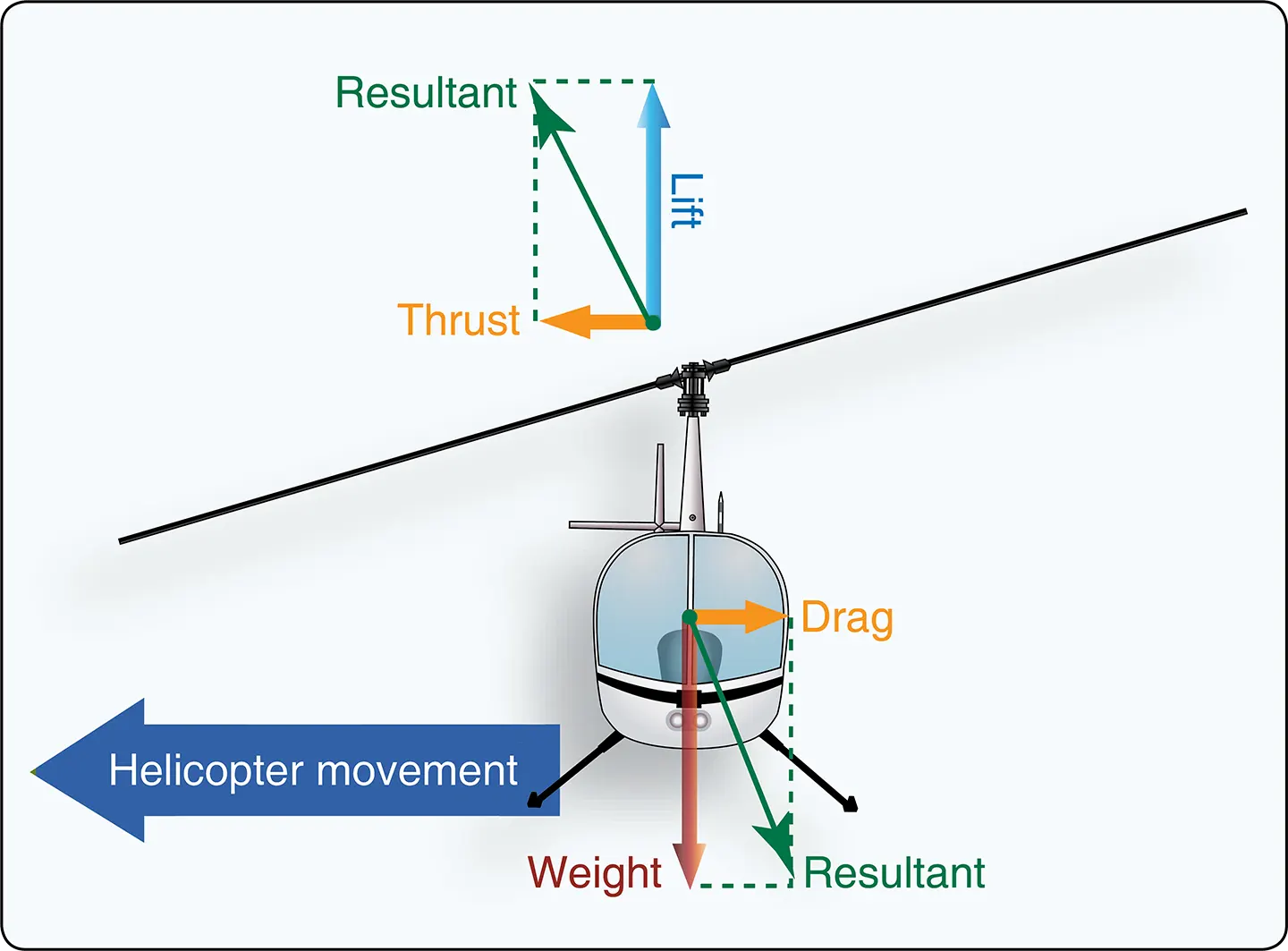
Sideward Flight In sideward flight, the tip-path plane is tilted in the direction that flight is desired. This tilts the total lift-thrust vector sideward. In this case, the vertical or lift component is still straight up and weight straight down, but the horizontal or thrust component now acts sideward with drag acting to the opposite … Read more

Helicopter Forward Flight

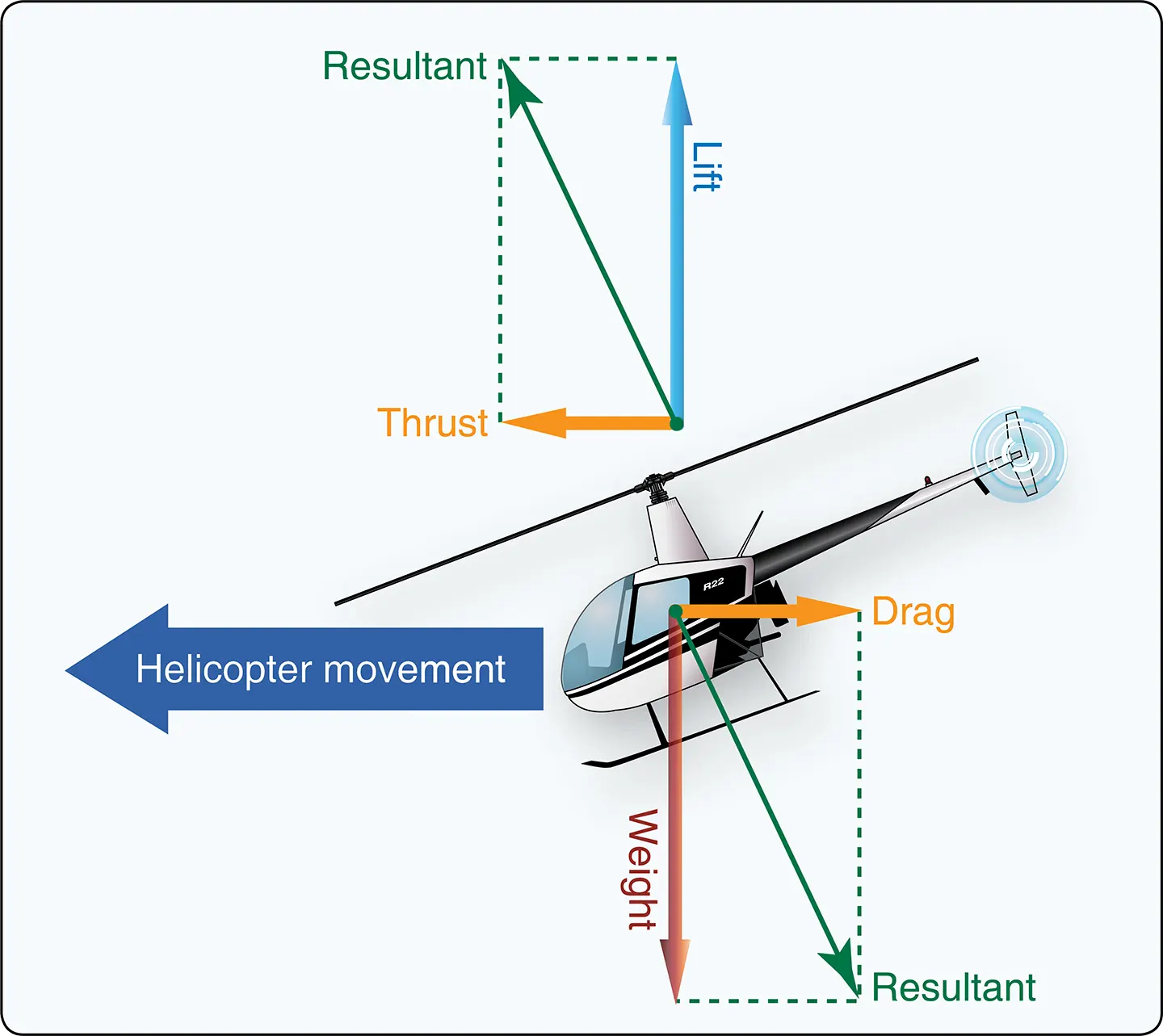
In steady forward flight, with no change in airspeed or vertical speed, the four forces of lift, thrust, drag, and weight must be in balance. Once the tip-path plane is tilted forward, the total lift-thrust force is also tilted forward. This resultant lift-thrust force can be resolved into two components—lift acting vertically upward and thrust … Read more

Helicopter Vertical Flight

Hovering is actually an element of vertical flight. Increasing the angle of incidence of the rotor blades (pitch) while keeping their rotation speed constant generates additional lift and the helicopter ascends. Decreasing the pitch causes the helicopter to descend. In a no-wind condition in which lift and thrust are less than weight and drag, the … Read more

Helicopter Hovering Flight

Hovering is the most challenging part of flying a helicopter. This is because a helicopter generates its own gusty air while in a hover, which acts against the fuselage and flight control surfaces. The end result is constant control inputs and corrections by the pilot to keep the helicopter where it is required to be. … Read more

Helicopter Rotor System Airflow and Reactions

Relative Wind Knowledge of relative wind is essential for an understanding of aerodynamics and its practical flight application for the pilot. Relative wind is airflow relative to an airfoil. Movement of an airfoil through the air creates relative wind. Relative wind moves in a parallel but opposite direction to movement of the airfoil. [Figure 1] … Read more