Airplane Night Orientation and Navigation

Generally, at night, it is difficult to see clouds and restrictions to visibility, particularly on dark nights or under an overcast. When flying under VFR, pilots should exercise caution to avoid flying into clouds. Usually, the first indication of flying into restricted visibility conditions is the gradual disappearance of lights on the ground. If the … Read more
5 6

Airplane Night Takeoff, Taxi, and Climb Procedures

Starting, Taxiing, and Run-up Once seated in the airplane and prior to starting the engine, a careful pilot will organize and arrange all items and materials to be used during the flight. The pilot should also take extra care at night to clear the propeller area. While turning the rotating beacon ON or flashing the … Read more

Airplane Night Flight Training and Preparation

Training for Night Flight Learning to fly safely at night takes time and experience. Pilot’s should practice maneuvers at night including straight-and-level flight, climbs and descents, level turns, climbing and descending turns, and steep turns. Practicing recovery from unusual attitudes should only be done with a flight instructor. Pilots may practice these maneuvers with all … Read more

Airport and Navigation Lighting Aids for Night Operations

The lighting systems used for airports, runways, obstructions, and other visual aids at night are other important aspects of night flying. Lighted airports located away from congested areas are identified readily at night by the lights outlining the runways. Airports located near or within large cities are often difficult to identify as the airport lights … Read more

4 6

Airplane Equipment and Lighting for Night Operations

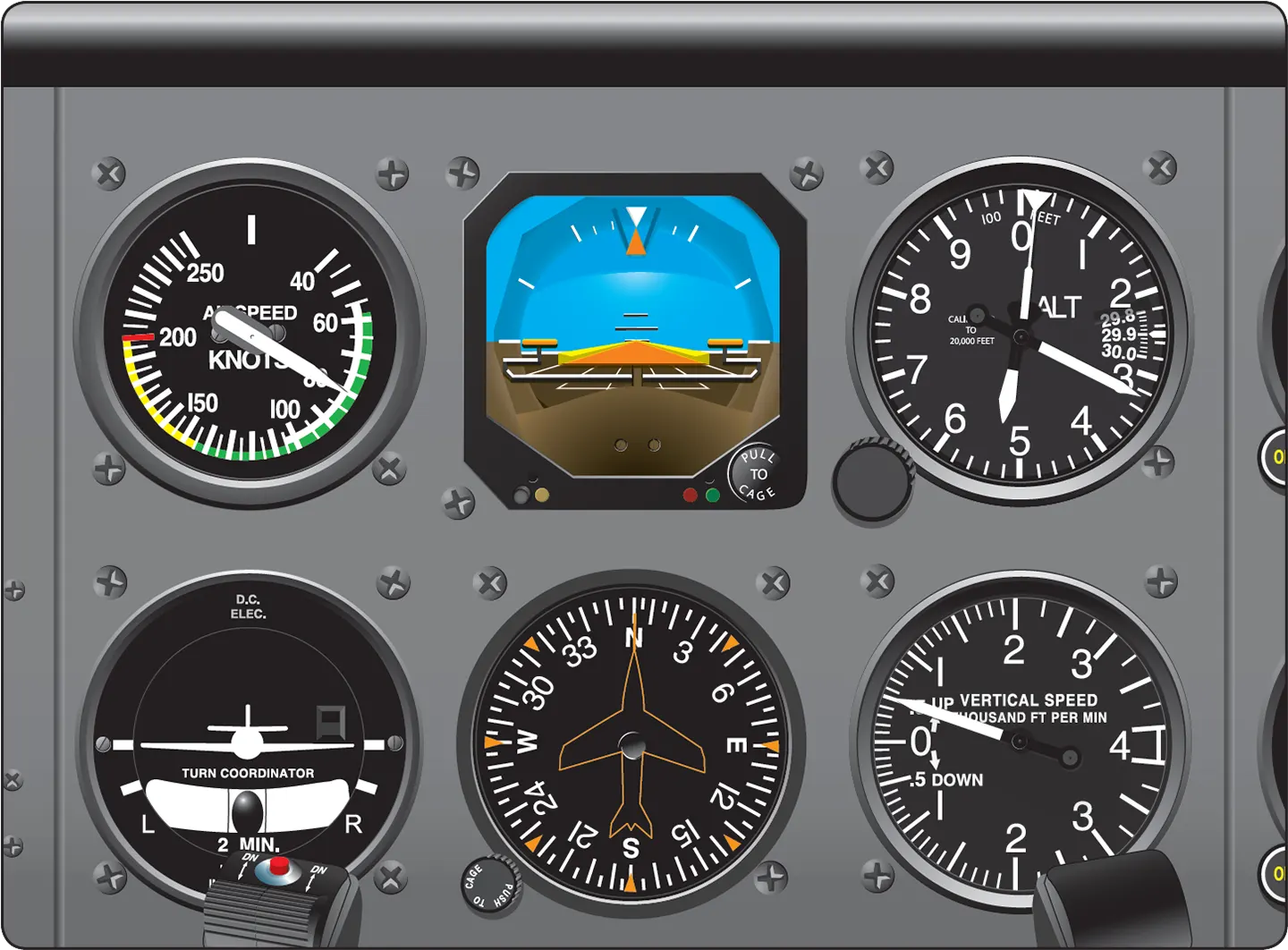
14 CFR part 91, section 91.205(c) specifies the basic minimum airplane equipment that is required for VFR flight at night. This equipment includes basic instruments, lights, electrical energy source, and spare fuses if applicable. The standard instruments required by 14 CFR part 91, section 91.205(d) for IFR flight are valuable assets for aircraft control at … Read more

Pilot Equipment for Night Operations

As part of preflight preparation, pilots should carefully consider the personal equipment that should be readily available during the flight to include a flashlight, aeronautical charts, pertinent data for the flight, and a flight deck checklist containing procedures for the following tasks: Before starting engines Before takeoff Cruise Before landing After landing Stopping engines Emergencies … Read more

Visual Illusions in Airplane Night Operations

Visual illusions are especially hazardous because pilots rely on their eyes for correct information. Darkness or low visibility increases pilot susceptibility to error. Two illusions that lead to spatial disorientation, false horizon and autokinesis, concern the visual system only. False Horizon Flying at night under clear skies with ground lights below can result in situations … Read more

2 6

Vision and Visual Performance for Airplane Night Operations

Due to the physiology of the eye [Figure 1], humans experience diminished vision in low-light conditions. Because vision involves the eyes and brain working together, understanding eye function leads to pilot behaviors that can improve night vision significantly. Anatomy of the Eye Light from an object enters the eye through the cornea and then continues … Read more

3 1 1

Airplane Chandelles and Lazy Eights

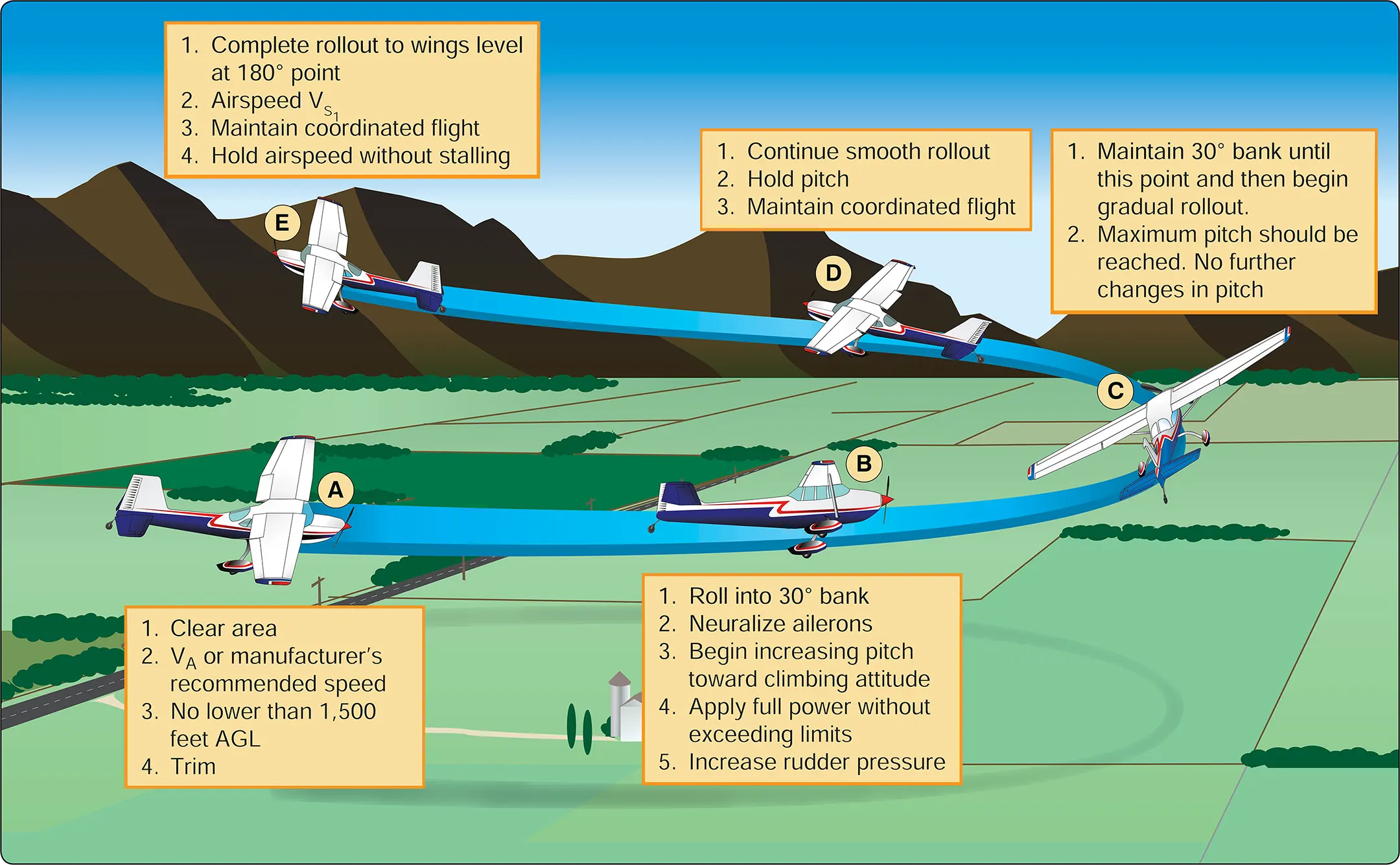
Chandelle A chandelle is a maximum performance, 180° climbing turn that begins from approximately straight-and-level flight and concludes with the airplane in a wings-level, nose-high attitude just above stall speed. [Figure 1] The goal is to gain the most altitude possible for a given bank angle and power setting; however, the standard used to judge … Read more

1 4

Airplane Steep Turns and Steep Spirals

Steep Turns Steep turns consist of single to multiple 360° and 720° turns, in either or both directions, using a bank angle between 45° and 60°. The objective of the steep turn is to develop a pilot’s skill in flight control smoothness and coordination, an awareness of the airplane’s orientation to outside references, division of … Read more