Weather Theory for Pilots

Weather is an important factor that influences aircraft performance and flying safety. It is the state of the atmosphere at a given time and place with respect to variables such as temperature (heat or cold), moisture (wetness or dryness), wind velocity (calm or storm), visibility (clearness or cloudiness), and barometric pressure (high or low). The … Read more
Aviation Weather: Fronts and Thunderstorms

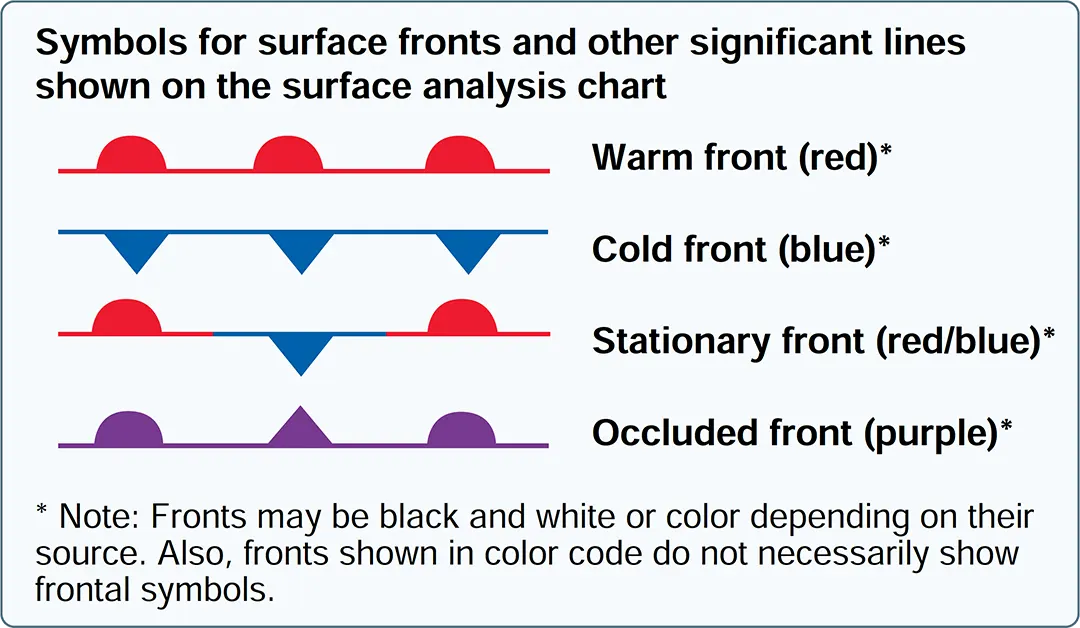
Air masses rarely remain isolated. As they move across the Earth’s surface, they interact with other air masses that may have different temperature and moisture characteristics. These interactions create boundaries known as fronts, which are often associated with changing weather conditions, cloud development, precipitation, and turbulence. Understanding fronts helps pilots anticipate weather changes and make … Read more

Air Masses and Their Influence on Weather

Air masses are large bodies of air with relatively uniform temperature and moisture characteristics. As they move away from their source regions, they influence weather conditions by interacting with the surfaces and atmospheric conditions they encounter. Air masses are classified according to the regions in which they originate. They acquire the temperature and moisture characteristics … Read more

Atmospheric Stability and Weather Formation

Atmospheric stability, moisture, and temperature are closely related and play a major role in the development of clouds, fog, precipitation, and thunderstorms. Understanding how these factors interact helps pilots anticipate weather conditions and recognize potential hazards that may affect flight safety. The stability of the atmosphere depends on its ability to resist vertical motion. A … Read more

Wind, Air Currents, and Weather Patterns

Wind and air currents are produced by differences in atmospheric pressure, temperature, and the effects of Earth’s rotation. Understanding how air moves through the atmosphere helps pilots anticipate weather changes and recognize conditions that may affect aircraft performance and flight safety. Air flows from areas of high pressure into areas of low pressure because air … Read more

Altitude Effects on Flight and the Human Body

Altitude has a significant effect on both aircraft performance and human physiology. As altitude increases, atmospheric pressure and air density decrease, influencing how an aircraft performs and how the human body functions during flight. Altitude and Flight Altitude affects every aspect of flight, from aircraft performance to human performance. At higher altitudes, where atmospheric pressure … Read more

Measurement of Atmospheric Pressure and Altitude

Accurate measurement of atmospheric pressure is essential for weather forecasting, altitude determination, and aircraft performance calculations. Pilots rely on pressure information to set flight instruments correctly and to evaluate how atmospheric conditions may affect flight operations. Measurement of Atmospheric Pressure Atmospheric pressure historically was measured in inches of mercury (“Hg) by a mercurial barometer. [Figure … Read more

Coriolis Force and Global Wind Circulation

Air does not move in straight lines over the Earth’s surface. Its motion is influenced by several forces that shape global wind patterns and weather systems. One of the most important of these forces is the Coriolis force, which results from the rotation of the Earth and plays a key role in atmospheric circulation. In … Read more

Weather Theory: Atmosphere and Pressure Basics

Weather plays a critical role in aviation safety and flight planning. To understand weather phenomena, pilots must first understand the atmosphere, its composition, circulation patterns, and the effects of atmospheric pressure. These fundamental concepts explain how weather develops and how changing atmospheric conditions affect aircraft performance. The atmosphere is a blanket of air made up … Read more