Automation Management and Glass Cockpit Safety

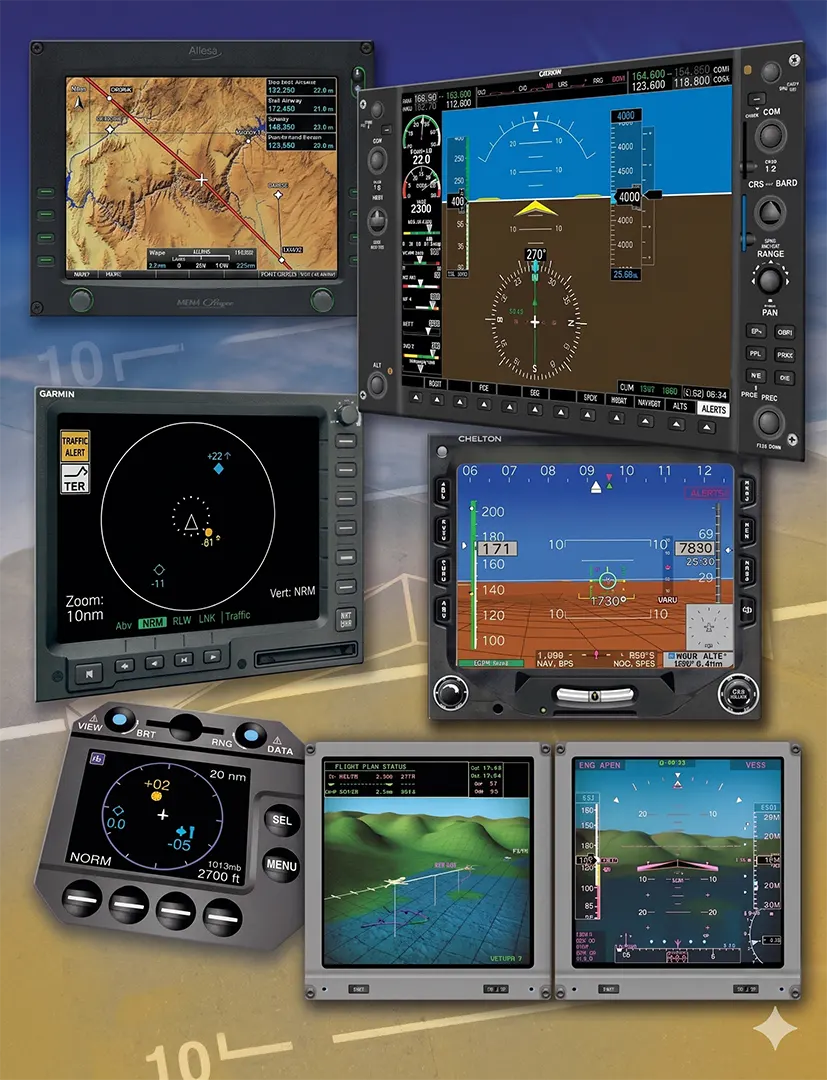
In the GA community, an automated aircraft generally consists of an integrated advanced avionics system that includes a primary flight display (PFD), a multifunction flight display (MFD) including an instrument-certified global positioning system (GPS) with traffic and terrain graphics, and a fully integrated autopilot. This type of aircraft is commonly known as a technically advanced … Read more
Situational Awareness and Workload Management

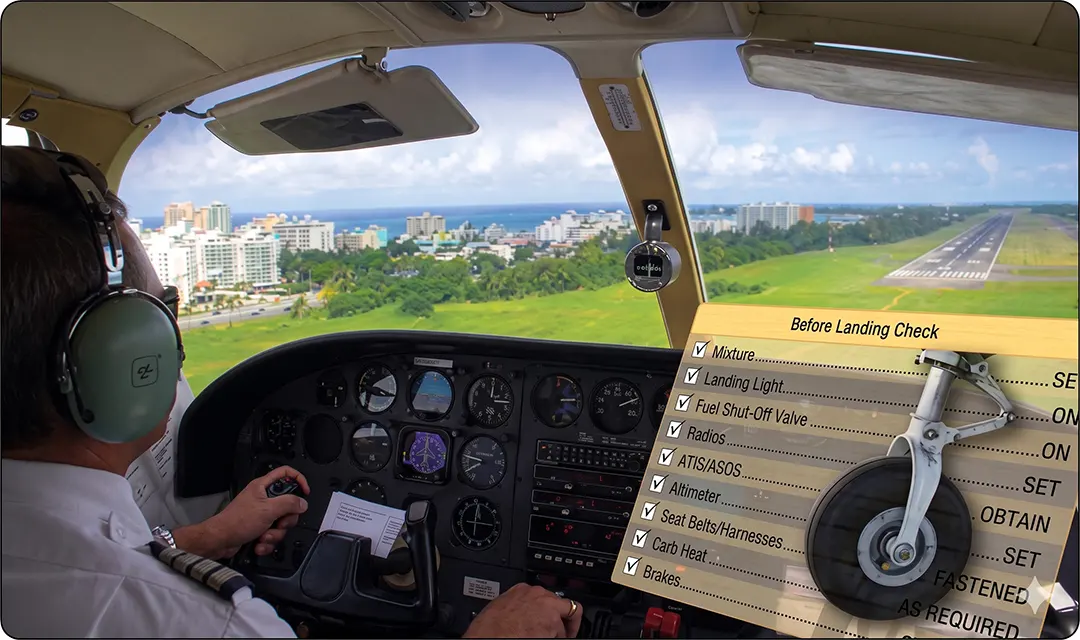
Situational awareness is the accurate perception and understanding of all the factors and conditions within the five fundamental risk elements—flight, pilot, aircraft, environment, and type of operation—that comprise any given aviation situation affecting safety before, during, and after the flight. Monitoring radio communications for traffic, weather discussion, and ATC communication can enhance situational awareness by … Read more

ADM in Dynamic Flight Situations

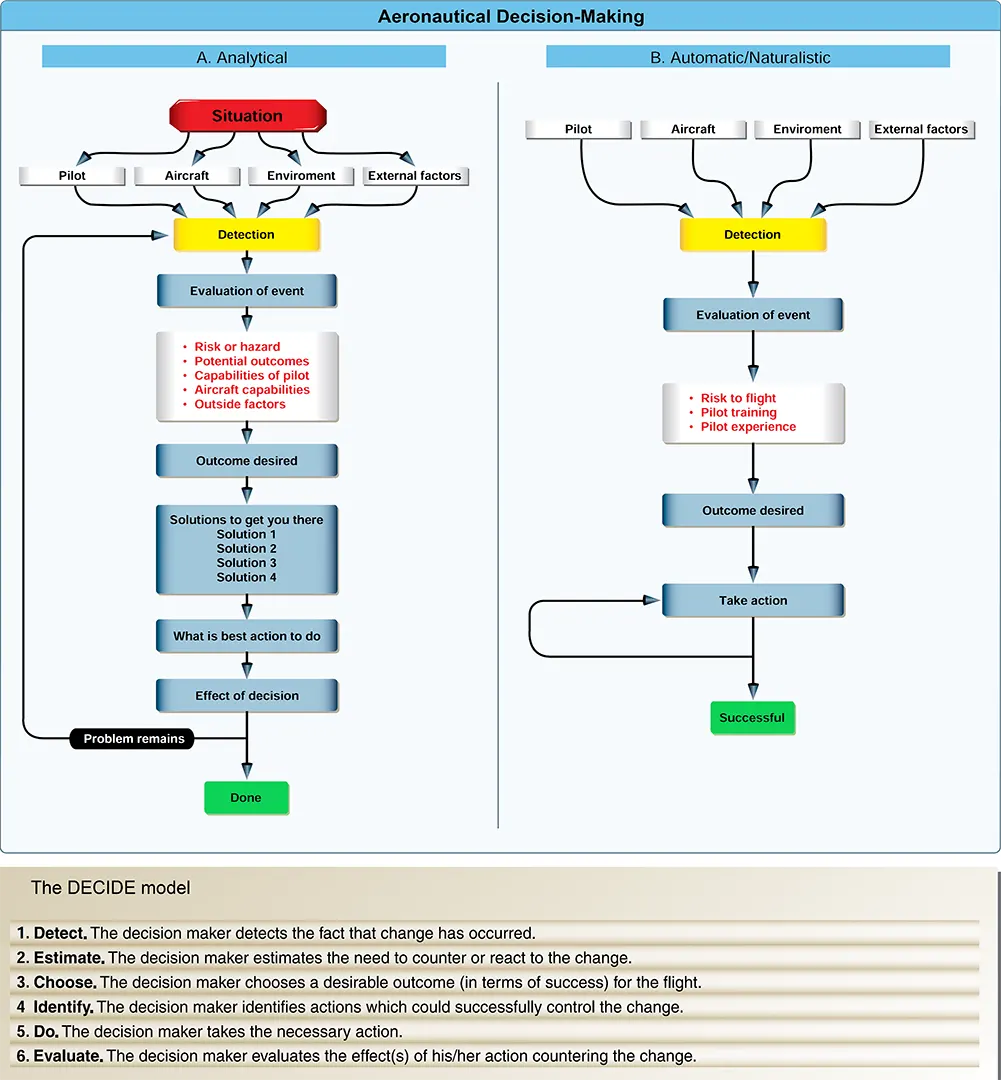
A solid approach to decision-making is through the use of analytical models, such as the 5 Ps, 3P, and DECIDE. Good decisions result when pilots gather all available information, review it, analyze the options, rate the options, select a course of action, and evaluate that course of action for correctness. In some situations, there is … Read more

Human Behavior and Pilot Decision-Making

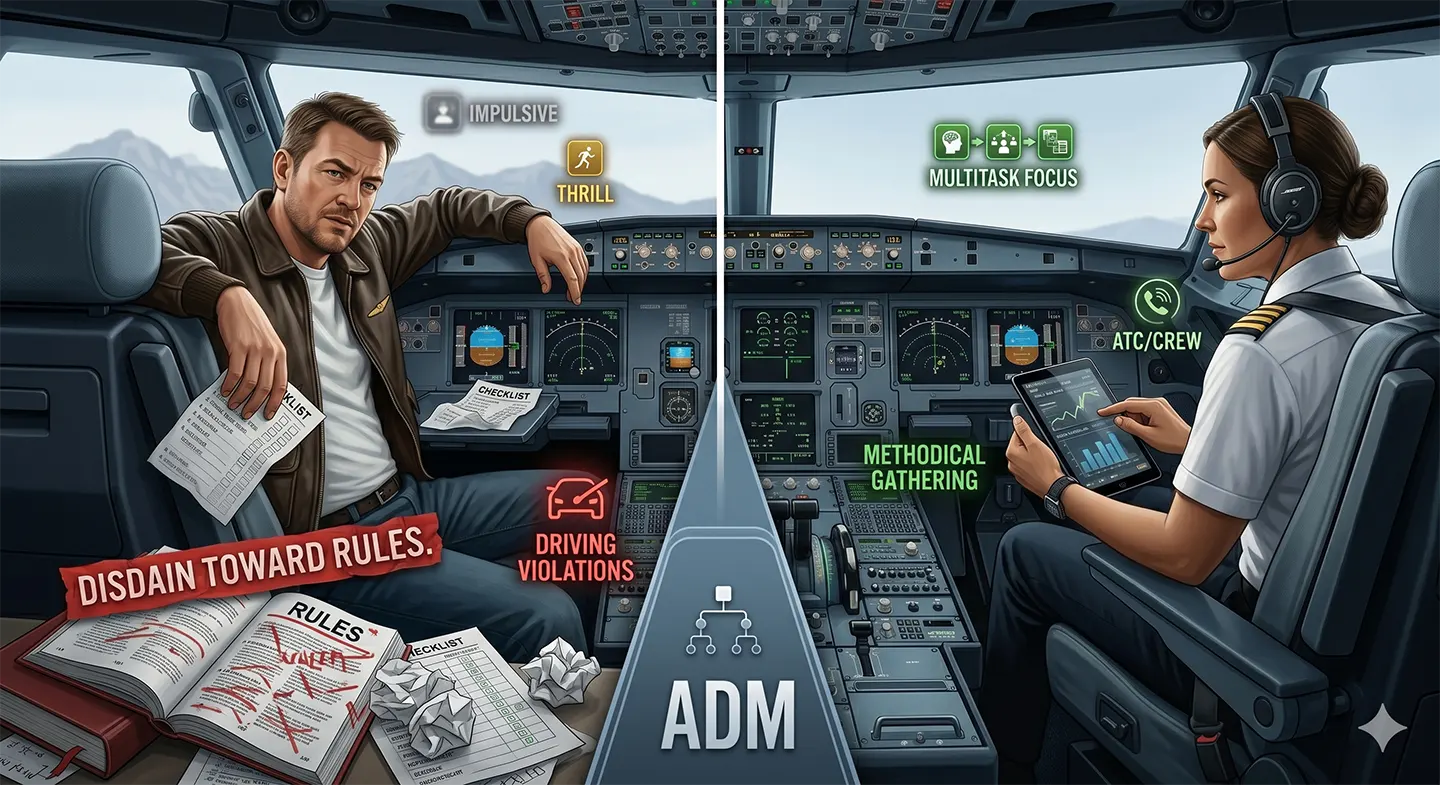
Studies of human behavior have attempted to determine an individual’s predisposition to taking risks and the level of involvement in accidents. In 1951, a study regarding injury-prone children was published by Elizabeth Mechem Fuller and Helen B. Baune of the University of Minnesota. The study consisted of two separate groups of second-grade students. Fifty-five students … Read more

Introduction to Aviation Human Factors

Why are human conditions such as fatigue, complacency, and stress so important in aviation? These conditions, along with many others, are called human factors. Human factors directly cause or contribute to many aviation accidents and have been documented as a primary contributor in more than 70 percent of aircraft accidents. Typically, human factor incidents and … Read more

Evaluating Flight Hazards and Risk Mitigation

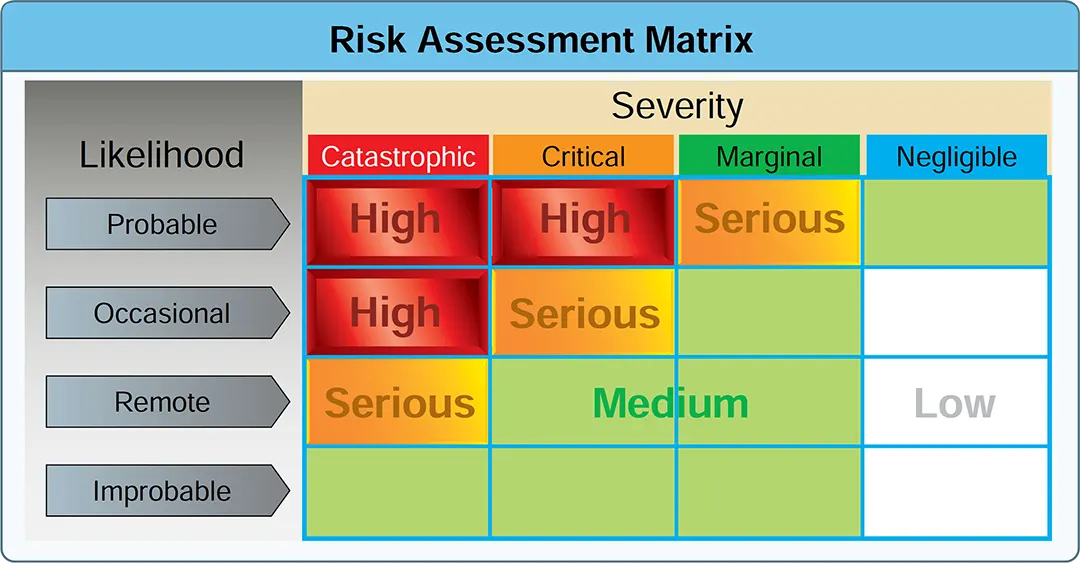
Two defining elements of ADM are hazard and risk. Hazard is a real or perceived condition, event, or circumstance that a pilot encounters. When faced with a hazard, the pilot makes an assessment of that hazard based upon various factors. The pilot assigns a value to the potential impact of the hazard, which qualifies the … Read more

Crew Resource Management and SRM

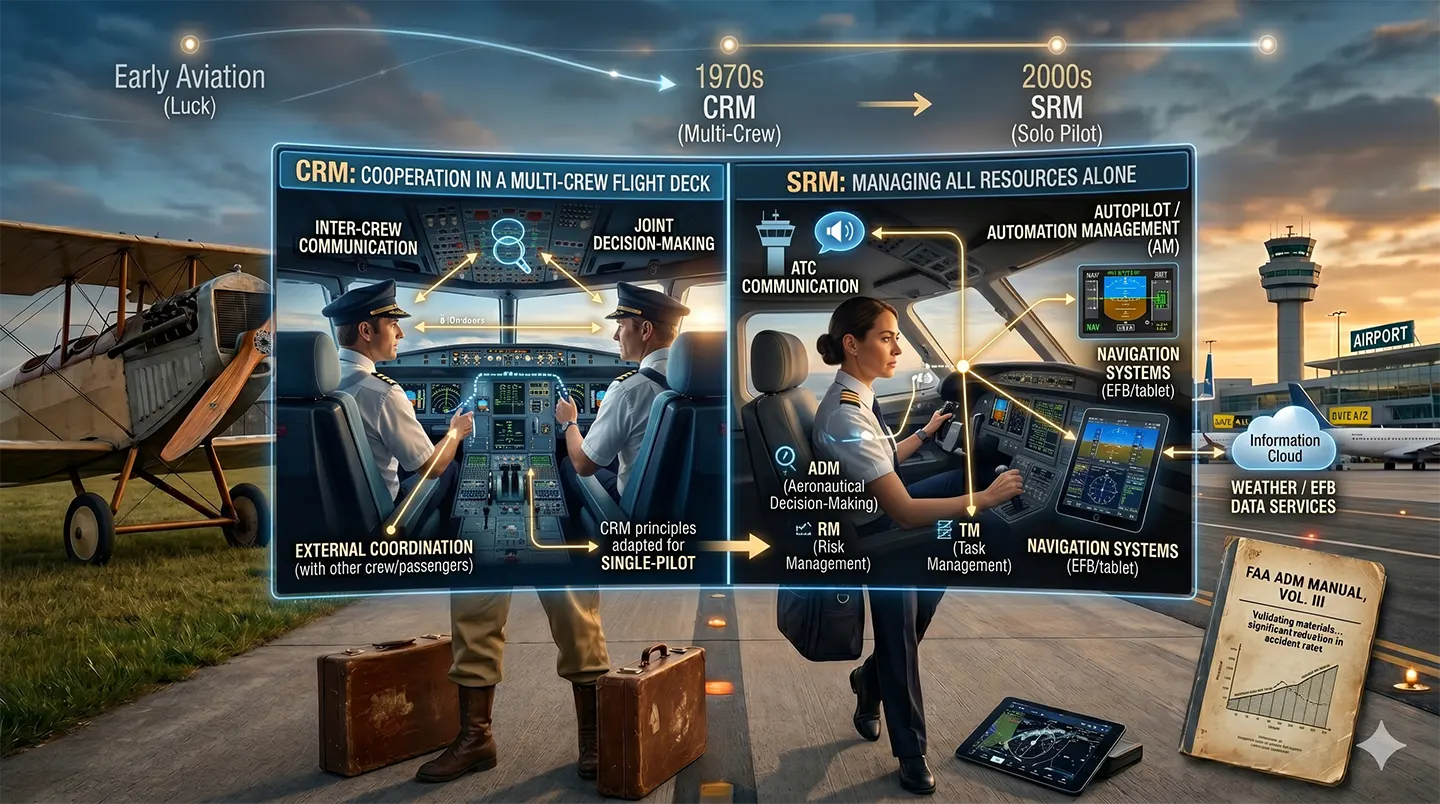
Crew Resource Management (CRM) focuses on improving communication, coordination, and decision-making among flight crew members. However, many CRM principles also apply to single-pilot operations. These concepts led to the development of Single-Pilot Resource Management (SRM). SRM is defined as the art and science of managing all available resources—both onboard the aircraft and from external sources—available … Read more

Aviation Risk Management Principles

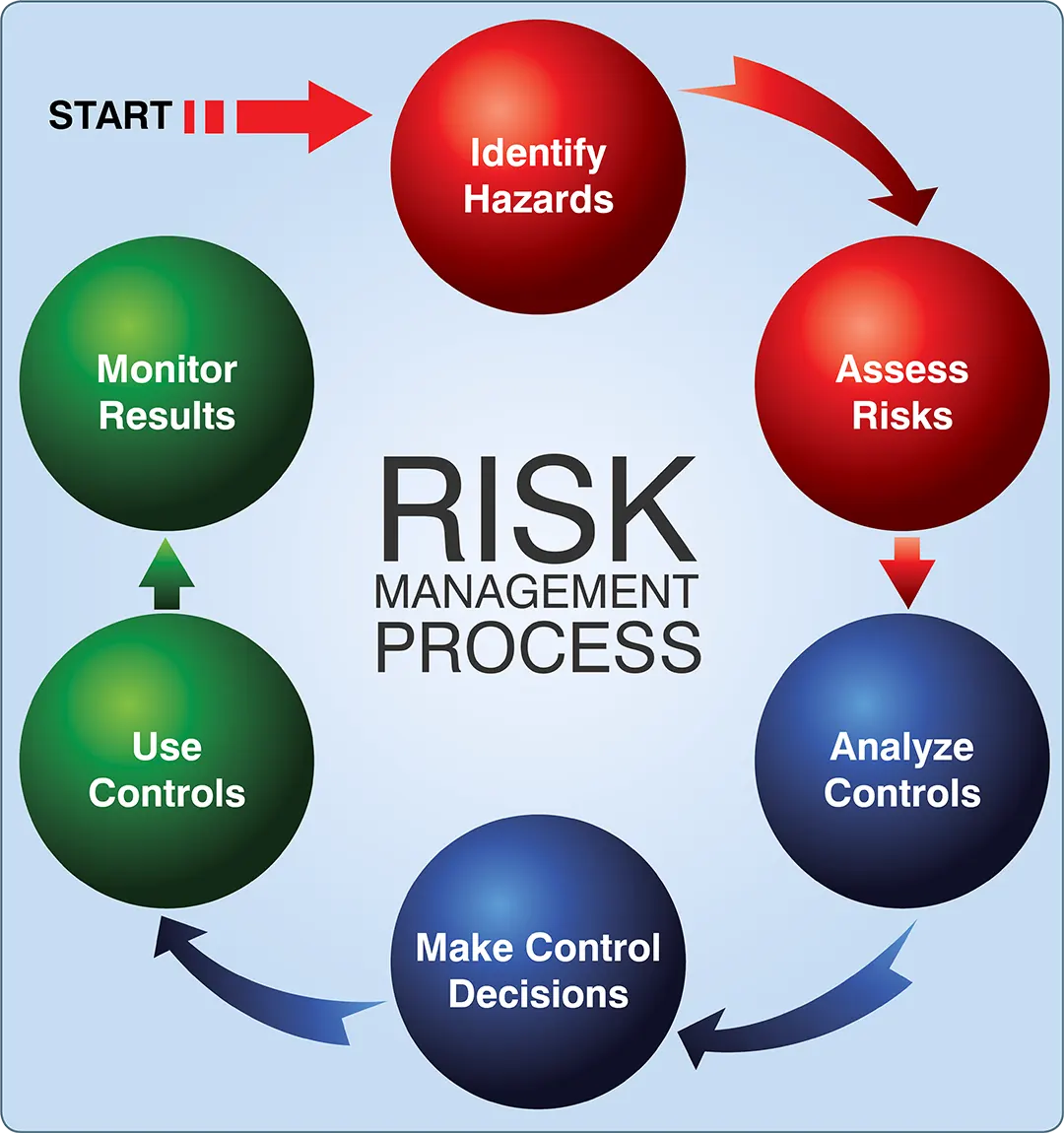
The goal of risk management is to proactively identify safety-related hazards and mitigate the associated risks. Risk management is an important component of ADM. When a pilot follows good decision-making practices, the inherent risk in a flight is reduced or even eliminated. The ability to make good decisions is based on experience, education, and both … Read more

Aeronautical Decision-Making Guide

Aeronautical decision-making (ADM) is a critical aviation skill that helps pilots assess risks, manage workload, and make safe operational decisions during flight. Effective ADM improves situational awareness and reduces the likelihood of human-error-related accidents. ADM is decision-making in the unique environment of aviation. It is a systematic approach pilots use to consistently determine the best … Read more

ADM Frameworks: 5P, 3P, and DECIDE Models

An understanding of the decision-making process provides the pilot with a foundation for developing ADM and SRM skills. While some situations, such as engine failure, require an immediate pilot response using established procedures, there is usually time during a flight to analyze any changes that occur, gather information, and assess risks before reaching a decision. … Read more