
Ground reference maneuvers are an important part of airplane flight training because they teach pilots to control an airplane while maintaining a specific flightpath in relation to objects on the ground. During initial training, pilots learn how various flight control pressure inputs affect the airplane. After achieving sufficient proficiency in the four fundamentals of flight, pilots begin applying these skills to maneuver the airplane along specific paths using ground-based references.
These maneuvers combine the four fundamentals of flight—straight-and-level flight, turns, climbs, and descents—into a set of integrated flying skills used in everyday flight operations. They form the foundation for flying traffic patterns and performing operations such as aerial surveying, photography, sightseeing, and agricultural application (crop dusting), as well as other flight activities that require specific flightpaths referenced to points on the surface.
To perform ground reference maneuvers accurately and safely, pilots must develop proper coordination, timing, and attention. They must apply the necessary flight control pressures to maintain the required airplane attitude and position while accounting for the effects of wind on the airplane’s ground track. These skills help pilots maintain the intended flightpath in relation to selected ground references.
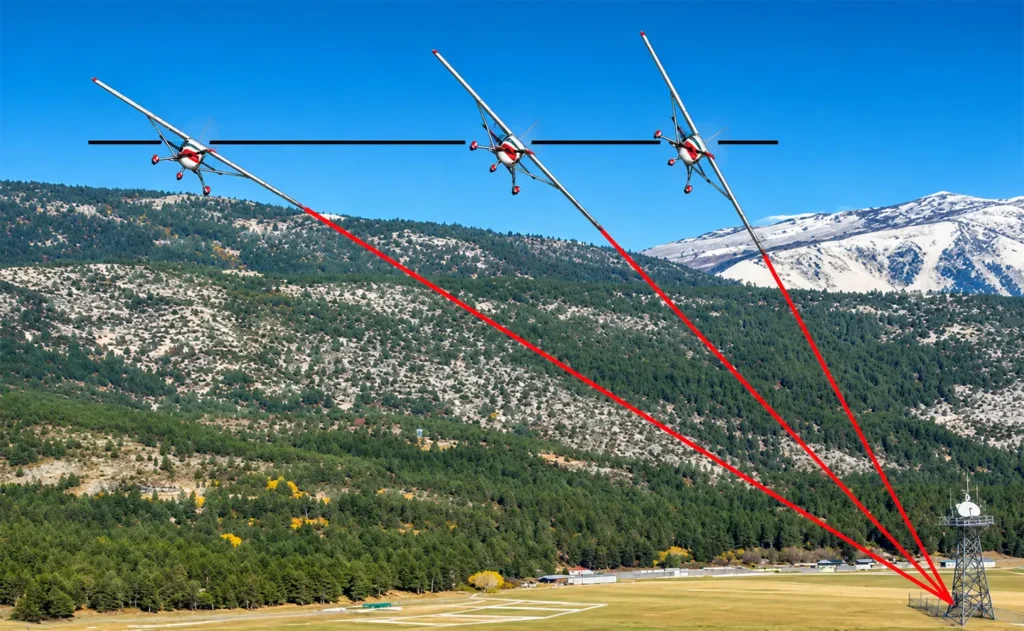
Ground reference maneuvers are introduced by the flight instructor once the pilot demonstrates proficiency in the four fundamentals of flight. During these maneuvers, pilots primarily use the natural horizon and ground-based references to control the airplane, with brief periods of scanning the flight instruments to confirm the airplane’s flight attitude and performance. The following topics explain the principles and techniques involved in ground reference maneuvers, including drift correction, rectangular courses, turns around a point, S-turns, and elementary eights.
Ground Reference Maneuvers Learning Path
1. Maneuvering by Reference to Ground Objects
Understand the basic principles of maneuvering an airplane using ground-based references and maintaining a desired flightpath.
View Topic →2. Drift and Ground Track Control
Learn how to correct for wind drift, maintain a constant radius during turns, and track over or parallel to a straight line.
View Topic →3. Rectangular Course Maneuver
Learn to fly a rectangular ground track while adjusting turns and correcting for wind drift, and understand common errors.
View Topic →4. Turns Around a Point
Understand how to maintain a constant radius around a selected ground reference point while compensating for wind drift.
View Topic →5. S-Turns
Learn to perform consecutive turns in opposite directions across a straight ground reference line while maintaining a consistent ground track.
View Topic →6. Elementary Eights
Explore eights along a road, across a road, around pylons, and Eights-on-Pylons, including their techniques and common errors.
View Topic →