5 16 min

Instructional Aids and Training Technologies

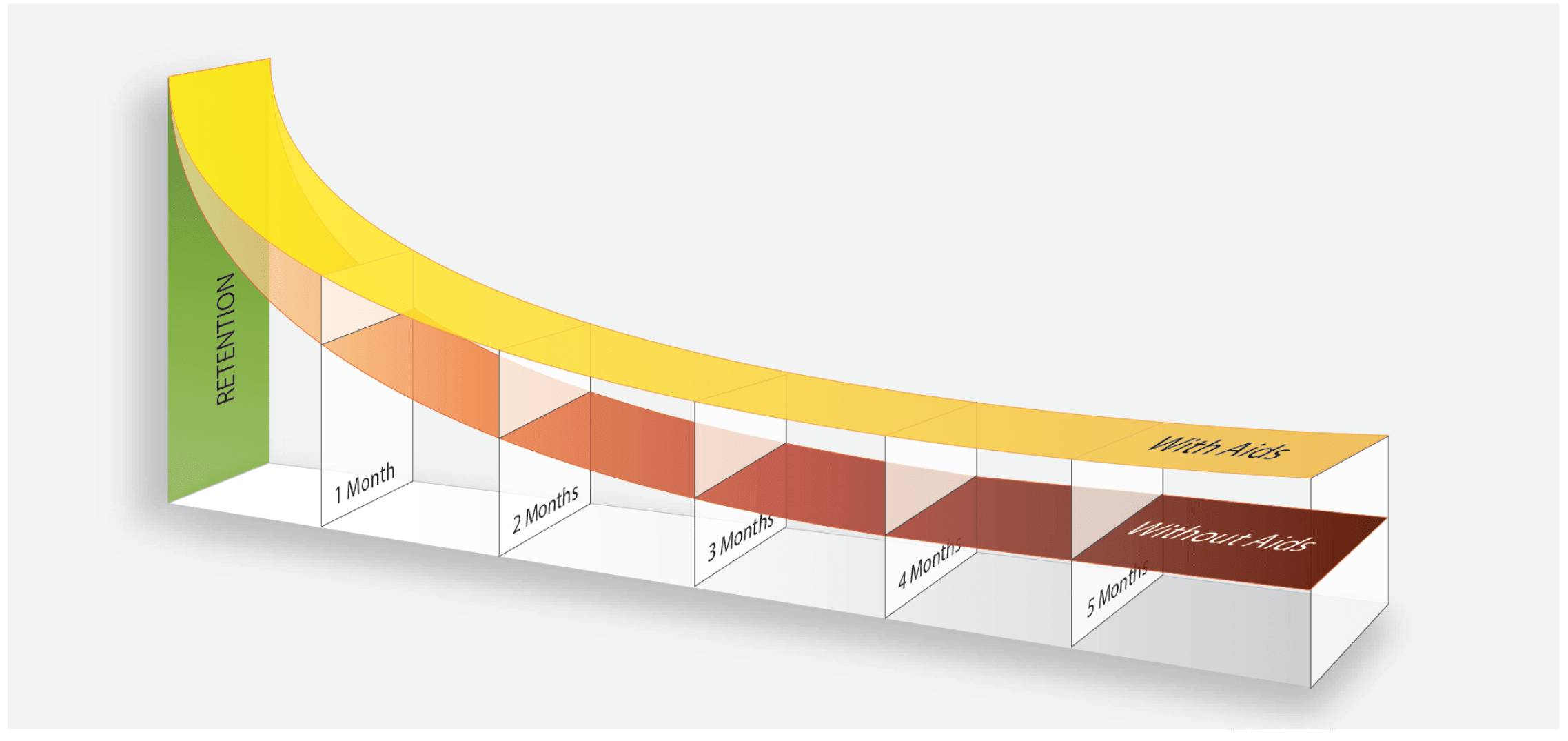
Instructional aids are devices that assist an instructor in the teaching-learning process. Instructional aids are not self-supporting; they support, supplement, or reinforce what is being taught. In contrast, training media are generally described as any physical means that communicates an instructional message to learners. For example, the instructor’s voice, printed text, video cassettes, interactive computer … Read more

Application and Assessment of the Lesson

Application of the Lesson Application is the learner’s use of the presented material. If it is a classroom presentation, the learner may be asked to explain the new material. If it is a new flight maneuver, the learner may be asked to perform the maneuver just been demonstrated. In most instructional situations, the instructor’s explanation … Read more

Drill and Practice Method

Drill and practice, based on Thorndike’s law of exercise discussed in The Learning Process, predicts that connections are strengthened with practice. The human mind rarely retains, evaluates, and applies new concepts or practices after one exposure. Learners do not master welding during one shop period or perform crosswind landings during one instructional flight. They learn … Read more

5 15 min

Demonstration-Performance Method

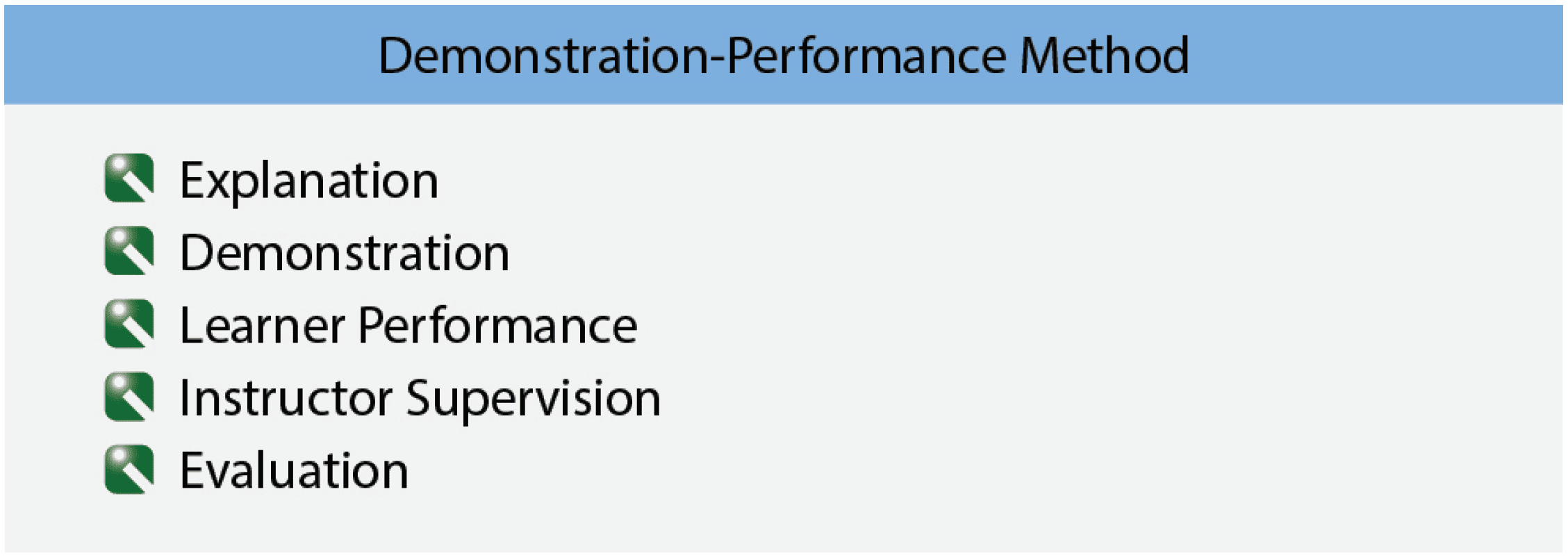
Best used for the mastery of mental or physical skills that require practice, the demonstration-performance method is based on the principle that people learn by doing. In this method, learners observe the skill and then try to reproduce it. It is well suited for the aircraft maintenance instructor who uses it in the shop to … Read more

Cooperative or Group Learning Method

Cooperative or group learning organizes learners into small groups who can work together to maximize understanding. Research indicates that learners completing cooperative learning group tasks tend to have better test scores, higher self-esteem, improved social skills, and greater comprehension of the subjects they are studying. Perhaps the most significant characteristic of group learning is that … Read more

5 12 min

Electronic Learning

Electronic learning or e-learning has become an umbrella term for any type of education that involves an electronic component. [Figure 1] E-learning comes in many formats. It can be a stand-alone software program that takes a learner from lecture to exam or it can be an interactive web-based course. Figure 1. E-learning encompasses a variety … Read more

Problem-Based Learning

In 1966, the McMaster University School of Medicine in Canada pioneered a new approach to teaching and curriculum design called problem-based learning (PBL). In the intervening years, PBL has helped shift the focus of learning from an instructor-centered approach to a learner-centered approach. There are many definitions for PBL, but this site defines it as … Read more

5 8 min

Training Delivery Methods

Today’s instructor can choose from a wealth of ways to present instructional material: lecture, discussion, guided discussion, problem based, group learning, demonstration-performance, or e-learning. In a typical lesson, an effective instructor normally uses a combination of methods. The instructor determines which teaching method best conveys the information and when to use it. For example, Bob … Read more