
Managing Risk during Flight Instruction

Instructors know the need to manage risk during flight instruction. The risk management techniques are the same as taught to learners, however, there are a few hazards that are unique to flight instruction. The resulting risk can be identified, assessed, and mitigated. For example: Ask the learner to fly specific maneuvers after giving appropriate training. … Read more
Risk Management Training for Pilots

Instructors should teach risk management using a building block approach. This method will be effective with both new pilots as well as existing pilots who have not previously been exposed to formal risk management training. Risk Management Training through the Private Pilot Level A new learner’s exposure to risk management should begin before the first … Read more

10 1 min

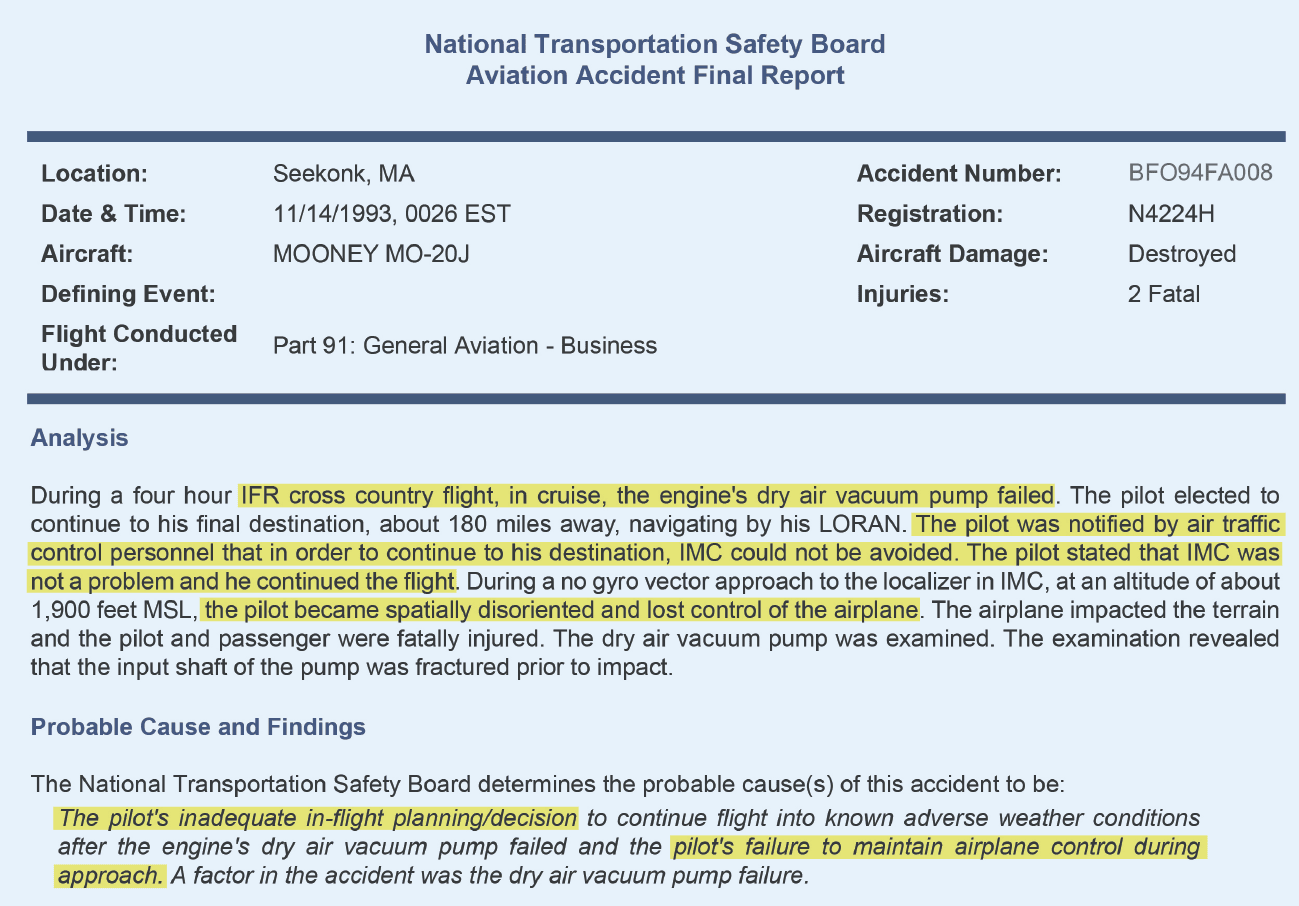
Poor Risk Management and Accident Causality

Traditional Accident Investigation Taxonomy Aviation accidents are investigated by both the National Transportation Safety Board (NTSB) and the Federal Aviation Administration (FAA). The role of the NTSB is to determine the probable cause of accidents and make recommendations, while the FAA seeks to determine if the accident revealed deficiencies in pilot training, aircraft certification, air … Read more

Teaching Risk Management during Flight Instruction

Examination of accident data leads to the inevitable conclusion that many aviation accidents involve poor risk management decisions. Therefore, effective risk management is one of the most important skills a pilot needs to learn, understand, and practice as a habit. Since flight instructors continually deal with risk, they quickly become subject matter experts. Instructors know … Read more