Aircraft Refueling Procedures

Static electricity is formed by the friction of air passing over the surfaces of an aircraft in flight and by the flow of fuel through the hose and nozzle during refueling. Nylon, Dacron, or wool clothing is especially prone to accumulate and discharge static electricity from the person to the funnel or nozzle. To guard … Read more
7 30 min

Airframe Fuel Systems

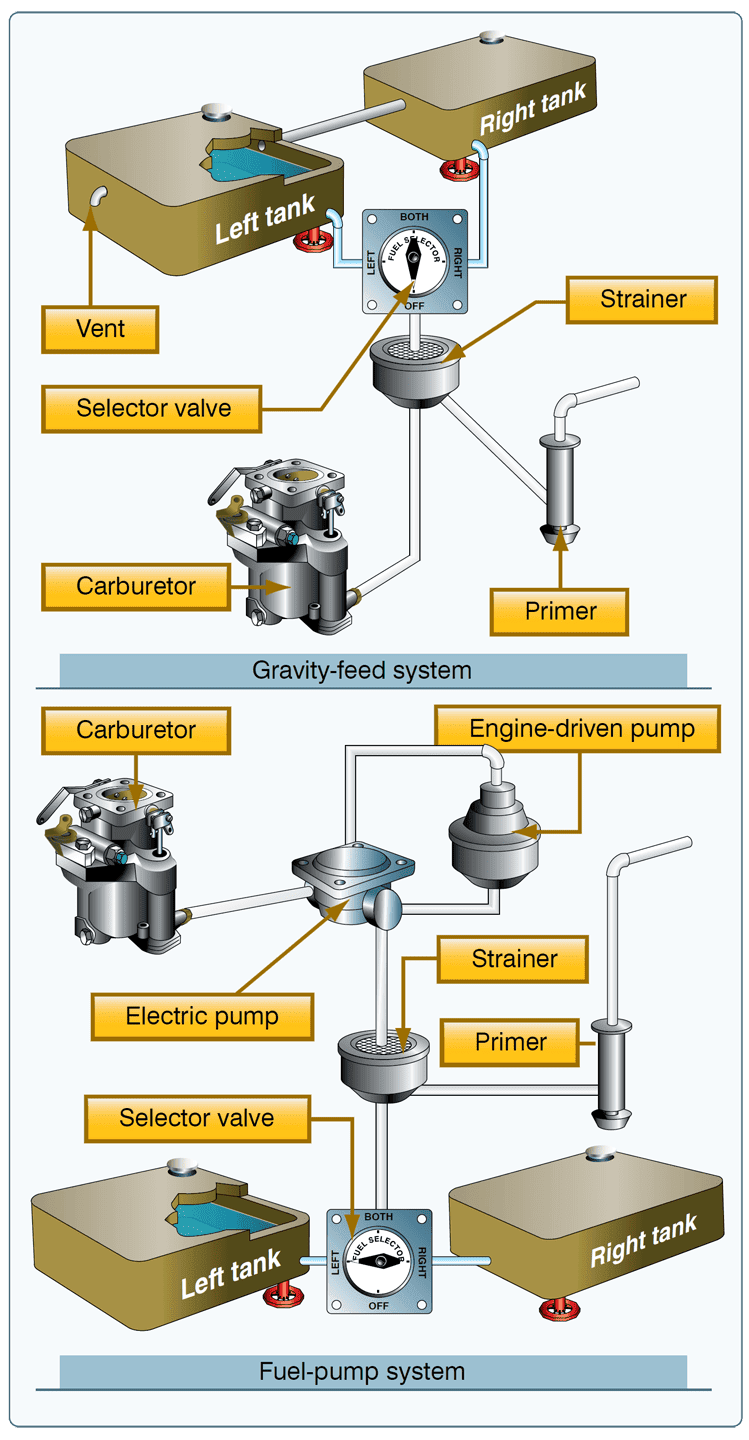
The fuel system is designed to provide an uninterrupted flow of clean fuel from the fuel tanks to the engine. The fuel must be available to the engine under all conditions of engine power, altitude, attitude, and during all approved flight maneuvers. Two common classifications apply to fuel systems in small aircraft: gravity-feed and fuel-pump … Read more

7 22 min

Aircraft Turbine Engines

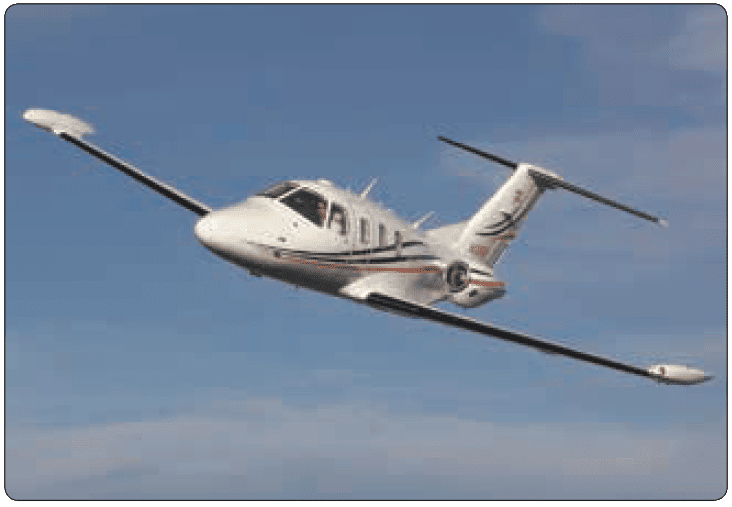
An aircraft turbine engine consists of an air inlet, compressor, combustion chambers, a turbine section, and exhaust. Thrust is produced by increasing the velocity of the air flowing through the engine. Turbine engines are highly desirable aircraft powerplants. They are characterized by smooth operation and a high power-to-weight ratio, and they use readily available jet … Read more

Full Authority Digital Engine Control (FADEC)

FADEC is a system consisting of a digital computer and ancillary components that control an aircraft’s engine and propeller. First used in turbine-powered aircraft, and referred to as full authority digital electronic control, these sophisticated control systems are increasingly being used in piston powered aircraft. In a spark-ignition reciprocating engine, the FADEC uses speed, temperature, … Read more

7 21 min

Aircraft Engine Combustion

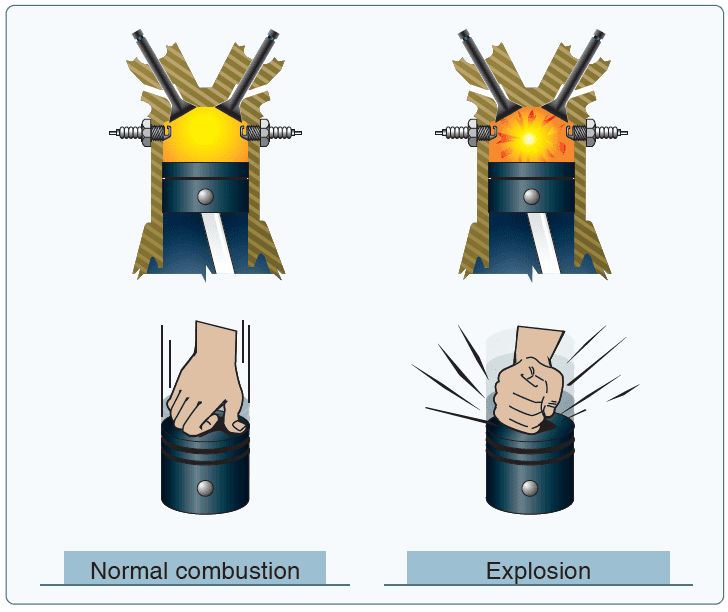
During normal combustion, the fuel-air mixture burns in a very controlled and predictable manner. In a spark ignition engine, the process occurs in a fraction of a second. The mixture actually begins to burn at the point where it is ignited by the spark plugs. It then burns away from the plugs until it is … Read more

7 20 min

Aircraft Engine Starting System

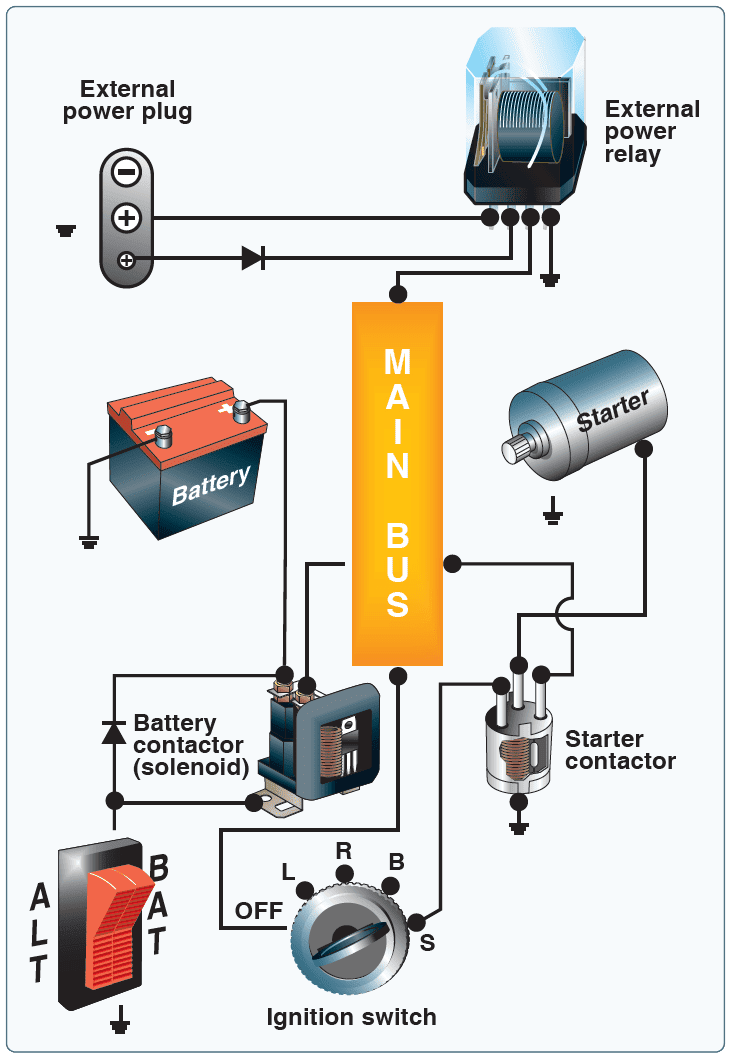
Most small aircraft use a direct-cranking electric starter system. This system consists of a source of electricity, wiring, switches, and solenoids to operate the starter and a starter motor. Most aircraft have starters that automatically engage and disengage when operated, but some older aircraft have starters that are mechanically engaged by a lever actuated by … Read more

Aircraft Engine Exhaust Systems

Engine exhaust systems vent the burned combustion gases overboard, provide heat for the cabin, and defrost the windscreen. An exhaust system has exhaust piping attached to the cylinders, as well as a muffler and a muffler shroud. The exhaust gases are pushed out of the cylinder through the exhaust valve and then through the exhaust … Read more

7 19 min

Aircraft Reciprocating Engine Cooling Systems

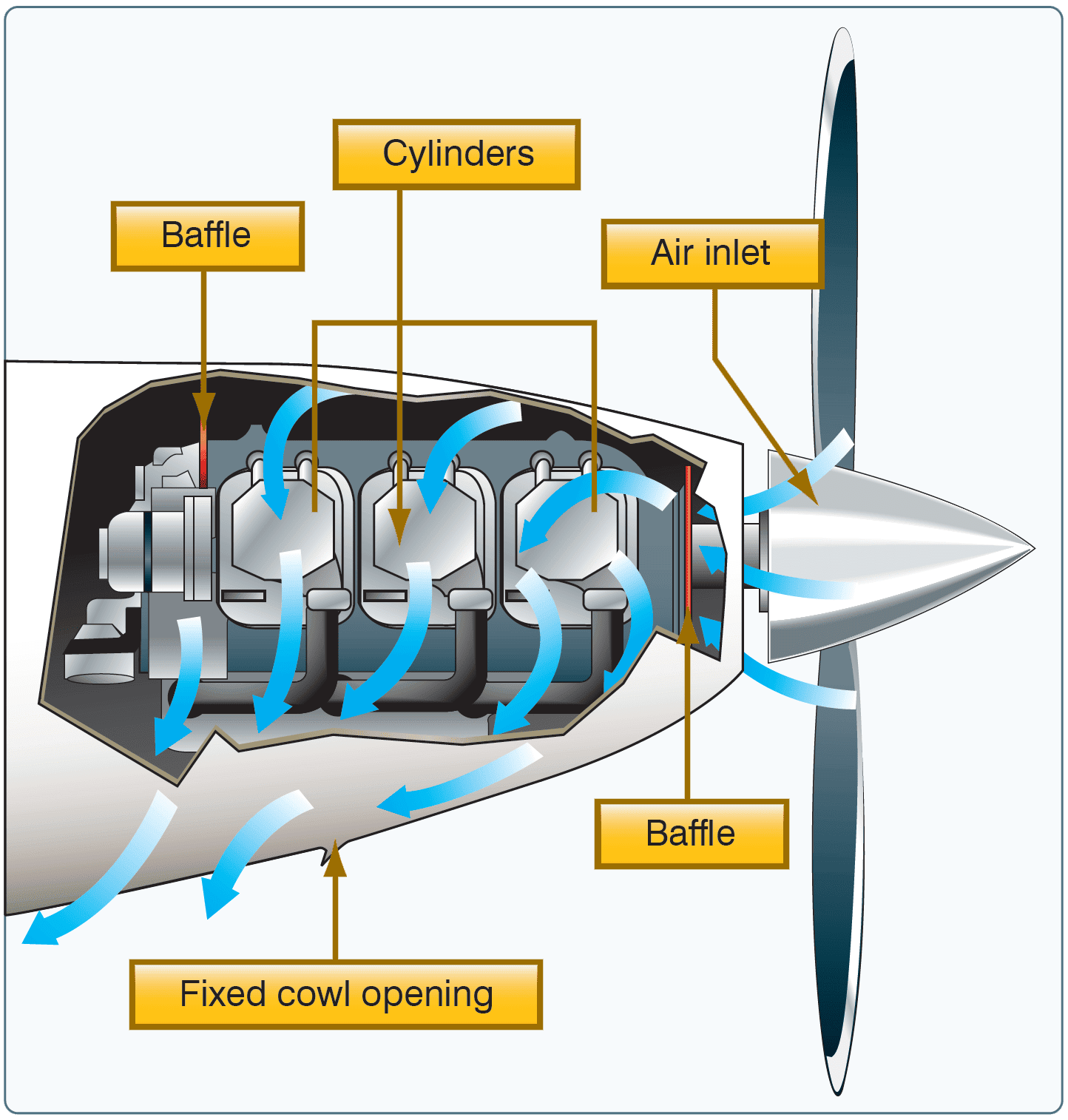
The burning fuel within the cylinders produces intense heat, most of which is expelled through the exhaust system. Much of the remaining heat, however, must be removed, or at least dissipated, to prevent the engine from overheating. Otherwise, the extremely high engine temperatures can lead to loss of power, excessive oil consumption, detonation, and serious … Read more

7 17 min

Aircraft Reciprocating Engine Oil Systems

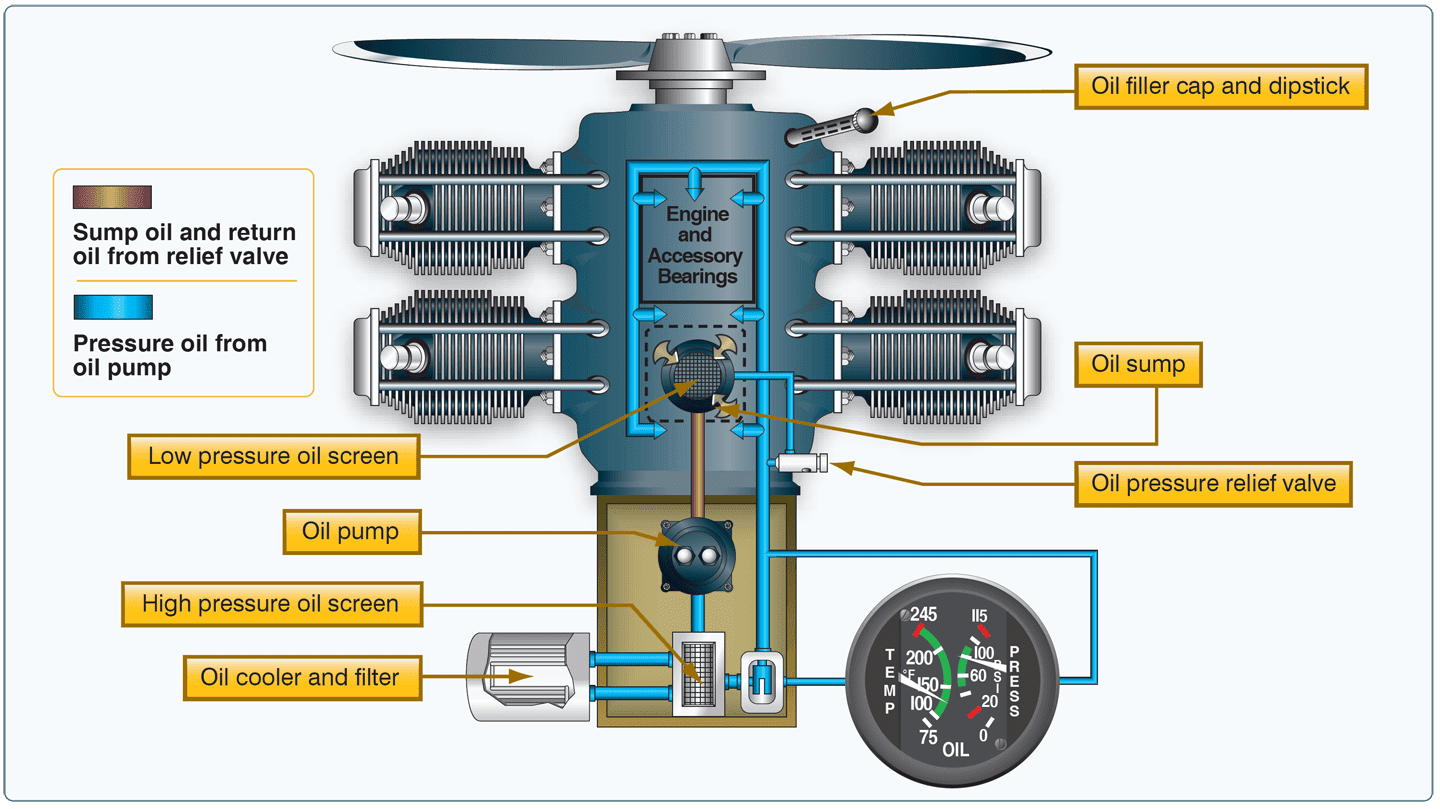
The engine oil system performs several important functions: Lubrication of the engine’s moving parts Cooling of the engine by reducing friction Removing heat from the cylinders Providing a seal between the cylinder walls and pistons Carrying away contaminants Reciprocating engines use either a wet-sump or a dry-sump oil system. In a wet-sump system, the oil … Read more

7 16 min

Aircraft Reciprocating Engine Ignition System

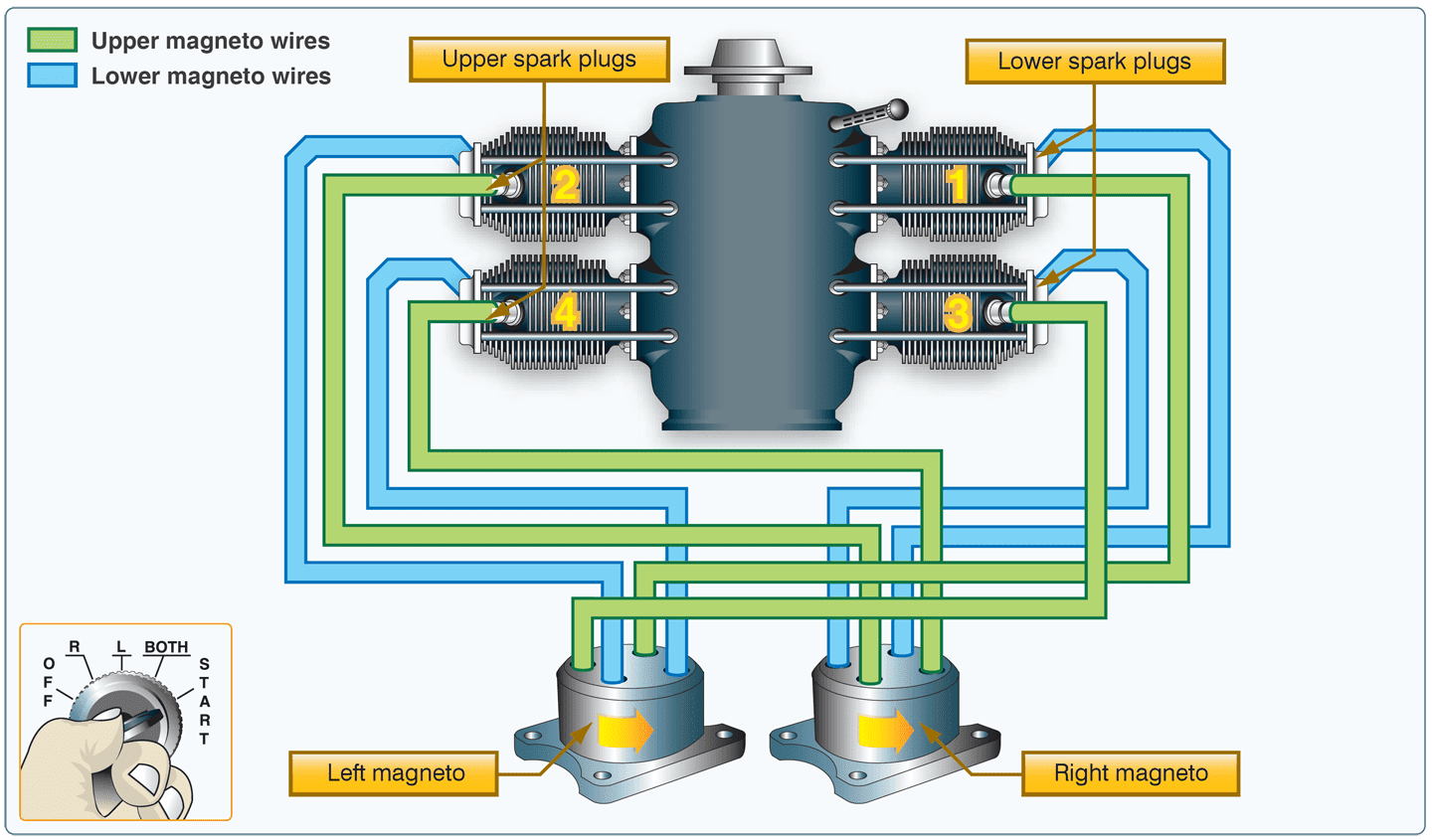
In a spark ignition engine, the ignition system provides a spark that ignites the fuel-air mixture in the cylinders and is made up of magnetos, spark plugs, high-tension leads, and an ignition switch. [Figure] Ignition system components A magneto uses a permanent magnet to generate an electrical current completely independent of the aircraft’s electrical system. … Read more