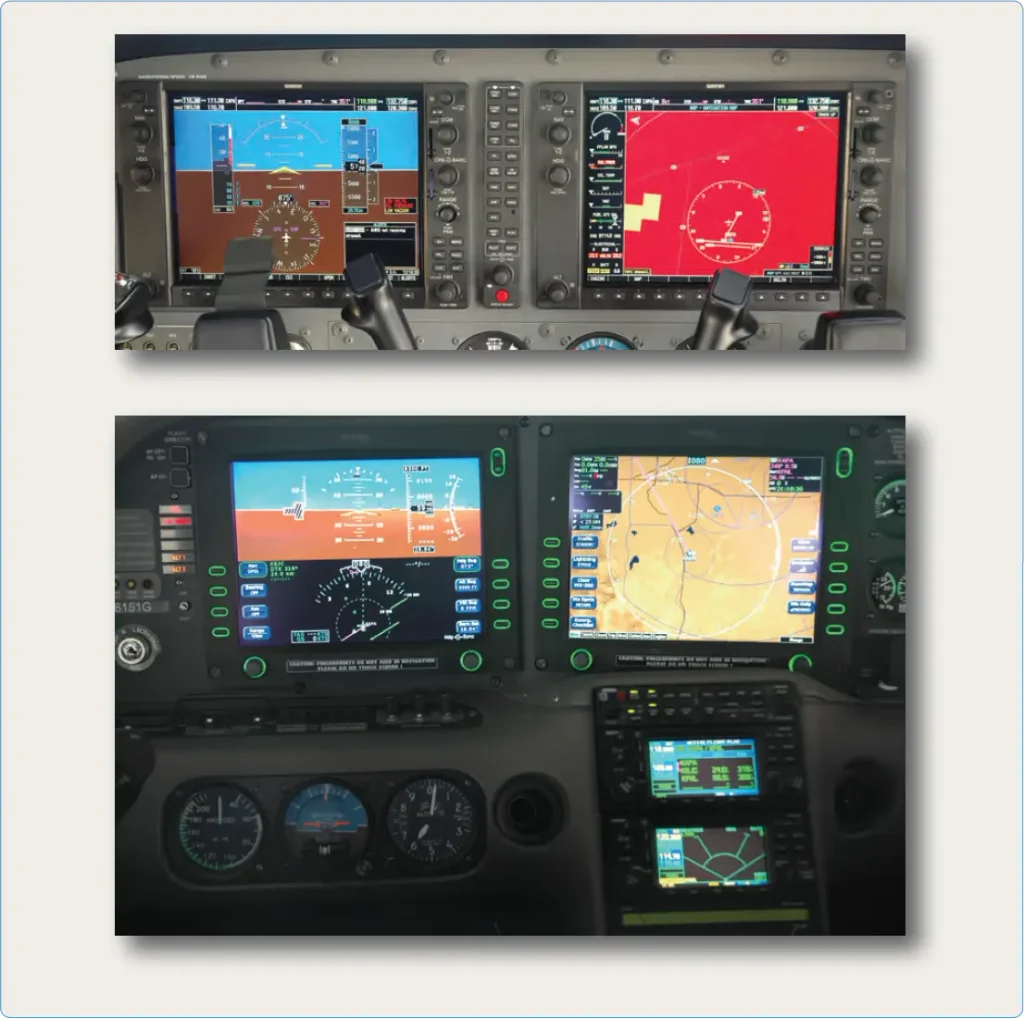
Area Navigation (RNAV) systems, aeronautical applications, and functions that depend on databases are widespread. [Figure 1] Since the 1970s, installed flight systems have relied on airborne navigation databases to support their intended functions, such as navigation data used to facilitate the presentation of flight information to the flight crew and understanding and better visualization of the governing aeronautical flight charts. With the overwhelming upgrades to navigation systems and fully integrated flight management systems (FMS) that are now installed in almost all corporate and commercial aircraft, the need for reliable and consistent airborne navigation databases is more important than ever.
Figure 1. Area navigation (RNAV) receivers
The capabilities of airborne navigation databases depend largely on the way they are implemented by the avionics manufacturers. They can provide data about a large variety of locations, routes, and airspace segments for use by many different types of RNAV equipment. Databases can provide pilots with information regarding airports, air traffic control (ATC) frequencies, runways, and special use airspace. Without airborne navigation databases, RNAV would be extremely limited. In order to understand the capabilities and limitations of airborne navigation databases, pilots must understand the way databases are compiled and revised by the database provider and processed by the avionics manufacturer. Vital to this discussion is understanding of the regulations guiding database maintenance and use.
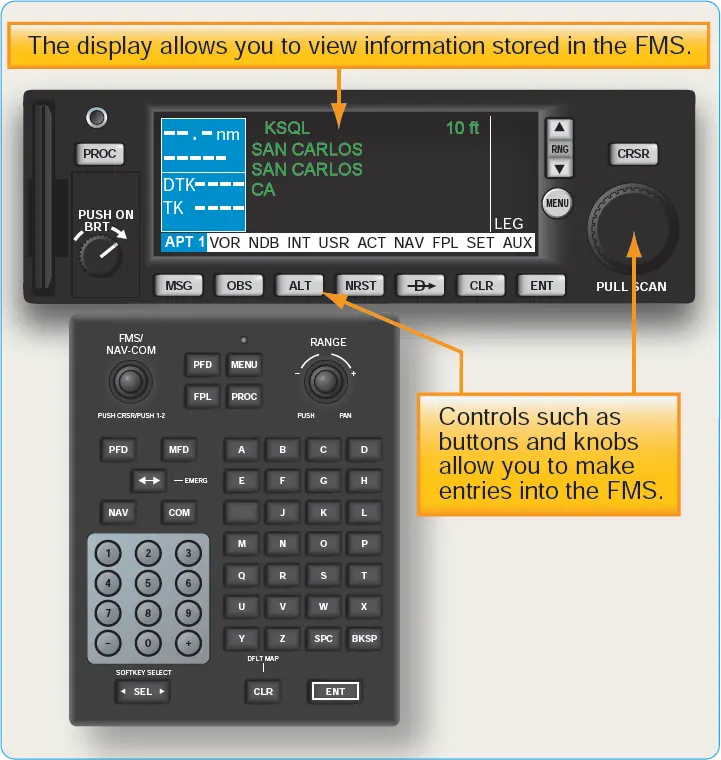
There are many different types of RNAV systems certified for instrument flight rules (IFR) use in the National Airspace System (NAS). The two most prevalent types are GPS and the multisensory FMS. [Figure 2]
Figure 2. GPS with a flight route on display
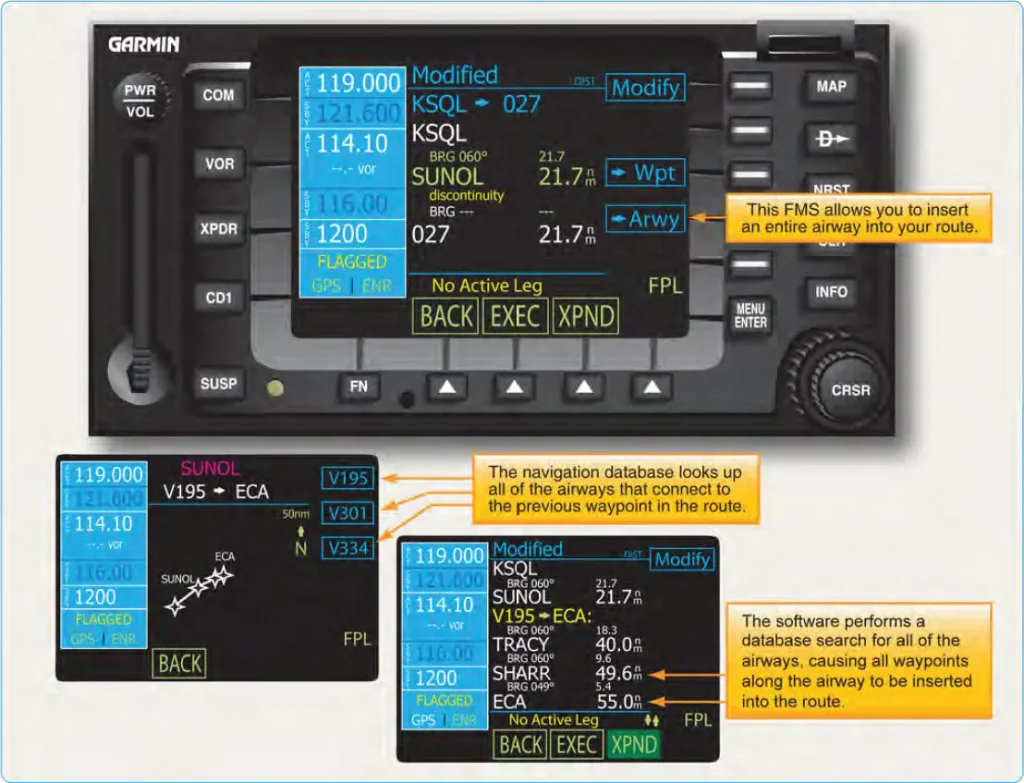
A modern GPS unit accurately provides the pilot with the aircraft’s present position; however, it must use an airborne navigation database to determine its direction or distance from another location. The database provides the GPS with position information for navigation fixes so it may perform the required geodetic calculations to determine the appropriate tracks, headings, and distances to be flown. [Figure 3]
Figure 3. FMS display
Modern FMS are capable of a large number of functions including basic en route navigation, complex departure and arrival navigation, fuel planning, and precise vertical navigation. Unlike stand-alone navigation systems, most FMS use several navigation inputs. Typically, they formulate the aircraft’s current position using a combination of conventional distance measuring equipment (DME) signals, inertial navigation systems (INS), GPS receivers, or other RNAV devices. Like stand-alone navigation avionics, they rely heavily on airborne navigation databases to provide the information needed to perform their numerous functions.
We use cookies to improve your experience, analyze site traffic, and support advertising. You can accept all cookies, reject non-essential cookies, or manage your preferences.